Get Full Government Meeting Transcripts, Videos, & Alerts Forever!
Get email alerts on the Housing Code Enforcement topic
No spam. Unsubscribe anytime.
Committee hears case studies after hotel and apartment displacements; staff to propose code, process and partnership changes in March
Summary
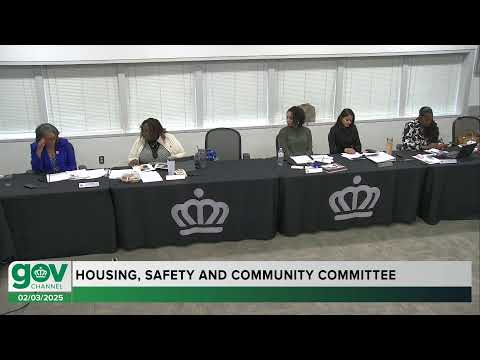
The Housing, Safety and Community Committee on Feb. 3 reviewed early findings following two major housing enforcement situations — Lamplighter Inn and Tanglewood Apartments — and heard staff say the city can act more quickly in select cases if paired with clear parameters, partner services and a protocol for occupant relocation. Staff will return
Charlotte’s Housing, Safety and Community Committee on Feb. 3 reviewed early findings from city action around two major housing situations — the Lamplighter Inn and Tanglewood Apartments — and discussed policy options to strengthen code enforcement, prevent unsafe housing conditions and reduce displacement impacts.
Rebecca Heffner of Housing & Neighborhood Services and Jerry Green of Code Enforcement summarized case studies the committee had requested after previous briefings. Staff said Lamplighter Inn (a lodging establishment) and Tanglewood Apartments (a multifamily complex) presented different enforcement challenges but both highlighted the need for earlier intervention, clearer categorization of imminently dangerous violations and a stronger ecosystem of partner services for relocation and resident support.
Key findings: staff said many problematic properties are a small number of owners but affect many residents; lodging establishments used as long‑term housing can deteriorate rapidly and have complex systems (for example, boiler failures) that are difficult to repair on a room‑by‑room basis; and property management turnover or owner abandonment accelerates deterioration and constrains legal remedies. Code staff noted that Lamplighter had previously been regulated under Mecklenburg County Environmental Health and that county permitting and coordination raised red flags that staff plan to address with improved interagency notification.
City attorneys and staff discussed legal constraints and noted that North Carolina law treats hotel occupants differently from tenants unless they meet a 90‑day threshold; staff also cited legal uncertainties about some remedies and said they will validate options with the city attorney. Committee members urged a focus on tenant protections, outreach and direct resident engagement; staff said they will convene a resident advisory session and additional stakeholder engagement led by community partners.
Staff told the committee they see options to accelerate action for imminently dangerous violations (the city’s “48‑hour” category) and to refine violation categorization to prioritize health and safety risks. They also flagged the limits of enforcement: many supportive services (shelter and permanent housing) are limited in supply and the city’s relocation protocol can be constrained by availability of housing in the market.
Next steps: staff will continue stakeholder engagement, hold a community roundtable and return with preliminary recommendations to the committee in March that may include changes to process, new partnership agreements for relocation and support, and clearer criteria for when the city will pursue accelerated enforcement or in‑rem repairs. No formal committee votes were taken Feb. 3.