Get Full Government Meeting Transcripts, Videos, & Alerts Forever!
Get email alerts on the Land Use Udo topic
No spam. Unsubscribe anytime.
Planning staff outline schedule changes after SB 382; several UDO text amendments delayed
Summary
Planning staff told the Transportation Planning and Development Committee on Feb. 3 that recent state law (SB 382) restricting the city’s ability to initiate down‑zonings compelled staff to delay or remove several proposed UDO text amendments and to coordinate with county and legal staff before moving forward.
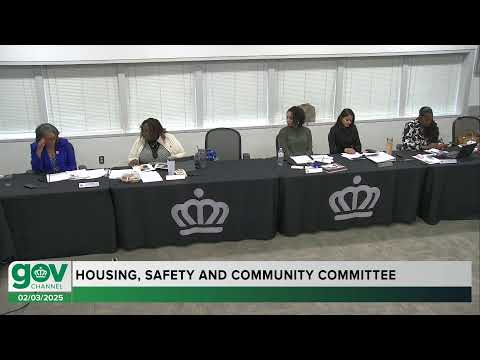
Planning staff briefed the Transportation Planning and Development Committee on Feb. 3 on a set of proposed Unified Development Ordinance (UDO) text amendments and the effect of state Senate Bill 382 on the spring amendment schedule.
Staff said SB 382, adopted late in 2024, restricts local governments from initiating down‑zonings that decrease permitted density or create nonconformities without property‑owner consent. As a result, planners removed or delayed text amendments that could be interpreted as creating down‑zoning impacts and are coordinating with the city attorney and with Mecklenburg County to avoid legal conflicts.
Ms. Holmes (planning staff) told the committee that items placed on hold include neighborhood character and residential infill overlays, refinements to where triplexes would be allowed in N1 and N2 districts, alignment rezoning approaches and other items that might create new nonconformities for property owners. Staff said general rezoning petitions that are initiated by property owners are not affected by SB 382.
Staff said the countywide coordination is important because a county decision can determine whether local adoption is possible across jurisdictional boundaries. Staff also noted proposed spring filings that are not affected by SB 382 and said they will present a refined set of amendments for the Feb. zoning meeting; additional spring filings on non‑conflicted items will follow. Staff recommended a more regular semiannual maintenance cycle to reduce the need for frequent text amendments.
Committee members asked for clearer materials showing which edits were removed, and staff agreed to distribute a summary prior to the next meeting. Staff said they will also monitor state legislative activity (a House bill had been filed to modify the SB 382 language) and adjust the schedule if the state law is changed.
No formal action was taken Feb. 3; staff will bring specific text amendments to zoning committee and council when they are ready for decision.