Get Full Government Meeting Transcripts, Videos, & Alerts Forever!
Get email alerts on the Subdivision topic
No spam. Unsubscribe anytime.
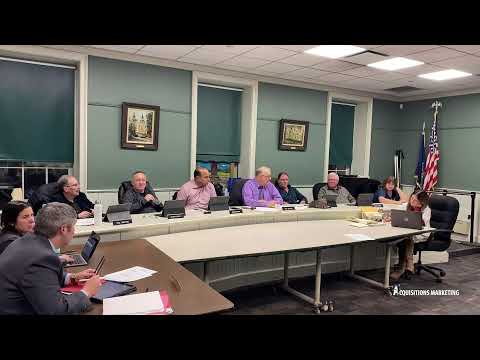
Planning board sets public hearing Feb. 6 for Girdle lot‑line adjustment; staff asked applicant to confirm private‑road status and easements
Summary
The board set a public hearing for Feb. 6, 2025 on a lot‑line adjustment affecting two parcels accessed via Girdle Lane. Staff flagged questions about rear‑lot access, private‑road definition, common‑driveway waiver, easements, and utility encroachments that the applicant must clarify before final action.
The Planning Board set a public hearing for February 6, 2025 on a proposed lot‑line adjustment affecting two parcels served by Girdle Lane and a private access easement. The application would reallocate acreage between an agricultural parcel and a residential parcel and relies on rear‑lot/access provisions and existing easements for legal access.
Town staff and board members identified several technical and legal questions the applicant must address before final approval or as part of the hearing record: confirmation that the access qualifies as an improved private or public road under the town code (the rear‑lot rules require minimum frontage or an access strip/right‑of‑way), the legal status of the existing paved surfaces and any private‑road or common‑driveway implications, and whether a waiver of the common‑driveway prohibition (section 83‑32) is required and justified under the board’s waiver standards. Staff also asked the applicant to confirm and provide surveys showing that the access easement and any private roads are within single ownership or have recorded maintenance agreements, and to document any existing utility easements or infrastructure (electric, buried lines) that would become encroachments after the adjustment.
The board set the public hearing date and classified the project as an unlisted action under SEQRA. The board advised the applicant to provide a revised map (including an optional flag‑lot “tail” parallel to the easement as one possible solution), a written justification/documentation that the access meets the private‑road definition or that a waiver is appropriate under the code, and any necessary survey clarifications before the hearing. The board deferred the hearing to allow the applicant time to supply the requested documentation.
Why it matters: The adjustment affects access rights, potential future subdivision options, and could establish a precedent for rear‑lot configurations and common driveways in the area. The board recommended resolving deeded access, private‑road status and utilities up front to avoid complications if parcels are later sold.