Get Full Government Meeting Transcripts, Videos, & Alerts Forever!
Get email alerts on the Zoning Privacy topic
No spam. Unsubscribe anytime.
Hidden Valley residents oppose rezoning request they say would skirt deed restrictions
Summary
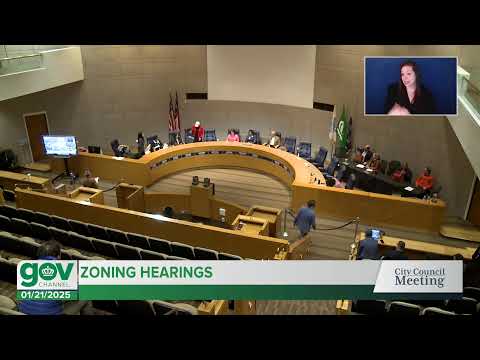
A rezoning request for 813 White Plains Road in Hidden Valley prompted residents and association leaders to urge the council to reject a one‑step zoning change they said would enable subdivision in violation of deed restrictions.
A rezoning request for 813 White Plains Road in the Hidden Valley neighborhood drew extensive public comment and debate, with residents urging the council to reject a conventional request that would change the parcel’s zoning from N1B to N1C. Staff recommended approval, describing the request as consistent with the 2040 policy map and noting the petitioner’s existing lot is large enough that the classification change ‘‘maintains the same single‑family intent’’ while offering slightly smaller minimum lot sizes.
Petitioner Fevon (Viven) Nagash, who described herself as the owner of 5930 Investment LLC, said she bought the property intending to subdivide and to build a modest single‑family home in the future and that she plans to be a responsible neighbor. Nagash told the council the lot is just over 15,000 square feet and that rezoning to N1C would allow the minimum of roughly a 6,000‑square‑foot lot necessary to create a second parcel.
Hidden Valley residents and association leaders pressed the council to deny the rezoning. Kanubia Umezar, secretary of the Hidden Valley Community Association, told the council the petition “is an attempt…to circumvent our deed restrictions and to basically create multifamily homes on one lot under the guise of splitting those lots.” Umezar tied the concern to Hidden Valley’s long history and the neighborhood’s efforts to stabilize and improve infrastructure and housing.
Other speakers emphasized impacts to legacy homeowners. Marjorie Parker, president of the Hidden Valley Community Association, said the proposal would “workaround against Hidden Valley deed restrictions, which states 1 single family home per lot.” Natalie Gardner said subdivision would “diminish our property market's value and reduce the land we've carefully preserved,” arguing the change would affect generational plans for her family’s property. Charlene Henderson, the neighborhood communications liaison, urged the council to reject the petition and cited ongoing code‑enforcement and overcrowding concerns that residents say are already straining services.
Petitioner Nagash offered a brief rebuttal, saying she intended to build one modest single‑family home on the site for her family and that she would follow deed restrictions and neighborhood expectations. She said she planned to work with neighbors on design and privacy issues and that she is an investor planning to live in the home eventually.
Council members wrestled with legal limits and the role of deed restrictions in zoning decisions. Staff and the city attorney reminded the council that private deed restrictions are not superseded by the UDO and are enforced through private legal means, not by the city. Planning staff said the policy map recommends the broader neighborhood 1 place type that encompasses both N1B and N1C and that, given the parcel’s frontage and size, an N1C classification is a relatively modest one‑step change.
Several council members said they sympathized with the neighborhood’s concerns and warned about precedents. Councilmember LaWanna Mayfield said approving the request could have “unintended consequences” for other neighborhoods and expressed concern that deed restrictions alone may not protect longtime homeowners. Others noted that every property owner has the right to seek rezoning, and that council decisions must be based on land‑use policy rather than private contract disputes.
The public hearing was closed after extended discussion; no final vote was recorded in the meeting transcript. Council members said they would continue working with the petitioner, district staff and the Hidden Valley community to clarify outstanding questions about the deed restrictions, parking and driveway impacts before any final action.
Ending: The petition’s future now depends on further review and neighborhood outreach; residents were advised to consult private legal counsel regarding deed restrictions, and council members said they would weigh land‑use policy and community concerns before taking a final vote.