Get Full Government Meeting Transcripts, Videos, & Alerts Forever!
Get email alerts on the Property Revaluation topic
No spam. Unsubscribe anytime.
Wayne County tax office warns revaluation could show 45–60 percent market-value increases; appeals and exemptions ahead
Summary
A Wayne County tax office representative told the Goldsboro council that a countywide revaluation of property values is nearly complete and preliminary figures show an average market-value change in the 45–60 percent range. Notices are expected in February and a formal appeals process and exemptions could reduce taxable values.
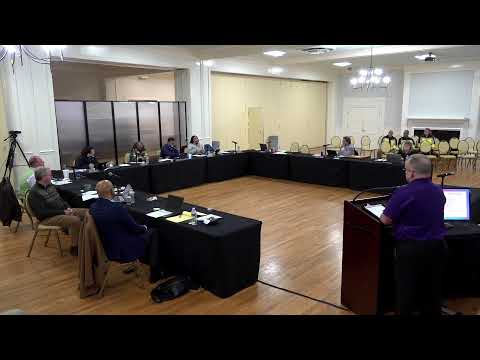
A Wayne County tax office representative told the Goldsboro City Council that preliminary results of the countywide revaluation show an average increase in market value “probably between 45 and 60 percent.” The tax office said it plans to send value-change notices to all property owners in February and will process appeals and exemptions before finalizing amounts that could affect tax bills later this year.
The tax office representative said the revaluation reflects market activity and is “strictly our job” to place values, while elected bodies set tax rates. “The value times the rate gives us that tax bill that people associate,” the representative said, adding that the office will try to educate residents about the distinction between value and tax rate.
Why it matters: a large increase in assessed market values can raise tax bills if taxing authorities do not lower the tax rate to offset the higher base. County staff stressed that notices, appeals and exemption reviews — including veterans, elderly and disability exemptions — will be part of the months-long process that precedes any rate decisions.
Details from the presentation - Range: The presenter said the current range being used internally is roughly 45 to 60 percent increase in market value, with variation by property; some parcels will be less and some more. “That’s the change we’re looking at right now,” the tax office representative said. - Timing: Value-change notices to property owners are expected to go out in February. An informal appeals process will follow; if property owners remain dissatisfied they can appear before the Board of Commissioners sitting as a Board of Equalization and, as a final step, seek state review. - Exemptions and deductions: Staff said they will apply veterans, elderly and disability exemptions during the review; for example, the presenter described a veterans exemption that “reduces taxable value by $45,000” and an elderly/disabled exemption that is income-limited (the presenter cited a household-income limit of $37,900 as currently in effect). - Revenue-neutral advertisement: County staff noted a state requirement to advertise a revenue-neutral rate (the tax rate that would generate the same total revenue on the new base as last year). The presenter emphasized that advertising the revenue-neutral rate is not the same as adopting it and said staff will provide additional detail in April–May when appeals and exemptions are complete.
What residents should expect next: county staff said notices in February, informal appeals and field visits through the spring, and a more definitive range for budgeting by April or May. The presenter urged residents to review notices, gather supporting documentation (recent appraisals, comparable sales, income/expense records for commercial property) and file timely appeals with the tax office if they believe values are incorrect.
Questions raised: Council members asked whether the county can provide neighborhood-level data and how much of the increase is residential versus commercial. The tax office representative said residential sales are driving the current increases but commercial review is ongoing and neighborhood-level detail is limited in the early sampling; staff will provide more local breakdowns as reviews continue.
Ending: County staff said they will coordinate with city finance and encouraged council members to share educational materials with constituents. Final property-tax bills will depend on taxing jurisdictions’ rate decisions after values are finalized.