Get Full Government Meeting Transcripts, Videos, & Alerts Forever!
Get email alerts on the Urban Forest Management topic
No spam. Unsubscribe anytime.
San Leandro adopts Tree Master Plan to expand, protect urban forest
Summary
Council unanimously adopted a Tree Master Plan that sets canopy goals, prioritizes plantings in high-heat and underserved neighborhoods, and moves the city from reactive to proactive tree management with a multiyear implementation schedule.
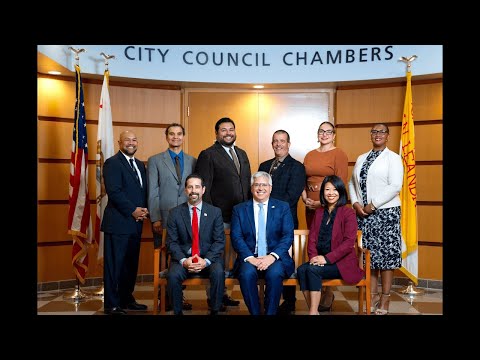
The San Leandro City Council unanimously adopted a Tree Master Plan on a motion by Council member Aguilar and a second from Council member Viveiros Walton, advancing a citywide strategy to manage, expand and protect street and park trees.
The plan follows a two-year inventory and public-engagement process that cataloged roughly 17,859 field points, including about 16,140 street and right-of-way trees and 1,700 park trees. Jennifer Aleta, the city’s Parks and Landscape Manager, said the plan was designed to shift the city from a reactive model to a proactive five-year maintenance program and long-term canopy goals.
"We will determine the removal and replacement needs of those trees on a case by case basis," Aleta said, addressing concerns about eucalyptus and other species. Planet Geo consultant Alex Hancock presented inventory and heat-mapping results showing that neighborhoods with low canopy correspond to higher urban heat severity and socioeconomic vulnerability.
The plan includes: a prioritized planting list of species matched to planting-strip widths and site conditions; an inventory-derived list of more than 4,000 potential planting sites in public rights of way and parks; targets and actions organized around planning, performance and people; and a proposed five-year program to clear backlog maintenance and move to cyclical care.
Council members asked for more detailed budget figures to support implementation. Aleta and Hancock said planting and maintenance costs vary widely depending on whether work is performed by city crews or contractors; per-tree contractor costs could range from about $150 to $350 depending on the work required. The city reported it received a $1,000,000 Cal Fire grant that has been spent on prior plantings and expects a preliminary notice of award for a $224,000 extreme-heat planning grant to support regional coordination.
Public commenters, including neighborhood residents and tree advocates, urged faster work in underserved corridors and on private-property protections; several speakers recommended stronger enforcement for unauthorized private tree removals and more partnerships to green school yards and industrial corridors. Mike Katzlakabe, a resident speaker, said the tree canopy differences were “absolutely amazing” for neighborhood livability.
The resolution to adopt and implement the Tree Master Plan passed unanimously. Council directed staff to begin implementation steps including public education, ordinance review, development of an implementation budget, and prioritized plantings in high-need areas.