Get Full Government Meeting Transcripts, Videos, & Alerts Forever!
Get email alerts on the Emergency Preparedness topic
No spam. Unsubscribe anytime.
Candidates assess Missoula's emergency readiness; call for resources, station upgrades and upstream prevention
Summary
Forum candidates reviewed Missoula's preparedness for wildfire, windstorm and flooding events and supported investments including the fire levy, a new station and upstream prevention such as avoiding development in flood-prone areas.
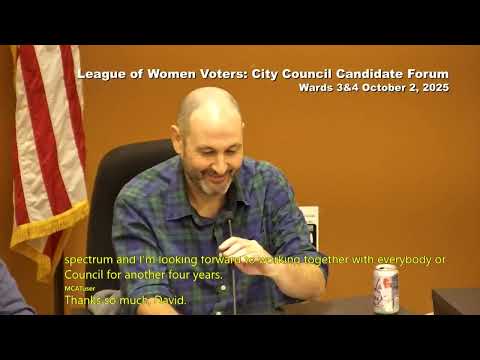
Missoula City Council candidates at the Oct. 29 forum discussed the city's readiness for major disasters such as wildfires or flooding and identified several priorities: sustained funding for fire and emergency services, better upstream land-use planning and support for nonemergency social services that reduce downstream emergency demand.
Mike Nugent credited the fire levy and the creation of another engine company with improving readiness and said a new central station is on track. "We're on track to build a new station in the middle of town, which will help response," he said.
Daniel Carlino and David Quattrocci emphasized the need to fund emergency-response alternatives (mobile support team, homeless outreach) and to avoid downstream crises by planning and restricting building where flooding is likely. Carlino said shutting down a shelter was a "pretty big red flag" for emergency preparedness and argued for infrastructure that supports people displaced by storms.
Why it matters: Candidates linked emergency response capability to both capital spending (stations, apparatus and staff) and preventative policy choices that reduce future emergency calls and displacement.
Clarifying details
- Fire levy: Candidates credited a voter-approved fire levy with enabling added firefighting capacity.
- New station and engine company: Candidates said those planned investments will improve response times, particularly in central areas.
Ending: Candidates framed both operational funding and upstream planning (land use, shelter and services) as necessary to improve Missoula's disaster resilience.