Get Full Government Meeting Transcripts, Videos, & Alerts Forever!
Get email alerts on the Budget topic
No spam. Unsubscribe anytime.
Scotia‑Glenville officials outline $2.85M budget gap and weigh closing an elementary school
Summary
District leaders told the board a $2.853 million carry‑forward gap for 2025–26 could be narrowed by proposed cuts or by using reserves; closing an elementary school could free up to roughly $2.8 million in staffing savings but would not immediately yield that full amount and would raise class sizes and boundary/transportation questions.
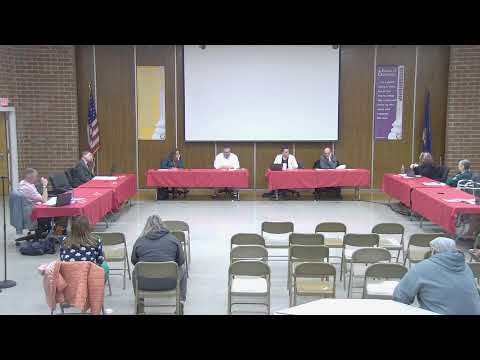
Superintendent Schwartz and district finance staff told the Scotia‑Glenville Central School District Board of Education at a budget work session that the district faces a carry‑forward budget gap of about $2,853,000 for the 2025–26 fiscal year and presented a menu of potential reductions, including the possibility of closing one elementary school.
The board heard that the district’s allowable revenue increase from the tax levy is roughly $1.3 million, and without additional reductions or use of reserves the gap remains significant. Business Manager Keith Bartow summarized the carry‑forward analysis: “By doing that, we show that we would have a budget gap of, $2,853,000.”
District leaders repeatedly cautioned that closing a building does not automatically produce the headline savings often cited. Superintendent Schwartz said closing a school only produces the projected savings if staffing is reduced districtwide rather than simply moving staff and students to other buildings. “If you simply move all of the children from that building into the other 3 schools, and you move the staff along with them, you are not gonna recognize any savings,” she said. The administration’s illustrative figure of roughly $2.8 million in potential savings from closing an elementary school reflects reductions in personnel, not the building alone.
The presentation noted several offsets and costs that reduce the net savings from a closure. The district estimated ongoing utilities and minimal maintenance for a closed building at about $50,000 annually. The administration also corrected earlier figures for outside services: the athletic consultant engagement was $2,000 per month for four months ($8,000), and the athletic trainer position was shown in the budget at $61,800.
Board members asked for detail about how a closure would affect class sizes, special education services and staff job status. The administration said class sizes would rise under a three‑school configuration but would remain “within your classroom guidelines” in the planning scenario; the administration also stressed uncertainty about projected incoming kindergarten classes and un‑identified future special education needs. The district referenced a cohort survival enrollment study prepared by Mr. Zlotner (2022–23) to underpin enrollment projections.
On staff impacts, the administration explained that layoffs are handled through reduction‑in‑force rules that depend on certification and districtwide seniority, not solely on which building an employee occupies. The district described the preferred eligibility (Pell) recall list used for laid‑off employees and noted recall rights extend for seven years.
The board debated program priorities the staff proposed cutting to shrink the gap. Two items drew repeated attention: the school resource officer (SRO) staffing line and the Learning Leaps intervention program. Several board members said they would prefer to restore one or both of those programs even if it meant proposing a budget that exceeds the statutory tax levy limit. The administration gave a scenario estimate showing that adding back the SRO and Learning Leaps would raise the projected levy rate above the version the administration prepared to meet the cap. Business Manager Bartow also explained the district’s reserve practices: the district typically uses a portion of fund balance (appropriations from reserves) to limit levy increases and has in the past appropriated roughly $4 million, but using additional reserves now would require replenishing them later.
No formal board vote was taken at the work session. The board asked staff to return with specific lists of proposed position and program reductions at the board’s chosen target: the board can direct staff to stop at the roughly $1.9 million in preliminary reductions already developed, to add the additional cuts discussed at the meeting to get under the 3.25% levy cap, or to present scenarios that would go modestly above the cap while restoring the SRO and Learning Leaps lines. The administration said it will provide more detailed staffing implications and precise projected tax‑rate scenarios at the next meeting.
The board also asked the administration to continue talks with the village and town about potential municipal contributions to SRO costs, and members requested that principals’ feedback from staff meetings be compiled and shared with the board before final decisions.
Next steps: staff will prepare detailed line‑by‑line reductions for the board’s selected target and return with updated tax‑rate scenarios and explicit lists of affected positions; no changes to staffing or building assignments were approved at the session.