Get Full Government Meeting Transcripts, Videos, & Alerts Forever!
Get email alerts on the Mental Health topic
No spam. Unsubscribe anytime.
Candidates call for expanded mental-health and addiction response; push to make mobile support team 24/7
Summary
Forum candidates urged expanded behavioral-health services and broader hours for Missoula's mobile support team, cited cuts in state funding and the need for coordinated local services including onsite clinics at navigation centers.
Missoula City Council candidates at the Oct. 29 candidate forum emphasized gaps in local mental-health and addiction services and urged expanding nonpolice response options, including converting the mobile support team into a round-the-clock service.
Daniel Carlino, a Ward 3 council member, said the mobile support team "is only operating about 10 hours of the day right now" and called to make it 24/7 so people in crisis could receive a mental-health professional instead of a law-enforcement response. "I'll be pushing to expand that," he said.
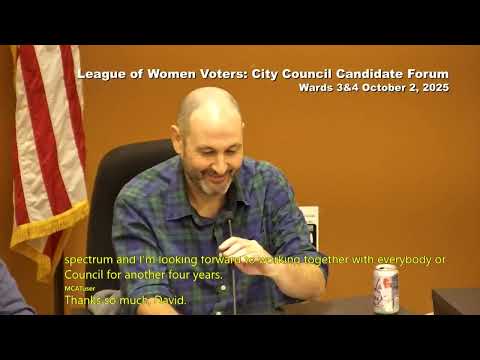
David Quattrocci, a community organizer who works at Partnership Health Center, described on-site clinic services at the Watershed Navigation Center and said such colocated clinical support works: "I've seen the impact that the Watershed Navigation Center has for people. We have a clinic right on-site, and I've seen it work wonders for people who are at different levels of crisis." He called for diverting behavioral-health-related 911 calls away from police when appropriate and said the mobile support team was designed to do more than is often asked of it.
Jennifer Savage, a councilor running in Ward 3, and Mike Nugent both said state-level cuts to behavioral-health services have reduced treatment access and argued the city should act as convener and advocate to restore services. Savage said the Montana Legislature's 2017 changes reduced resources for treatment and courts' ability to compel care, leaving gaps in local access.
Why it matters: Candidates framed mental-health and addiction services as public-safety and public-health priorities that require investment and coordination. Expanding nonpolice crisis response was presented as a way to improve outcomes and reduce unnecessary arrests or ER visits.
Clarifying details from the forum
- Mobile support team hours: described as operating roughly 10 hours per day and a candidate priority for expansion to 24/7 (Daniel Carlino).
- On-site clinic model: Quattrocci cited the Watershed Navigation Center as an example where clinic services on-site improved continuity of care.
- State funding: Candidates linked limited local capacity to reductions in state resources after 2017.
Ending: Candidates urged continued partnership with nonprofit service providers and noted the city's limited authority to replace statewide funding; candidates called for local advocacy alongside expanded local programs.