Denver excise and licenses details 2026 cuts, restructure and program changes
Loading...
Summary
The city’s Excise and Licenses department told Denver City Council it will reduce contracts and staff, shift residential rental enforcement to a complaint-driven model, end a local marijuana youth education campaign and implement a two-division restructure while keeping core licensing services operating.
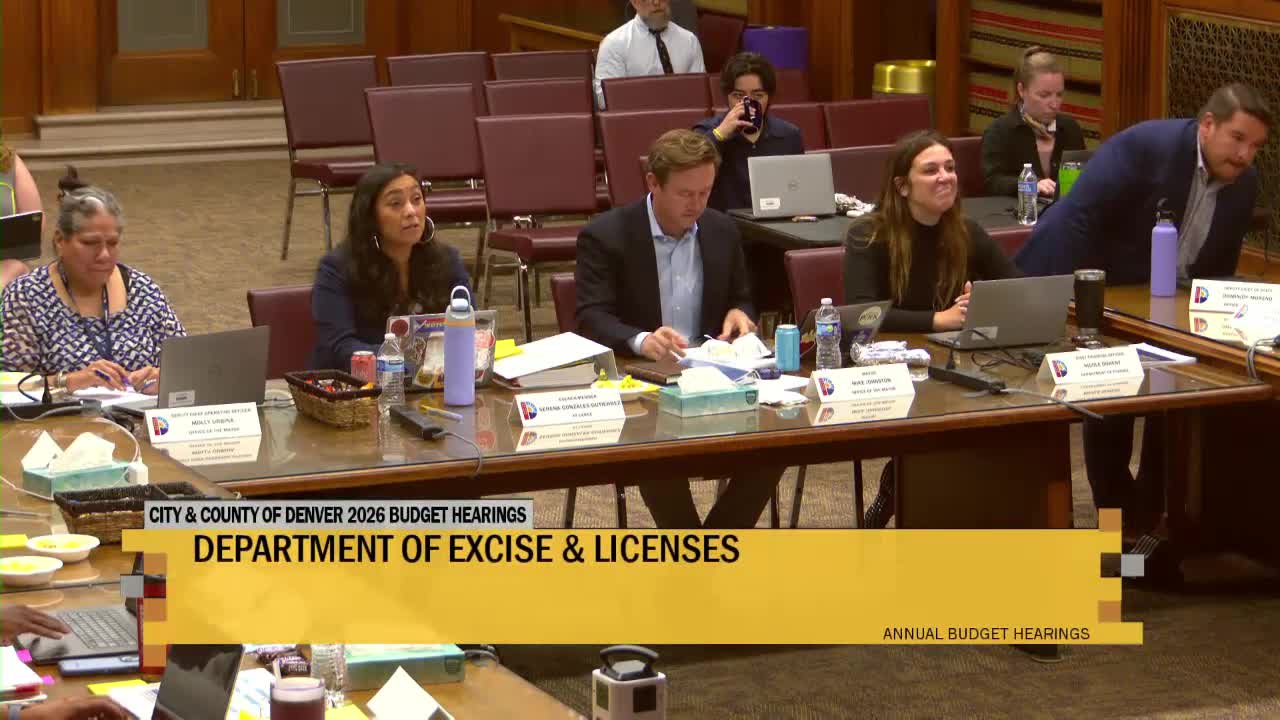
Molly Duplachey, executive director of the Department of Excise and Licenses, told Denver City Council during a budget hearing that the department will reduce contracts and staff in 2026 while preserving core licensing services and enforcement for short-term rentals.
Duplachey said the department will pursue a restructure that reduces top‑heavy management, shifts to two primary divisions (license processing and enforcement/consumer protection), and creates specialized teams for hearings and licensing logistics to maintain service levels.
The changes are intended to protect public health and safety while reducing costs. Duplachey said a name-change measure on the November ballot would make the agency the Department of Licensing and Consumer Protection but “this mission remains the same.” She told council the department does not expect costs from the name change during the current fiscal year.
Why it matters: The department licenses and enforces rules for businesses citywide. The proposed cuts affect how the city finds and pursues unlicensed residential properties, how neighborhood hearing costs are funded and how youth marijuana prevention work is delivered — all areas council members said touch small businesses, tenants and neighborhood groups.
Key reductions and program changes
- Staffing and budget: The proposal reduces overall appropriation and staffing. Duplachey said the 2026 recommendation includes a reduction of eight full‑time equivalents (five vacant, three filled). She described a roughly 9% decrease from 2024 actual spending to the recommended 2026 appropriation and warned personnel remains the largest share of the budget (about 87% rising to just over 90% under proposals).
- Contracts and funds: The department will cut $95,000 from the residential rental software contract and eliminate the city’s marijuana youth education campaign (winding down in late 2025). Duplachey said the business license hearing fund will be reduced by $50,000 (the remaining balance). She noted most liquor and marijuana hearings now occur only on request rather than automatically, reducing demand for that fund.
- Residential rental enforcement: The department will move residential rental enforcement to a more complaint‑based approach while keeping proactive enforcement for short‑term rentals. Duplachey said the city issued about 15,000 residential rental licenses in 2023 (a spike tied to the license’s first full year) and continues to receive about 250–300 new residential rental applications per month. Enforcement will still use assessor data, tenant reporting tools and a contract (currently Lineberger) that the city will reissue via RFP; Duplachey said the contract is a “force multiplier” especially for short‑term rentals.
- Hearings and notifications: The department said it has streamlined and modernized hearings; many hearings are now discretionary or set on request. Duplachey described plans to publish a searchable dashboard of applications eligible for hearing and to offer citywide opt‑in notifications for liquor, marijuana and cabaret applications, while acknowledging neighborhood‑level geofencing requires additional GIS work with Technology Services.
- Marijuana social equity program review: Duplachey said the marijuana social equity licensing program is scheduled to sunset in 2026; the department will review the policy and bring recommendations consistent with ordinance requirements. She told council the department does not expect the 2026 budget changes to hinder its ability to process licenses or perform the policy review.
Enforcement, process and neighborhood impacts
Councilmembers raised specific concerns about parking lot lighting enforcement, small-business impacts and access to hearings for neighborhood groups. Councilwoman Alvidrez said businesses in her district received messages suggesting possible criminal charges; Duplachey replied most citations are administrative and that the department first issues notices of violation without fines and will work with businesses to achieve compliance.
On parking lot lighting, Duplachey said the policy change targets defined higher-crime downtown boundaries and that alternative solutions — solar lighting or temporary poles — and phased compliance plans can be acceptable. She told council the department will work with operators who show a good‑faith plan to come into compliance.
Several council members said the reduction in the business license hearing fund is an equity concern because the fund paid for neighborhood legal representation in contested liquor hearings. Duplachey provided historical allocations: $53,000 in 2023, $97,000 spent in 2024 from a $150,000 appropriation, and $30,000 allocated so far in 2025.
Shepherd’s Hotel and lodging/residential questions
Councilmembers asked about Shepherd’s Hotel (described by staff as a location designated a nuisance and in legal proceedings). Duplachey and staff said the site was denied a lodging license and that enforcement is paused while legal proceedings continue. Staff explained the city treats “lodging” as stays shorter than 30 days and “residential” as 30 days or more; Shepherd’s was operating on weekly leases and therefore met the lodging definition. Staff said questions about eviction procedures for occupants in noncompliant properties require further review with City Attorney’s Office.
Performance metrics and operations
Duplachey presented performance measures showing a licensing volume spike in 2023 (driven by residential rental licensing), a typical case‑closure average of about 10–12 days, and continued work to reduce transaction times and maintain in‑person walk‑in hours. She said the department will decentralize communications work while preserving a dedicated media relations role.
What’s next
Angela Casillas, legislative director for the mayor, told council the final day to submit budget questions is Monday, September 29, and said the team had already received more than 400 questions. The department and council members said they expect additional office hours and follow‑up as the budget process continues.
Ending: Duplachey summarized the department’s aim as striking “the right balance to ensure that we have mitigated the impact of these reductions on our core services.”