Get Full Government Meeting Transcripts, Videos, & Alerts Forever!
Get email alerts on the Dhs Budget Cuts And Service Impacts topic
No spam. Unsubscribe anytime.
Denver Human Services details roughly $50 million in reductions, program cuts and staff reassignments
Summary
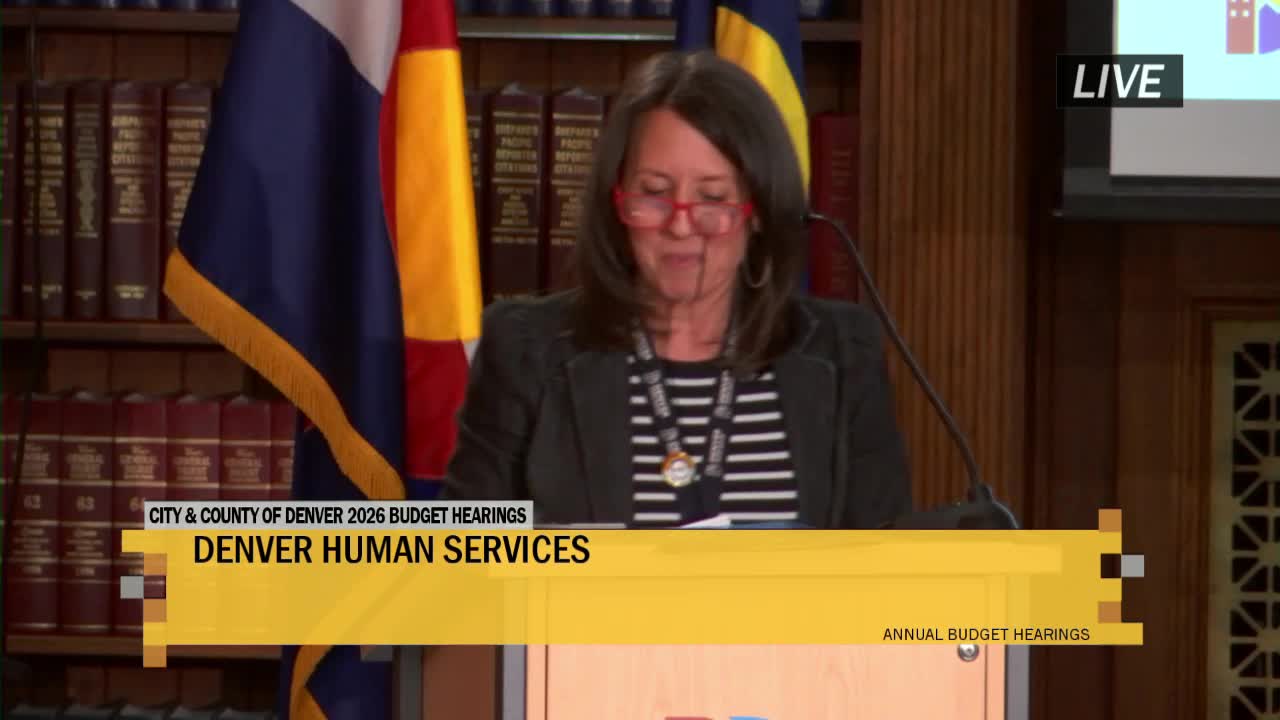
Denver Human Services Director Anne Marie Braga told City Council members during a budget hearing that the department will reduce its operating budget to about $215 million and make program and staffing changes intended to close a gap created primarily by state and federal policy changes.
Denver Human Services Director Anne Marie Braga told City Council members during a budget hearing that the department will reduce its operating budget to about $215 million and make program and staffing changes intended to close a gap created primarily by state and federal policy changes.
Braga said the department will protect its core assistance and protection services — food, medical, energy, child support, child welfare and adult protection — even as it implements reductions to administrative posts, contracts and some prevention programs. “We don’t receive any general fund dollars,” Director Anne Marie Braga said. “We do get the human services mill levy, but we are funded by state and federal dollars mainly.”
The cuts come after an internal nine‑month cost‑savings process that the department began in November, Braga said. The department identified about a 17–18 percent reduction across its prior budget through a combination of vacant positions, program consolidations, contract terminations and operational efficiencies. Chief Administrative Officer Clint Woodruff said the department’s plan reduces total staffing and spending: “We’re looking to reduce our budget down to a $215,000,000,” he said.
Braga and Woodruff said the department will attempt to preserve direct benefit delivery while trimming administrative and support roles. Among the largest program changes described in the presentation:
- Colorado Works/TANF case‑management contracts: DHS will end most TANF (Colorado Works) contracts that provided case management and supportive services. Woodruff said nine TANF contracts represented roughly $7 million in combined contract and supportive‑service expenditures and will be affected by the reductions. Those contracts were described as a major source of nonprofit funding that will shrink or end.
- Childcare assistance (CCAP) freeze: The department will maintain a freeze on CCAP enrollment. Woodruff said staff will transfer some CCAP employees into other roles while the freeze is in effect.
- Denver Parent Advocates Lending Support (DPALS) and other prevention programs: Braga said DPALS will be “sunsetted,” a deliberate term she used to indicate elimination with the possibility of future reinstatement if funding returns. Some child‑welfare prevention programs were reduced rather than eliminated; the department said it will keep a prevention services team in place but at a smaller scale.
- Organizational changes and personnel: The department eliminated one deputy executive director position following the retirement of a long‑time executive. Across the organization, DHS identified a total reduction of about 92.5 full‑time equivalent positions; Woodruff said 44 of those were already vacant. Anne Marie Braga described an earlier holding pattern that left 66 employees identified for reassignment; she said, at the time of the hearing, about 21 permanent employees and seven time‑limited employees remained in the reassignment process. Braga said employees not reassigned by Nov. 3 will be offered positions or may choose layoff with severance.
- Transfers to HOST and general fund: Woodruff said DHS will transfer $4.5 million to HOST to administer the property tax rebate program and move the rental‑assistance portion of general assistance to HOST (about $1.7 million). He also said remaining funds from the newcomers program (about $5 million as the program winds down) would be transferred to the general fund as the program finishes.
- Capital projects delayed: The department deferred a previously requested $15 million for phases of Castro Building revitalization and said it will instead phase work in at a lower level in coming years.
Officials emphasized process improvements that reduced application processing time for SNAP cases. Braga credited a change to a case‑based approach and process improvement work for bringing timeliness to about 97 percent, up from a dip during early implementation and a concurrent state technical problem. “Look where we are now. We’re at 97% with this process improvement change,” Braga said.
On federal and state policy risks, the department flagged HR 1 and Medicaid redetermination as major uncertainties. Woodruff and Braga gave department estimates for potential impacts if the state is assessed administrative or benefit matches tied to error rates. Braga summarized DHS estimates for the local effects of pending policy changes: an estimated 45,000–50,000 Denver residents could be affected in SNAP eligibility changes tied to HR 1 proposals; administrative cost cuts at the state level projected at roughly $25 million could translate to roughly $3.5 million in local costs; and Medicaid redetermination impacts could affect an estimated 56,000 Denver residents with local administrative cost exposure estimated in the millions. Braga said the department is coordinating with state officials and metro counties to reduce error rates and advocate for funding.
Councilors asked about operational and front‑line impacts. Chief Program Officer Mimi Sherman said child support caseloads had been relatively low compared with other counties and the department rebalanced work so those caseloads could absorb some responsibilities. On child welfare, Sherman described a deliberate review to close cases that no longer needed to be open and to move cases toward kinship placements where appropriate. Sherman said the department was reviewing the prevention caseload and prioritizing functions that best prevent out‑of‑home placements.
Multiple council members asked who DHS would partner with to mitigate reductions in nonprofit contracts and prevention services. Braga and Sherman named Rocky Mountain Human Services as a statutorily required partner and cited ongoing conversations with community groups including the Guadalupe Project, Tepeyac, the Office of Respondent Parents Council (ORPC) and other local nonprofits. Braga said the department is urging councilors to continue legislative advocacy for state and federal funding.
The presentation also described workforce and culture supports for employees affected by the changes: employee pulse surveys, wellness offerings, weekly group meetings for staff on reassignment lists and frequent town halls. “We wanted to make sure that when we’re talking about these things that we grounded people and gave people a chance to really go through their feelings a little bit,” Braga said.
Next steps and follow‑up items included continued one‑on‑one meetings with council members, further outreach to affected nonprofits, additional data monitoring through the department’s public dashboards and continued advocacy at the state and federal level. Braga asked council members to relay community contacts who might partner with the department as it retools service delivery.
The presentation did not include any formal council votes during the hearing. Councilors and DHS staff ended the session with an agreement to continue follow‑up on specific questions, including verification of online parent‑recruitment information for foster and kinship care and details about which nonprofit contracts were being phased out or reduced.