Get Full Government Meeting Transcripts, Videos, & Alerts Forever!
Get email alerts on the Environment Pollinators topic
No spam. Unsubscribe anytime.
Minnetonka proclaims July as Monarch and Pollinator Awareness Month, highlights city programs
Summary
The Minnetonka City Council read a proclamation declaring July 2025 Monarch and Pollinator Awareness Month, heard a staff briefing on city programs to support native plants and milkweed, and reviewed outreach events and policies intended to reduce pesticide use and expand pollinator habitat.
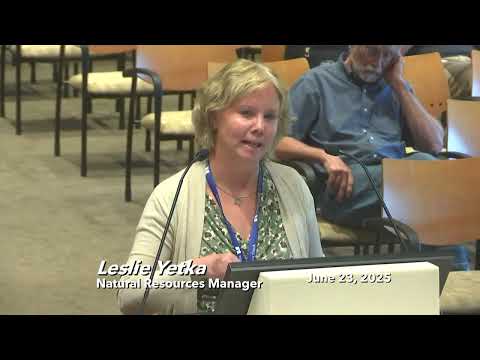
Leslie Yetkin, the city’s natural resources manager, told the Minnetonka City Council on June 23 that the city is marking July as Monarch and Pollinator Awareness Month and described ongoing programs to expand habitat and public engagement.
“Pollinators provide essential services to us and our communities. Food production is extremely reliant on pollination,” Yetkin said, explaining the department’s twin goals: “to provide more food” on the landscape and to create habitat such as milkweed for monarch butterflies.
The council then heard a proclamation, which the mayor read aloud: “Now, therefore, be it resolved that the Minnetonka City Council hereby proclaims the month of July as Monarch and Pollinator Awareness Month in the city of Minnetonka.” The proclamation text read during the meeting cited the decline of pollinators and noted federal attention to monarch conservation.
Why it matters: Yetkin told the council Minnetonka has participated in the national Mayor’s Monarch Pledge since 2017 and that the city has met every action step in the program. She said Minnetonka is listed as a “monarch champion” in the program’s national report and is among the first nine cities to reach that status, accomplishments the city ties to local planting, outreach and ordinance changes.
The staff presentation reviewed programs and policies that support pollinators: the Mayor’s Monarch Pledge actions; the Resilient Minnetonka program that offers education and a native-plant sale for private-property owners; habitat restoration in parks; an annual tree sale emphasizing pollinator-friendly species; a zoning landscaping requirement that includes a 25% native-plant component drawn from a city-approved list; an updated nuisance ordinance that allows native landscaping features; right-of-way mowing policies; and efforts to reduce chemical use.
Yetkin outlined events and outreach tied to the July awareness month, including library partnerships, a native edible-plant workshop, a pollinator party, Minnetonka farmers market outreach dates and a “community reads” discussion tied to a selected book. She also said staff distribute seed packets containing milkweed and other pollinator plants at the city open house.
Council members voiced support. Councilmember Romaley said she was “so proud” of the city’s lawn-ordinance changes and native-plant requirements. Councilmember Wilburn encouraged residents to plant milkweed in small areas and boulevards where appropriate. Several members described personal efforts to convert turf to native plantings.
The city did not adopt any new ordinance or ordinance text at the meeting; the council read and acknowledged the proclamation and received the staff briefing. Staff identified the city zoning ordinance, nuisance ordinance and the natural resources master plan as existing policy tools used to support pollinator habitat.
Looking ahead, Yetkin noted continuing outreach during July and encouraged residents to the city’s events and to pick up seed packets at the open house.