Get Full Government Meeting Transcripts, Videos, & Alerts Forever!
Get email alerts on the Education Legislation topic
No spam. Unsubscribe anytime.
SCUC ISD superintendent outlines wide-ranging state bills and local implementation plan
Summary
Superintendent Paige Maloney told the Schertz‑Cibolo‑Universal City ISD board that the 80th/89th legislative session produced many new requirements — from teacher pay funding to new library and parental‑rights rules — and described the district's plan to track and implement changes.
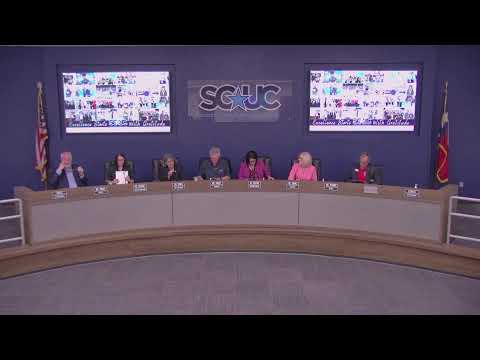
Schertz‑Cibolo‑Universal City Independent School District Superintendent Paige Maloney delivered what she called the district's final legislative briefing on the recently concluded session, telling the board the session produced dozens of laws and pending legal challenges that will change district operations.
"This the presentation that I'm gonna do this evening is really our last legislative update for the 80 ninth session because, as you know, we did get to sine die," Maloney said, summarizing the district's immediate priorities and the approach administrators will follow.
The nut of Maloney's message: some measures increase revenue for public education, others impose new compliance tasks. On finance, she said the state package included what she described as "the largest investment for public education at $8,500,000,000," and that the district expects most of that state money to be tied to required teacher raises and associated TRS costs.
Maloney walked trustees through bills she said will require new local policies or processes, including: - A school finance package that provides state funding for teacher raises and requires the district to cover related TRS costs. - A voucher study and phased start date that the superintendent said has no accountability details yet and will not start until the 2026–27 school year. - Changes to election and ballot language rules intended to require clearer voter information about tax increases. - Competitive purchasing threshold changes (the procurement threshold rising from $50,000 to $100,000, effective in September) and the district's plan to adjust local policy before a TASB update. - Senate Bill 12 (parental rights), which Maloney said will require new policies on facility usage reporting, grievance procedures, parental engagement, DEI restrictions and required board training; she noted a lawsuit had already been filed against that bill. - Senate Bill 13, covering library collections and book challenges; Maloney said the district will create a library advisory council with parent representation and a process to vet and present new campus library purchases to the board as required by the law. - House Bill 1481, limiting student cell phone and smartwatch use during the school day effective Sept. 1; Maloney said three SCUC secondary schools have moved in that direction and that district communications to parents would follow. - A suite of classroom‑discipline changes (the so‑called "Teacher Bill of Rights") that alters allowable placements, removes mandatory DAEP placement for vape possession in some cases, and expands disciplinary authorities. Maloney said TEA guidance and a new student code of conduct are expected and that the district is preparing a substantial training effort for principals and assistant principals. - Other measures discussed included bills about posting the Ten Commandments if donated (SB 10), required votes on daily prayer/time to read religious text (SB 11), and changes affecting UIL participation by homeschoolers (SB 401).
Maloney told the board the administration is building a legislative tracker and will post it and update trustees monthly so they can see which bills require board action, local policy changes, or additional communications. "We're gonna post this on this item on the agenda monthly," she said, adding that some items will be brought back as discussion items in July and August and may require action in August.
Board members pressed for clarification on several items during the presentation. Trustee Thomas asked whether vape possession still required DAEP if the device contained THC; Maloney confirmed THC cases still carry DAEP placement while non‑THC vape possession would no longer carry the same mandatory placement under the new law.
Why this matters: the district will pass through state raises for certified staff while also absorbing related retirement system costs, must adopt multiple new policies and processes on library challenges and parental rights, and faces a large local workload to implement changes correctly and on time. Maloney repeatedly urged trustees that many details still await formal guidance from the Texas Education Agency or TASB and that administrators are building an implementation calendar and communications plan.
Looking ahead, Maloney said the district expects to present a draft student code of conduct once TEA releases the official guidance, and she forecast that unpacking the new laws will be an ongoing task for the next two years. "I don't think there's really an end to decide; it's gonna be about for the next 2 years," she said.