Get Full Government Meeting Transcripts, Videos, & Alerts Forever!
Get email alerts on the Education Policy topic
No spam. Unsubscribe anytime.
Cosmetology board hears detailed pitch for asynchronous theory instruction; members raise integrity concerns
Summary
Industry consultants asked the board to allow asynchronous (self‑paced) delivery of cosmetology theory, citing experience from other states and online platforms; board members expressed concern about test integrity, student support and ensuring hands‑on competency.
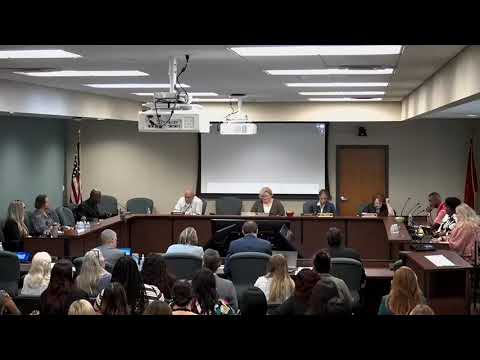
Representatives of private-sector training vendors and a consulting group presented to the Tennessee Cosmetology and Barber Examiners Board on Monday, asking the board to permit asynchronous (self‑paced) delivery for the theory portion of cosmetology programs, while keeping all hands‑on practical instruction on campus.
Nikki England, a vocational education consultant who leads the England Influence, told the board, “I am here today because I have a prospective client in Tennessee who is interested in offering asynchronous distance education delivery for their cosmetology program.” She argued asynchronous theory options can increase access for working adults and noted other states permit hybrid or asynchronous theory instruction.
Corina Santoro, general manager for Milady’s CEMA learning platform, described features she said mitigate integrity risks: activity logging, event tracking, automatic logout for inactivity, password-protected exams and controls that prevent students from skipping video content. “Our courses are developed with a variety of learning activities to ensure that students remain engaged,” Santoro said, and Milady’s platform records time spent on each activity and offers instant messaging and discussion tools.
Board members acknowledged the potential to expand access but raised multiple concerns about quality assurance and public safety. Several members questioned how the board could ensure that the student doing online work is the student who later performs hands‑on services, and whether technology could be gamed by AI or third parties. One member summarized the risk saying asynchronous delivery could allow an outside party or an AI to “automate their entire coursework without ever engaging in a class.”
Members repeatedly emphasized that practical, supervised training should remain on‑site. Board member questions focused on how testing integrity would be maintained, how instructors would verify student competency, and how students with learning differences would be supported.
How other states handle it Consultants cited experience in other states, including Texas, Florida and California, where hybrid or asynchronous theory instruction is in use. Milady’s presenters said the vendor has supported more than 3,000 schools and that the CEMA platform logs clicks, minutes and seconds on activities and disallows skipping of required video content.
Board response and next steps The board did not adopt a rule at the meeting. Staff and board members asked the presenters to provide more detail about how testing integrity would be assured (for example, whether exams would be proctored on campus or remotely with strict controls) and for sample curriculum mappings showing which lessons would move to asynchronous delivery and how on‑campus portions would be scheduled.
Members also asked that staff verify federal financial-aid and accreditor implications for programs that move portions of their curriculum online. The board indicated it would accept a formal application from a school seeking to pilot an asynchronous theory pathway if the application included the requested integrity safeguards, an explicit schedule showing how on‑campus practical hours would be preserved, and documentation of support services for students with disabilities.
Representative quotes - Nikki England (consultant): “If we want the beauty industry to remain strong, relative, and competitive we must evolve with the times, not by changing what we teach but by modernizing.” - Corina Santoro (Milady/CEMA): “The platform captures every minute that a student spends engaging with the material offering far more precise attendance tracking than regular traditional on campus time clocks.” - Board member (concern): “Cheating in online classes is easier than ever without face-to-face interaction…61 percent of students admitted to having someone else complete all or portions of their work.”
Why it matters Allowing asynchronous theory delivery could expand access to training for working adults and other nontraditional students, but board members said the training model must protect public safety and ensure licensure candidates demonstrate verified hands‑on competency. The board asked staff to collect additional documentation and left the door open for pilots or rulemaking after more evidence on safeguards is provided.