Get Full Government Meeting Transcripts, Videos, & Alerts Forever!
Get email alerts on the Transportation Bike Lanes topic
No spam. Unsubscribe anytime.
Council approves protected bike lane and traffic changes on 40th Street after heated public comment
Summary
Philadelphia City Council on May 29 approved two ordinances to change traffic flow and add a protected bicycle lane on 40th Street between Chestnut Street and Kingsessing, prompting sharply divided public testimony over safety, parking loss and impacts on nearby schools and low‑income blocks.
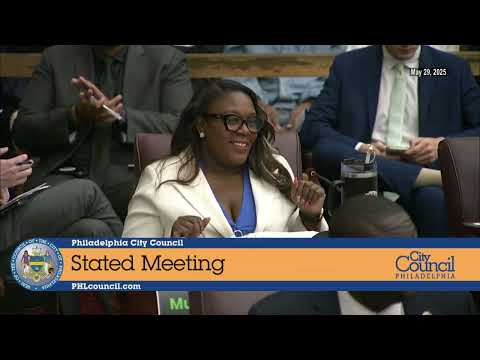
Philadelphia City Council on May 29 passed two ordinances that create a protected bicycle lane and change traffic movement on 40th Street between Chestnut Street and Kingsessing, council members said, after more than an hour of public testimony that sharply divided neighbors, cycling advocates and other residents.
The measures — an ordinance to regulate traffic direction on 40th Street and an ordinance authorizing the bicycle lane and related travel‑lane removal — passed on final reading with unanimous roll‑call votes recorded as 16–0, the clerk announced.
Councilmember Jamie Gauthier introduced the package and told colleagues she advanced the bills to address a longstanding safety problem on a corridor that serves three elementary schools and draws heavy pedestrian activity. “When I am legislating safe streets, I am legislating from Molly and all of our children, and I'll do it again and again and again,” Gauthier said, reading a note from a young constituent.
Supporters and opponents framed the measure as a question of safety and equity. Jeremy Blatstein, who described himself as a resident and said he supports protected lanes, told council “People biking to work, to school, to the store shouldn't have to gamble with their lives. We say we care about Vision Zero. Prove it. Build the bike lanes.”
Opponents said the plan would displace traffic and parking onto already congested, lower‑income blocks and raise hazards for pedestrians and drivers. Teresa Feo, who said she lives near the route, said the design “is not about safety. It's about convenience for a few affluent residents who want to feel safe biking to the Schuylkill River Trail,” and argued the lane would route traffic and pollution into the Kingsessing neighborhood and expose seniors and children at school zones to more danger.
Lynn Hogben, another nearby resident who urged rejecting or returning the bills to committee, listed technical concerns: a blind intersection at 40th and Warrington, an understudied congested intersection at Springfield, potential loss of residential parking and the risk that two residential side streets could be cut off by a one‑lane conversion.
City staff and multiple residents said the corridor has seen collisions and near misses and that a physically separated bike lane would reduce conflicts among cyclists, pedestrians and motorists; others said enforcement of speed limits and electric‑bike rules should come first. Sam Samor, a neighbor who said he rides and walks the street, told council, “Currently, I often don't feel safe doing any of those things.”
Councilmembers acknowledged the tensions that come with remaking a multi‑neighborhood street. Councilmember Jamie Gauthier said her office and the Streets Department conducted outreach and that the decisions balance competing needs for safer bike access, school safety and traffic flow. The council adopted both ordinances on final passage.
Votes and next steps: The clerk recorded final passage votes of 16–0 on both bills. The measures will move to implementation by the Streets Department; the ordinances authorize the traffic and lane changes and, where applicable, direct the department to install the infrastructure and update signage. Specific timing and technical plans, including mitigation for parking impacts, were discussed in testimony but are not specified in the ordinances passed today.
Why this matters: The change will alter traffic patterns and curbside use on a portion of a busy West Philadelphia corridor that connects to the Schuylkill River Trail. Advocates said a protected lane is needed to prevent injuries; opponents said the design shifts risk to nearby lower‑income blocks and elderly residents.
Council members and city staff will continue outreach and engineering work as the Streets Department develops plans to implement the ordinance. If engineering or legal adjustments are required, further administrative approvals and public notices will follow.