Get Full Government Meeting Transcripts, Videos, & Alerts Forever!
Get email alerts on the Accessible Parking topic
No spam. Unsubscribe anytime.
Ordinance committee approves legal form to centralize disability‑parking permits; clerk to maintain registry and periodic renewals
Summary
The committee endorsed ordinance language to make the City Clerk responsible for maintaining a public registry of curbside disability-parking permits, approved a renewal schedule aligned with resident-parking renewals, and tasked the Disabilities Commission to help develop outreach and translation.
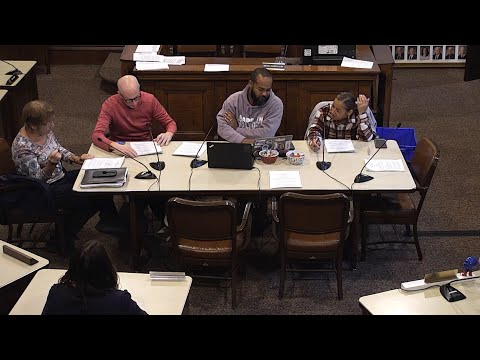
The Ordinance Committee on May 21 voted to approve a legal form that would centralize the management of disability‑parking signs and permits under the City Clerk’s office, with renewal notices to permit holders and periodic updates to a public registry.
Councilors said the change responded to long-standing problems maintaining an accurate record of curbside disability permits. The item, filed by Councilor Bartley and Councilor Ocasio, proposed that the City Clerk maintain addresses with disability signs, notify applicants periodically to confirm continued need, and remove signs automatically if no renewal is received.
Councilors and Disability Commission members discussed appropriate renewal frequency. Committee members favored consistency with residential-parking renewals; the committee’s draft legal language uses a biannual (every-two-year) notice but the Disabilities Commission suggested a three‑to‑five‑year range might be reasonable. The committee approved the form with the understanding staff and the Disabilities Commission will finalize renewal cadence and communications. Councilor Bartley said the clerk already compiles a list of addresses and staff recommended starting record‑keeping from January 2025 forward to limit the workload.
Lynn (chair of the Disabilities Commission) told the committee the commission supported a centralized spreadsheet, language translation for applicants, and engagement by commission volunteers for outreach. "We are a part of the process. We absolutely agree with you all," Lynn said, noting commission members’ willingness to help applicants fill out forms and to consider density and mapping issues when update cycles are set.
On a motion to approve the legal form and recommend it to full council, the committee voted in favor. The committee asked the clerk to work with the Disabilities Commission on the registry, notification language, and translation assistance.
Ending: The committee approved the legal form and recommended it to the City Council; the clerk’s office will collaborate with the Disabilities Commission to implement a registry and renewal process, with further refinement to be reported back to the committee.