Get Full Government Meeting Transcripts, Videos, & Alerts Forever!
Get email alerts on the Signs And Signage topic
No spam. Unsubscribe anytime.
Committee sends ambiguous window‑sign ordinance language to city solicitor after debate over branding, privacy and enforcement
Summary
The Ordinance Committee heard from business and health-center representatives and referred the city solicitor to draft ordinance language clarifying how the city treats large window signs, branding, and exemptions for public‑service providers; enforcement will be paused while the committee considers changes.
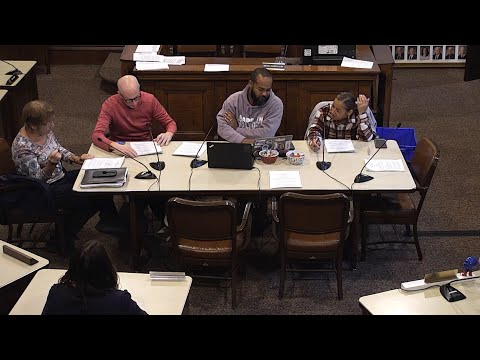
Holyoke’s Ordinance Committee on May 21 agreed to send proposed language to the city solicitor to clarify the city’s sign ordinance after a lengthy discussion about businesses that cover first-floor windows with marketing or informational graphics.
Devin Pasic, the zoning official, told the committee that the current sign ordinance limits window signs to 20% of first-floor windows but that the rule lacks clarity about how to measure or treat contiguous storefront windows. "The ordinance is not very descriptive, when it comes to exceeding 20% of the size of the First Floor windows," Pasic told the committee, noting many businesses exceed the 20% threshold and none appear to have permits.
Holyoke Health Center and VCARE were discussed repeatedly. Officials and commissioners said the health center uses window graphics for branding and patient privacy. Councilor McGrath Smith asked whether the committee would prefer tinted windows or other privacy measures; community members and Councilors responded that current graphics are tasteful and provide privacy for patrons.
Councilor Bacon noted the ordinance already states window treatments should be decorative and not marketing: "It specifies that it can't be a logo and it can't be a branding. It could be decorative. It could be art, but not marketing." Committee members asked legal staff to propose language that would allow certain nonprofit or public‑service uses (for example, health centers or elder‑service providers) to use more extensive window treatments while preserving protections against purely commercial marketing.
Zoning enforcement practices were also discussed. Zoning enforcement said it had issued notices but had paused further violations while the council discusses the ordinance. Pasic said enforcement will remain on hold while the committee considers changes. He also proposed an enforcement plan if the committee chose to keep the 20% rule: notifying businesses, providing informational pamphlets, and setting a compliance deadline.
The committee voted to refer draft language options to the law department for review and to plan a public hearing if an ordinance change requires it. The chair said any change tied to zoning would require public hearings at planning board and council levels.
Ending: The committee asked the city solicitor to draft alternative ordinance language that clarifies measurement of window sign area, defines permitted branding or public‑service exemptions, and proposes an enforcement process; enforcement remains paused pending that review.