Get Full Government Meeting Transcripts, Videos, & Alerts Forever!
Get email alerts on the Mental Health Arts topic
No spam. Unsubscribe anytime.
Committee hears proposal for statewide arts-and-health commission, proponents cite evidence on music, theater and arts improving mental health
Summary
House Resolution 117 — a proposal to explore an arts‑and‑health commission and broaden use of arts‑based interventions in health settings — received testimony from the Carter Center, Atlanta Symphony Orchestra, Alliance Theater and other arts organizations. Witnesses cited studies and program examples and urged the legislature to 'kick the tires'
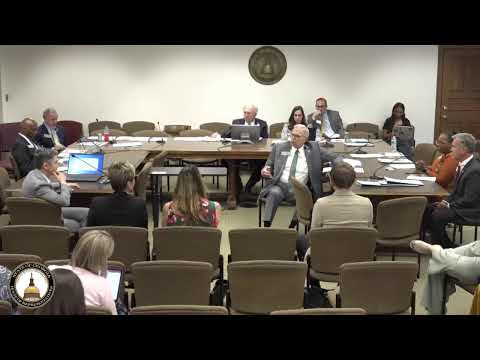
The House Health Committee heard testimony on House Resolution 117, a proposal to examine and promote the use of arts‑based interventions to improve population mental health and well‑being.
Representative Tommy Scofield (testimony recorded as Representative Scofield) introduced the item as an effort to explore how arts interventions can be used as a public‑health tool. Eve Bird, director of the mental health program at the Carter Center, told the committee that arts engagement can reduce symptoms of depression, anxiety and loneliness and cited international research and modeling suggesting investments in arts can improve quality of life and yield economic benefits. “Exposure to even low doses of arts has significantly improved the feelings of depression, anxiety, loneliness,” Bird said.
Erin Jones, senior director of sales and audience development at the Atlanta Symphony Orchestra and long‑time chorus member, described studies the orchestra has helped convene and said music and music therapy can lower cortisol, reduce anxiety and improve outcomes for people with major depressive disorder. Jones summarized findings she attributed to multiple studies: “Just listening to relaxing music lowers your cortisol levels by nearly 60%,” and “for the treatment of major depressive disorders, music therapy shows a 25 percent improvement in symptoms,” which she offered as evidence in support of the resolution.
Christopher Moses of the Alliance Theatre discussed research showing that arts field trips and in‑person arts experiences can increase concentration, tolerance for multiple viewpoints and a sense of hope among young people. Moses described a seven‑year experimental study the Alliance conducted with the University of Arkansas showing improved academic and social outcomes for students who attended cultural field trips.
Panelists and representatives from arts institutions explained ongoing projects: the Atlanta Symphony Orchestra’s partnership with the Goizueta Alzheimer’s Research Center for concerts aimed at people with dementia and caregivers; examples of hospitals using creative arts for trauma‑informed work with children; and Massachusetts and Rhode Island models of state arts‑and‑health initiatives cited as precedents for coordinated action.
Committee members asked about why a state commission or resolution was needed when arts and music are already widely available on digital platforms and through churches and community groups. Witnesses emphasized the difference between passive, individual consumption and organized, live or community arts interventions that produce measurable health benefits; Christopher Moses highlighted the community and shared‑experience aspects of live performances. Panelists urged the committee to support the resolution as a first step to evaluate options and scale evidence‑based arts‑for‑health programs in Georgia.
The resolution was in committee as a hearing item; the transcript indicates HR 117 was not printed and no committee vote occurred. Supporters asked the committee to consider a commission or further study to align arts organizations, health systems and policymakers around scalable interventions.