Get Full Government Meeting Transcripts, Videos, & Alerts Forever!
Get email alerts on the Prosthetics Orthotics topic
No spam. Unsubscribe anytime.
Hearing held on bill to broaden prosthetic and orthotic coverage; patients urge access while insurers flag medical‑necessity language
Summary
The House Health Committee heard testimony on House Bill 87 to expand what counts as medical necessity for prosthetics and orthotics, allowing additional devices for activities such as showering, running and adaptive sports.
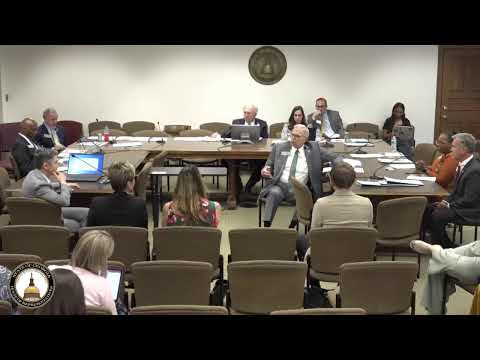
The House Health Committee held a hearing on House Bill 87 on Wednesday. The bill would change how Georgia law and commercial insurers define medical necessity for orthotics and prosthetics so that coverage can consider individualized activities and goals — including showering, bathing, exercise and adaptive sports — and allow additional devices beyond the single device often authorized under current practice.
Representative David Clark, the sponsor, said HB 87 “aims to change the definition of medical necessity deemed by law for orthotics and prosthetics,” and described provisions intended to allow clinicians and licensed certified prosthetists/orthotists (CPOs) to evaluate an individual’s specific functional goals and prescribe devices to meet those goals.
Multiple people with limb loss, family members and clinicians gave personal testimony describing daily needs that current coverage does not consistently meet. Susie Barrett spoke about her son Elliot, born without a right leg, who requires frequent device replacements as he grows; she said many rural families lack nearby services. Brad O’Malley described paying out of pocket for heavy-duty braces after infection and paralysis left him dependent on expensive devices. O’Malley told members the devices he purchased cost approximately $3,000 each.
Merrill Wallace, who testified and said he later became a representative, described losing a leg after surgeries and then facing insurance limits that blocked access to a second device for running — a device he said he needed to pursue athletic goals and regain quality of life. Brandon Todd, a patient advocate, said he went through “loopholes” and nonprofit donations to obtain a running blade after losing a leg in a motorcycle crash.
Providers and rehabilitation organizations supported the bill. Abigail Thompson Garcia, director of government relations and advocacy for the Shepherd Center, a 52‑bed rehabilitative hospital in Atlanta, said patients frequently need more than one device to return to daily life and hobbies and asked the committee for favorable consideration.
Rachel Oyer, who identified herself as a private business owner, Alliance Prosthetics Orthotics, described operational questions insurers might raise: “One of the things that I would say, as opposition stands, is wondering how are we gonna cover the cost,” she said, adding she hoped for collaborative conversations and compromise.
The Georgia Association of Health Plans, represented by Jesse Wellington, flagged a specific drafting concern. Wellington said insurers object to language in the bill that would make the treating physician the sole determiner of medical necessity, noting that “there is no other part of a medical benefit that's sort of treated that way” and warning that the change could remove insurers’ ability to perform utilization review. He also pointed to a potential fiscal issue under the Affordable Care Act: expanding benefit classes beyond what existed in 2013 could have state budgetary consequences.
Committee members asked about frequency limits. The transcript records discussion referencing a current standard that limits replacements to one prosthesis every three years for some coverage categories; proponents said HB 87 would allow additional devices when medically appropriate (for example, separate devices for daily use and for running or showering). The hearing record did not produce a final drafting resolution; Wellington and the sponsor said they expected to continue negotiations and that the sponsor’s office would work on a fiscal note.
The committee conducted the hearing only; no vote was taken. Committee staff and the sponsor noted a fiscal note remains pending. Supporters urged the committee to advance a bill they said would improve mobility and mental health for people with limb loss or limb difference; insurers asked for language changes to preserve utilization review and avoid unintended fiscal exposure to the state.