Get Full Government Meeting Transcripts, Videos, & Alerts Forever!
Get email alerts on the Utilities Rates topic
No spam. Unsubscribe anytime.
Council adopts new system development fees; staff recommends multi‑year water and sewer rate increases
Summary
Monroe City Council adopted an ordinance updating water and sewer system development fees to take effect Jan. 1, 2025, and received a consultant presentation recommending multi‑year rate increases tied to a wastewater treatment plant expansion and capital plan.
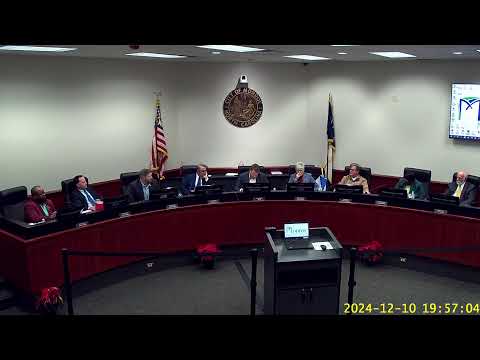
Monroe City Council on Dec. 10 adopted an ordinance to update the city’s water and sewer system development fee schedule, effective Jan. 1, 2025, following a presentation from retained consultants and a public hearing.
Scott Clark introduced a financial study performed by Raftelis Consultants and said the system development fee schedules were posted on the city website on Oct. 23, 2024, as required by North Carolina law. "North Carolina law requires that the system development fee is posted at least 45 days prior to the public hearing. It has been posted on our website since October, 23rd, 2024," Clark said.
Melissa LeBan of Raftelis presented a financial forecast and recommended rate structure. She said projected capital costs for the wastewater treatment plant had been revised downward from earlier estimates and that, for the capital plan now estimated at about $132.8 million, the consultant recommends a minimum set of rate increases to support the financing. "Right now, what we're looking at the further first 3 years are 5.5 percent each year," LeBan said, noting the city would target a 1.5 debt service coverage ratio and aim to maintain about 365 days cash on hand.
LeBan also described a proposed residential three‑tier volumetric rate and that irrigation customers would pay the highest tier. She summarized sample bills and said about 67.1% of residential customers use 5,000 gallons or less, meaning most customers would see increases smaller than the maximum tiers.
Council members discussed how system development fees and rate increases relate to financing the planned wastewater treatment plant and clarified that revenue bonds, not property taxes, would fund the debt. City staff said system development fees must be used for capital projects in the utility basins where they are collected and commonly finance water‑ or sewer‑specific infrastructure.
Councilmember Anthony moved to adopt an ordinance submitting the fee schedule for water and sewer system development fee increases effective Jan. 1, 2025; the motion was seconded and passed. Staff recommended implementing the proposed rate structure beginning July 1, 2025, as part of the fiscal year budget process. The council was also asked to consider including written language that would allow the city to impose additional fees or adjustments for meter sizes or industrial customers whose flows or discharges exceed anticipated volumes; staff recommended reviewing comparable municipal triggers before setting a numerical threshold.