Get Full Government Meeting Transcripts, Videos, & Alerts Forever!
Get email alerts on the Stormwater Flood Mitigation topic
No spam. Unsubscribe anytime.
Fort Smith board hears plan to pair park master plan with stormwater detention on former Acme Brick site
Summary
City staff and hired consultants told the Board of Directors that coordinating a park master plan with stormwater detention work will speed flood mitigation on the 111-acre former Acme Brick property and produce long-term recreational benefits; consultants and staff outlined timelines, costs and funding sources and the board agreed to consider the
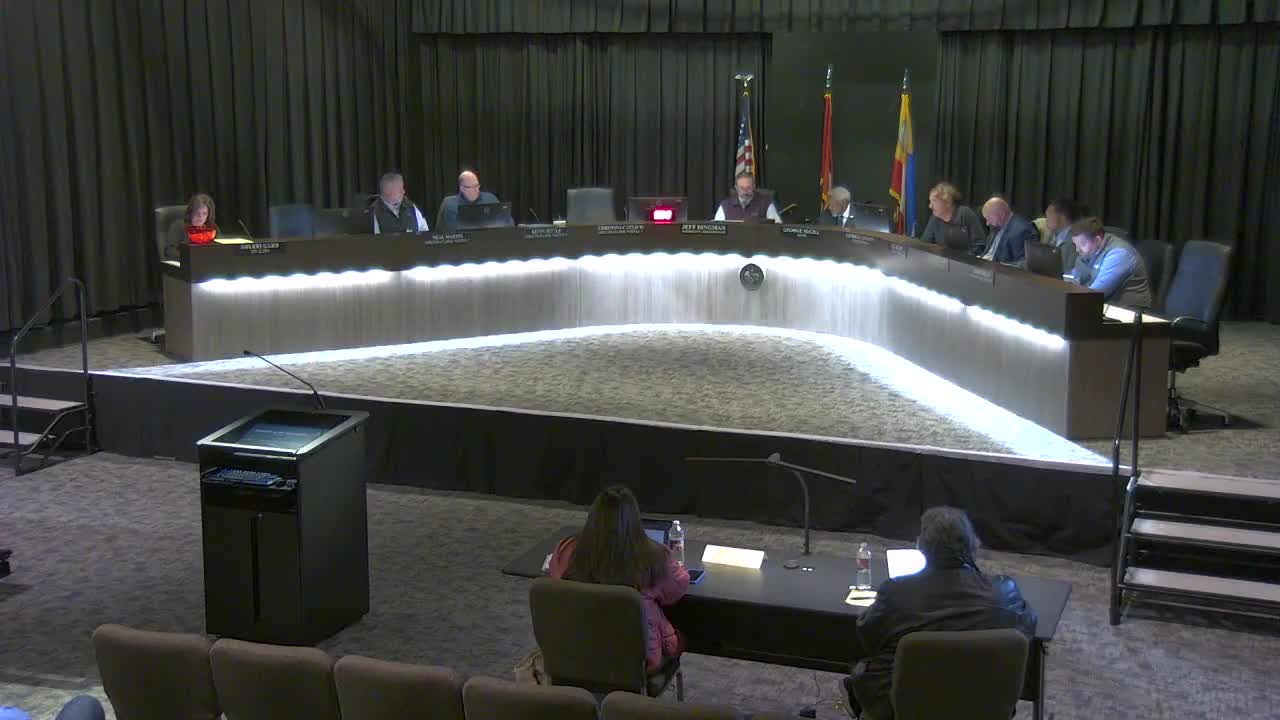
City officials and outside consultants told the Fort Smith Board of Directors on Jan. 14 that stormwater detention design and a park master plan for the 111-acre former Acme Brick Company property should proceed in parallel so flood-control basins can be built without foreclosing future park amenities.
Sarah Duester, Fort Smith director of parks and recreation, told the board the city approved purchase of the acreage in October 2023 and the leading priority is stormwater and flood mitigation while many citizens also want park amenities. “The purpose of the study session is to provide the board with additional details of why those two studies and plans really need to work in conjunction with one another,” Duester said.
Consultants from RDG Planning and Design and Half Associates outlined how the park master plan and stormwater design can coordinate. Scott Crawford of RDG said the firms plan a 14-month master-planning process that will include four open houses and online engagement tools and a market/operations analysis to estimate long‑term maintenance needs and revenue opportunities. Travis Brezendine of Half Associates said preliminary work shows two detention basins will likely be needed — roughly an 11-acre footprint on the east side of the road and about 8 acres on the west — and that those basins can be shaped to be park amenities rather than stand-alone pits.
Staff and consultants gave cost and schedule estimates: RDG’s park master plan contract is $698,000; staff said 61% of that ($427,455) was programmed in the parks budget for 2025 and the remaining ~$270,545 was included in a street/drainage sales-tax CIP allocation. Engineering to design the detention basins was described as $466,000 on the preliminary agenda for a coming board meeting. Construction for two detention basins was estimated at about $5.2 million; consultants said basin construction could be bid in early 2026 and would take roughly a year to build once funding and contracts are in place.
Consultants and staff described the flood-reduction benefits based on a preliminary detention analysis: the addition of the Acme ponds alone would remove 39 houses from the 25‑year floodplain and 11 houses from the 100‑year floodplain, and increase the downstream system’s ability to convey storms (from roughly a 10‑year to a 25‑year design event).
Board members asked detailed questions about sequencing, costs and community expectations. Director LaVaughn Settle, who had advocated a mountain‑bike facility when the site was purchased, asked whether the quarry area would be preserved for mountain biking; engineers said one side of the property (the quarry) could be reserved for that use while the basins occupy other portions but stressed the need to coordinate locations during master planning. Several directors, including Kevin Kemp and Greg Rego, said flood mitigation for neighborhoods that experience frequent backups should be prioritized and emphasized using the drainage sales tax and programmed CIP dollars to cover engineering and construction.
Staff and consultants described funding options used on comparable projects: mixes of public CIP funding, tax increment financing and private investment. RDG cited a completed wetland park project that cost about $7.5 million as a point of reference for scale on smaller wetland‑park projects. Staff said the two consultant agreements — RDG for master planning and Half Associates for the stormwater design — are on track to be presented to the board for consideration at an upcoming meeting; several directors said they would be willing to vote on those agreements next week.
A number of directors urged keeping the master‑planning step because it identifies phasing, operations costs, and potential revenue components so early investments do not preclude later priorities. Others said the board could accelerate detention design and construction as the initial priority, then add park amenities in phases as funding becomes available.
No formal contract was approved at the study session. Administration said it will return with the RDG and engineering agreements for formal action at the board’s next meeting.
The board directed staff to present the consultant agreements for formal consideration at the next available meeting, and staff confirmed the engineering agreement for the detention basins was on the preliminary agenda for the coming week.