Sen. Ingram seeks to extend Esther’s Law to assisted living, caps camera costs
Loading...
Summary
Sen. Ingram testified on Senate Bill 154 to expand Esther’s Law to residential care facilities, proposing a $50 cap on camera installation and a $2 monthly facility Wi‑Fi fee limit while preserving resident choice and roommate consent rules.
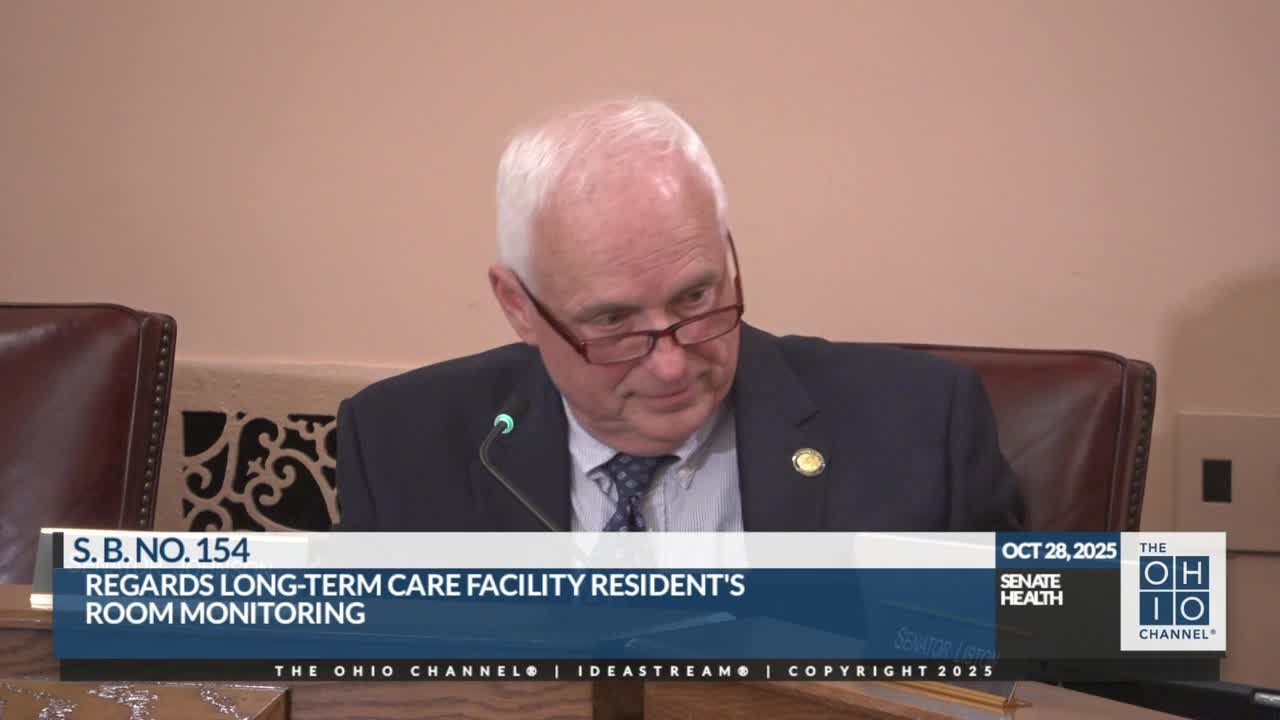
Sen. Ingram provided sponsor testimony to the Senate Health Committee on Senate Bill 154, a proposal to expand Esther’s Law — the 2022 law allowing nursing home residents and their families to install in-room cameras — to include residential care and assisted-living facilities.
“Families want the same opportunity to ensure their loved ones are safe and cared for no matter the type of facility they live in,” Sen. Ingram said, describing the bill as a response to constituent requests and recommendations from the Ohio Department of Aging and long-term care ombudsmen.
Key provisions described in testimony include expanding camera rights to residential care facilities, capping installation costs at $50 per device, limiting facility Wi‑Fi fees to no more than $2 per month, allowing residents to choose camera type including two-way audio or video where roommate consent is obtained, and authorizing residents to designate a sponsor who may access recorded footage. The sponsor testimony stated that the proposal would not replace caregivers but would “strengthen trust and communication between residents, families and staff.”
Sen. Ingram told the committee that about 60,000 Ohioans live in residential care facilities and argued those residents deserve the same transparency protections as nursing-home residents. The sponsor said the proposal was brought to her office by constituents, the Ohio Department of Aging and representatives of the long-term care ombudsman community.
The committee did not vote on SB 154 at this hearing; the presentation was accepted as sponsor testimony and the meeting proceeded to other items.