Get Full Government Meeting Transcripts, Videos, & Alerts Forever!
Get email alerts on the School Safety topic
No spam. Unsubscribe anytime.
Duval schools report full completion of state safety assessments; district urges more cameras, signage and electronic entry
Summary
Duval County officials told the school board the district completed state-mandated school risk assessments for 188 schools and recommended additional cameras, signage, vestibules, electronic entry access, Knox boxes and targeted training.
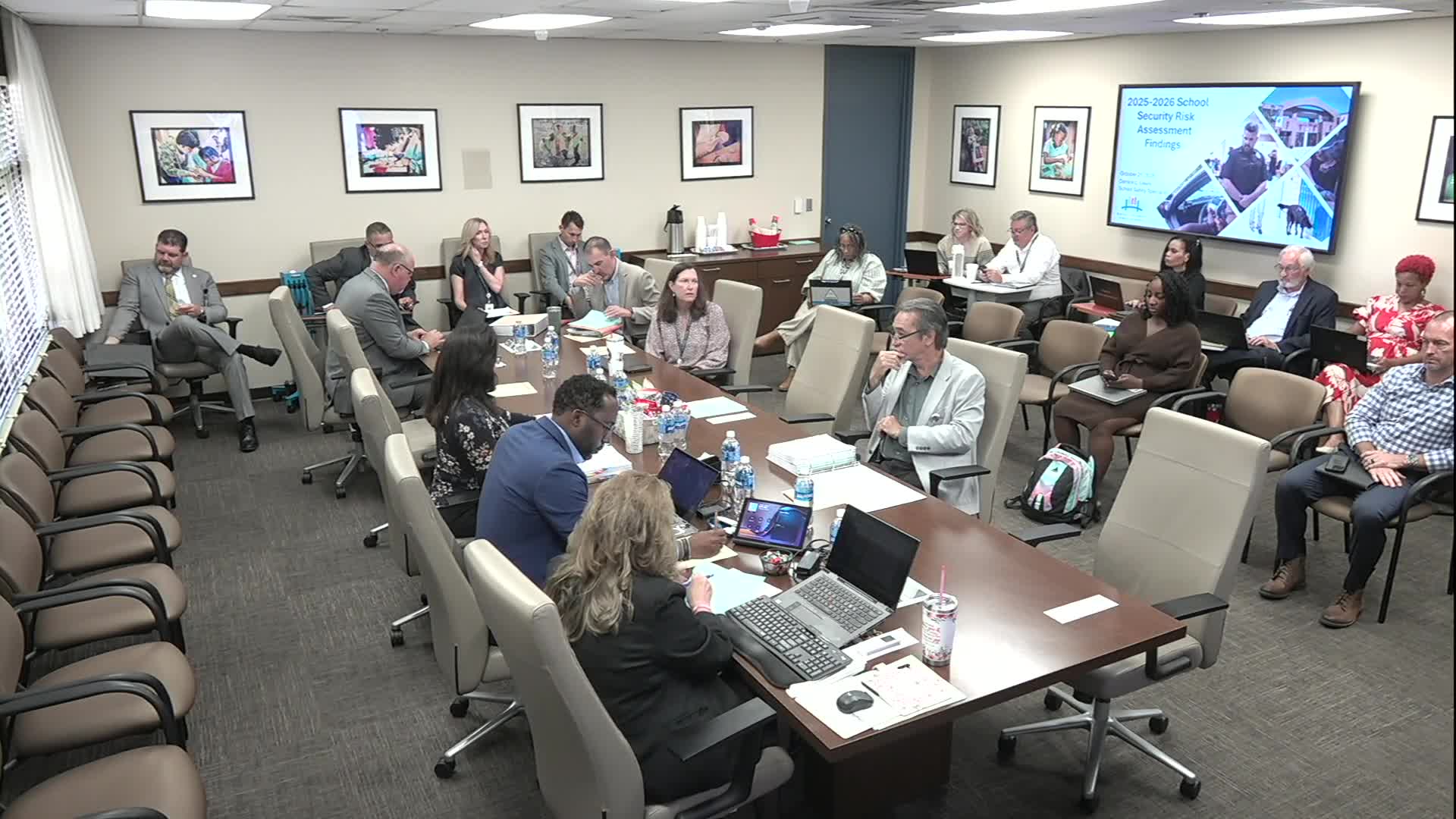
Derek Lewis, the district’s school safety specialist, told the Duval County School Board on Nov. 4 that the district met the state requirement for school safety risk assessments and is recommending further security upgrades.
The school safety update, presented during a board workshop, summarized results from the Florida Safe School Assessment Tool (FSET). Lewis said 188 schools completed the tool on time and principals answered roughly 600 questions about physical security, emergency preparedness, drills and threat response capabilities. ‘‘By October 1, every school in Duval County has to have a school risk assessment,’’ Lewis said.
The report showed high compliance on several basic preparedness items. Lewis said every school reported having a family reunification plan and designated ‘‘hard corners’’ or safe areas for students; those items showed 100% completion in the questionnaire. The assessments also highlighted recurring gaps that staff and first responders raised during multi-agency tours, including requests for additional cameras and signage.
Why it matters: the FSET responses feed to the state Office of Safe Schools and are part of a cycle that requires a full multi-agency site review every three years. Lewis said the reviews include representatives from Jacksonville Fire Rescue Department (JFRD), Jacksonville Sheriff’s Office (JSO) and school staff walking the campus together to identify hazards and response needs.
Details and recommendations
Lewis and district operations staff recommended several near- and mid-term actions: install additional cameras and better signage; continue upgrades to school vestibules and electronic entry systems; add Knox boxes (lockboxes that store building keys for first responders); and install vehicle bollards at vulnerable approaches. Lewis said many principals requested those measures after the on-site reviews.
Lewis described Knox boxes and their purpose: ‘‘What a Knox box is is this device [that] sits outside the school and has keys to the school. Only the fire department can get in there. So instead of breaking your windows, they’ll go to Knox Box.’’ Board members raised questions about whether other people could access the boxes; Lewis and other staff said theft or tampering is possible but uncommon, and first-responder access cards are also being discussed for police and deputies.
District staff noted some upgrades are already underway. An operations official said construction to add vestibules at 24 sites began in October and is expected to be completed by January. The district is also working to integrate cameras into a monitored response system — described to the board as a ‘‘fusion center’’ — that can geolocate a triggered alarm and display multiple cameras in real time for responders.
Training and information sharing
The district said it will expand training for substitute teachers and volunteers — working with the substitute vendor ESS — to cover active assailant response, designated ‘‘hard corners’’ and reunification protocols. Staff cautioned that the district will withhold some operational details from broad public disclosure to avoid providing potential attackers with a map of vulnerabilities, saying certain technical and site-specific information will be limited to secure (shade) sessions.
What the board asked and what was clarified
Board members asked for a brief, high-level status update on the district’s progress implementing the recommendations and for more detail about timelines for electronic access upgrades. District staff said not all schools have electronic entry yet but the goal is 100% coverage; some older campuses still rely on keyed entry. Staff also said they will provide a future public update on the district’s progress while reserving sensitive security specifics for secure briefings.
Ending
Board members thanked district staff for the report and called for more follow-up materials outlining where investments are being made and expected timelines. The district emphasized the assessments are one step in an ongoing process to identify and reduce risks at school campuses.