Get Full Government Meeting Transcripts, Videos, & Alerts Forever!
Get email alerts on the Natural Features Protection topic
No spam. Unsubscribe anytime.
NFP board reviews midyear projects, proposes guidance to help applicants navigate stormwater and landscaping requirements
Summary
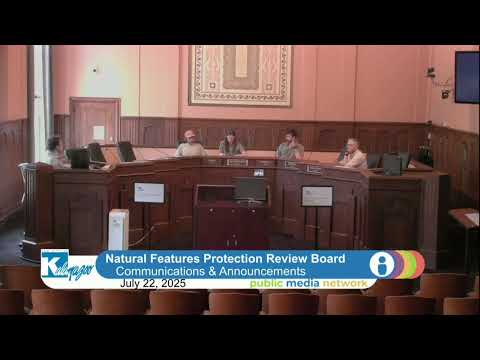
At its July 22 meeting, the Kalamazoo City NFP Review Board reviewed four approved projects, three administrative approvals and one variance recommendation to the ZBA; staff proposed a draft NFP guidance document to give applicants clearer step‑by‑step resources on stormwater, native landscaping and permitting.
The Natural Features Protection (NFP) Review Board on July 22 heard a midyear update from staff that summarized four approved projects, three administrative approvals and one variance recommendation forwarded to the Zoning Board of Appeals (ZBA), and discussed a draft NFP guidance document intended to help applicants navigate stormwater, plant selection and permitting requirements.
Board liaison Nolan said the board had approved four site projects so far in 2025 — 1609 Whites Road (Country Club parcel), 2045 East Michigan (city property with pump‑house upgrades and a PFAS treatment structure), 669 Gold Road (Vareberg Park improvements) and 1900 Belford Street (a large parcel split off for housing). He said there were three administrative approvals this year (251 Mill Street at the Growler Stadium riverfront property; minor landscaping revisions to 500 Golden Drive; and equipment upgrades at a cell tower at 3419 South Burdick) and one variance recommendation for 433 Reed Avenue that staff forwarded to the ZBA because proposed stormwater work touched regulated setbacks.
“I just wanted to give the board members just a general update on some of the projects that have come through,” Nolan said, describing the summary as a midyear “temperature check” and explaining that administrative approvals now include a written letter that clarifies when a project must return for full board review.
Why it matters: board members and staff said the guide is intended to reduce repetitive reviews and schedule delays by helping applicants know early which permits, technical reports and specialists they will need. Staff stressed NFP review is one stop in a larger site‑plan and permitting process; unclear expectations early in a project can produce cascading delays later.
Discussion highlights - Guidance and resources. Staff proposed a draft “NFP guide” that would provide a step‑by‑step process for applicants, links to the city GIS, regional EGLE permit charts, and sample technical documents (example arborist reports, woodland assessments) so applicants and small developers know how to prepare before coming to the board. Nolan said the guide is easier to update than the ordinance and that he will bring printed copies and additional staff presentations in August and September (stormwater standards and compliance) to advance the draft.
- Plant lists and native landscaping. Board members debated whether the guide should include a recommended plant list. One board member cautioned against supplying a short recommended list because “if we go down a path that everyone is using just the same 5, 10, 15 plants, we can also reverse the issue we’re having and have a monoculture,” and urged an emphasis on an “extreme do‑not‑plant list” plus criteria and external resources. Other members said applicants — especially small developers without in‑house ecologists or landscape architects — need clear early guidance and referrals so they can hire appropriate consultants and avoid repeated resubmittals.
- Stormwater and permitting. Staff said NFP stormwater standards tend to be more stringent than baseline city requirements and that the guide will include an EGLE permit chart and regional contact points so applicants can identify regulatory triggers early in the process.
- Administrative approvals and variance process. Nolan explained that administrative approvals are used when a project creates no ground disturbance (interior work, equipment swaps) and that the 433 Reed Avenue variance was required because current NFP ordinance language prohibits new stormwater BMPs within certain setbacks; the variance will return to the full NFP board for final consideration and public notice when it reaches site plan review.
Public access and outreach A member of the public and several board members raised difficulty locating agendas and minutes online after the city transitioned to CivicClerk. Nolan acknowledged the problem, said minutes and agendas are published in CivicClerk and that staff will work with communications to post links on the NFP board page and update PDFs on the city site before the next meeting.
Procedural actions The record shows the board held routine procedural votes at the start of the meeting: a motion to excuse absent members, a motion to approve the July 22 agenda and a motion to approve the minutes from the June 24, 2025 meeting. Each motion was approved by voice vote; the meeting transcript does not list individual roll‑call tallies.
What’s next Staff will bring a revised draft of the NFP guidance and printed examples to the August meeting, and a staff expert on stormwater is expected in September. The variance for 433 Reed Avenue will be noticed and return to the board for full NFP review when it reaches site plan consideration.
Ending note: The board emphasized that clearer up‑front guidance and sample documents are intended to lower soft costs for applicants, reduce repeated submittals and help the board and public engage with better prepared applications.