Get Full Government Meeting Transcripts, Videos, & Alerts Forever!
Get email alerts on the Legal Enforcement topic
No spam. Unsubscribe anytime.
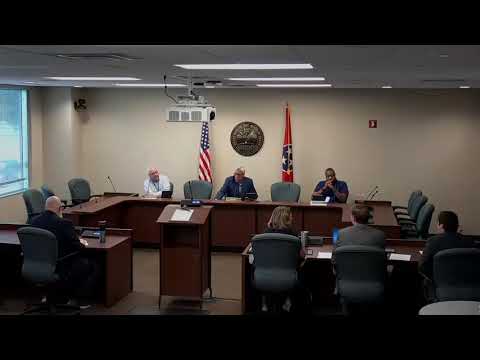
Collection Service Board accepts legal report; new rules to take effect Sept. 24, 2025
Summary
The Tennessee Collection Service Board accepted a 21-case legal report, including six recommended consent orders tied to statutory violations, and legal counsel announced that new board rules were filed with the Secretary of State and will take effect Sept. 24, 2025.
The Tennessee Collection Service Board voted to accept the legal report for the meeting, which Counsel Joseph Wharton said includes 21 complaints and six recommended consent orders tied to statutory violations.
The legal report was presented by Joseph Wharton, board counsel, who told members, “The legal report for this meeting has a total of 21 cases on it.” He read a list of complaint numbers into the record and recommended six consent orders tied to statutory licensure and surety-bond violations. The board approved the report by voice vote; no members recorded opposition.
Why it matters: the legal report identifies enforcement matters against collection-service providers and sets the department’s next steps, including consent orders and, where respondents do not respond, formal legal action.
Board discussion focused on how cases are presented and on the scope of the board’s jurisdiction. Several members asked why respondent names appeared on the draft legal report; Wharton said that the published report should be redacted and that the respondent names will be omitted when posted. He described the current practice: at the initial anonymous-reporting stage there is no conflict to declare, and only when an enforcement action (for example, a consent order or a notice of hearing) moves forward would any known conflict require a board member to recuse themselves.
Members also asked whether Tennessee law covers commercial collections or is limited to consumer debt. Tony Zachovich (board member) and others noted that the federal Fair Debt Collection Practices Act primarily protects consumers; in response, Wharton read the statutory definition into the record and summarized the board’s enforcement approach. “62 21 0 2 3 states collection service means any person that engages in or attempts to engage in the collection of delinquent accounts, bills, or other forms of indebtedness irrespective of whether the person engaging in or attempting to engage in collection activity has received the indebtedness by assignment or whether the indebtedness was purchased,” Wharton said, adding that exemptions (for banks or certain state institutions) exist. He said the board’s practical approach is to focus on statutory violations such as unlicensed activity when the respondent is not licensed rather than applying the board’s communication rules to unlicensed actors.
Counsel also described a change in legal-office practice for recovering costs: when the board issues a consent-order offer with a 30-day response window, and a respondent fails to respond, the department will file a notice of hearing and charges. If the respondent then seeks to accept the earlier consent offer, Wharton said the respondent will be asked to pay the original civil penalty plus the department’s incurred costs (including attorney time drafting the notice and the APD filing fee). Wharton gave an illustrative example: a $500 civil penalty could increase to roughly $900 after added costs if the respondent did not accept the consent offer within the initial period.
Wharton also reported that some previously issued consent orders were later revisited when respondents presented new facts; he said two earlier matters were closed after additional information was provided.
Separately, Wharton told members the board’s rulemaking process that began last year has concluded: the Attorney General’s Office reviewed the rules for constitutionality, they were filed with the Secretary of State and posted online on June 26, 2025, and the rules “will be going into effect 09/24/2025.” Board members acknowledged that update during the meeting.
Votes at a glance - Motion to accept the legal report with counsel’s recommendations — Mover: Chip Hellman; Second: Jason Hill; Outcome: approved by voice vote (ayes recorded; no opposition). Recorded yes votes: Jason Hill; Tony Zachovich; Chip Hellman. - Other procedural approvals at this meeting (agenda, minutes, 2026 meeting dates, adjourn) were passed by voice vote (see "Actions" for specifics).
Ending: Counsel said he would provide the cited statutory text and follow up on any remaining questions about jurisdiction, and the board closed the meeting after completing its agenda.