Get Full Government Meeting Transcripts, Videos, & Alerts Forever!
Get email alerts on the Stormwater Management topic
No spam. Unsubscribe anytime.
Clark County Clean Water Commission hears work‑group updates, approves April meeting summary
Summary
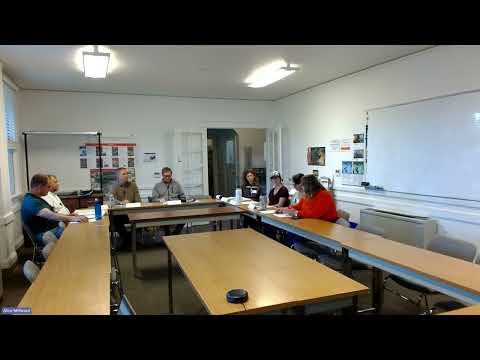
The Clark County Clean Water Commission met June 4, 2025, approved the April 2 meeting summary and spent most of the session receiving work‑group briefings on climate implementation, community outreach, a rate‑study implementation, and the county’s stormwater management action planning.
The Clark County Clean Water Commission met June 4, 2025, approved the April 2 meeting summary and spent most of the session receiving work‑group briefings on climate implementation, community outreach, a rate‑study implementation, and the county’s stormwater management action planning.
The summaries matter because the commission’s advice and monitoring feed into capital planning, grant eligibility and compliance, and local approaches to stormwater and watershed health across Clark County and the City of Vancouver.
On climate implementation commissioners said they are waiting for the county’s climate plan to be adopted before fully implementing new actions. Commissioners and staff said Jenna (staff) will be invited to the commission’s August meeting to give an overview of the adopted plan, its timeline and the policy areas that could affect stormwater planning, including tree canopy and stormwater design standards.
The community engagement subcommittee, led by Commissioner Alejandra Cortez, reported it is developing outreach materials and strategies to make the stormwater management plan more accessible. The group proposed a one‑page summary of the plan, outreach to homeowners associations (HOAs) that manage stormwater facilities, participation at local events such as Project Voice and the Lower Columbia Nature Network, and school‑ or camp‑based youth engagement. The subcommittee set a follow‑up meeting for June 10 to refine target audiences and presentation materials.
Commissioners and staff discussed planning for a Northpoint symposium the commission will host; organizers proposed a morning session to set context on local pollutant issues and an afternoon focused on collaboration and solutions. Staff are contacting speakers from other jurisdictions and programs to broaden the symposium beyond local presentations and to surface models that could scale or be adapted to Clark County.
On the rate study implementation, staff reported the county has expanded some eligibility and that county compliance work will make the program eligible for capital grants if submissions are timely. Finance staff were described as projecting additional revenue in coming years, but the transcript did not specify a confirmed figure. Commissioners noted that City Council members have been receptive to the concept of future rate increases as part of long‑term planning.
Staff briefed the commission on the stormwater management action plan (SMAP) procurement and scope. Osborne Consulting has been selected as consultant to help develop 6‑ and 20‑year plans focused on Lower Salmon Creek as a primary subbasin. The plan will include capital priorities, pipe and asset‑management frameworks, street‑sweeping plans and measurable performance metrics for implementation. Commissioners emphasized interest in metrics and in building a “goodness of performance” framework to track how projects improve illicit discharge detection, habitat, and other outcomes.
The discussion also touched on procurement and construction risk. Commissioners and staff noted that for construction projects the county’s procurement rules can favor low bids; they discussed qualifications‑based selection for some work, the limits of that approach for construction versus studies, and how contractor performance and change orders can affect project costs and timelines.
Commissioners raised one cost example: staff said a wetland restoration had been estimated at about $3,500,000 and that roughly half of that amount had been paid to date (source: staff update). They cautioned those figures are project estimates and may change as work proceeds.
During public comment the commission’s packet included an emailed comment from resident Peter Rochi, who asked that the county consider homeless encampments and their impacts on watersheds — including Burfrench Creek — when revising stormwater planning and to consider county‑level oversight or coordination with the City of Vancouver.
Administrative items: the commission approved the April 2, 2025 meeting summary. Roll call earlier in the meeting recorded commissioners Tracy Caravallo, John Chatel, Glenda Willie, Ted Gaffey, Emily Hess, Allison Schweitzer and Rudy Salacori as present; Alejandra Cortez was recorded as absent. A motion to approve the April 2 summary carried with all voting members present recorded as approving.
The commission noted a joint meeting with the City of Vancouver Forestry Commission scheduled for July 16, which will be hybrid and held at Vancouver City Hall; commissioners will give brief round‑table updates and the commission’s urban tree canopy assessment will be presented before that meeting. Staff said recordings and slide decks from recent work sessions will be posted on the county website when processed by public information staff, usually within about a week.
Next steps identified during the meeting included inviting Jenna to the August meeting to discuss the adopted climate plan, circulating materials from recent work sessions and the symposium planning team working with the county PIO on invitations and publicity. Commissioners also suggested site tours, including potential visits to recent projects such as the East Fork Lewis River restoration work, and continuing to develop measurable metrics for SMAP implementation.