Get Full Government Meeting Transcripts, Videos, & Alerts Forever!
Get email alerts on the Affordable Housing topic
No spam. Unsubscribe anytime.
Tulsa officials outline ‘community builder’ pilot to speed affordable rehabs and track progress
Summary
City staff presented a pilot program designed to fast-track developer-led rehabilitation projects aimed at returning roughly 6,000 housing units to the market over four years, with multilingual outreach and a public tracker promised.
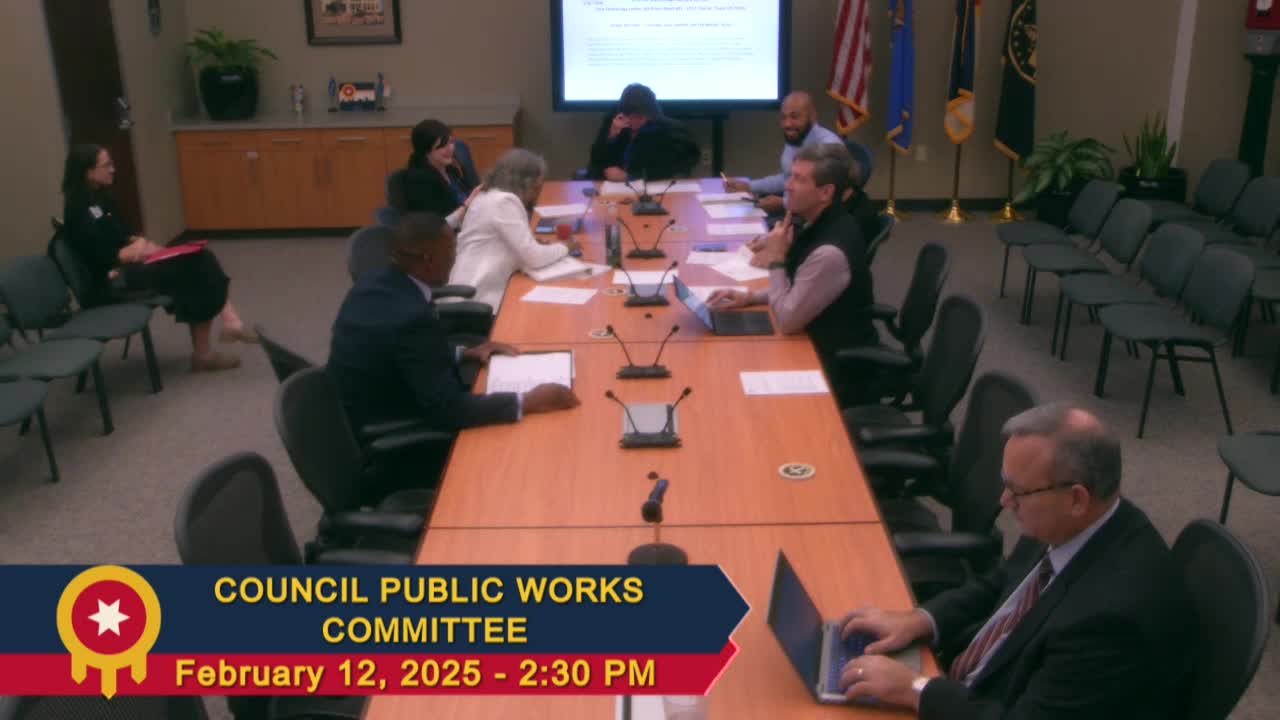
City officials described a new “community builder” pilot program at a Public Works Committee meeting, saying the program is intended to speed rehabilitation of units affordable to households earning about 60% of area median income (roughly $34,000) and to produce data the city can use to reform permitting and development processes.
“This community builder program is designed to fast track a lot of that, particularly against that affordable housing number and how I think it's defined for us as, 60% of the median income, which is around $34,000 and less is the focus,” the mayor’s designee said. The presenter added the pilot aims both to help reach a four‑year goal of returning 6,000–4,000 units to service and to reveal process changes the city can adopt more broadly.
The program, staff said, will combine city commitments (permitting and cross‑department coordination) with developer commitments (faster timelines and other conditions). City staff credited several internal team members with designing the pilot and said developers who participated in drafting the program provided input that shaped it.
Councilors asked about geographic targeting and equity. Staff said the pilot is not limited to particular council districts but that work with the city’s Neighborhood Conditions Index (NCI) will naturally direct activity toward areas with concentrated need. “Within the next couple weeks, you'll actually see a new approach we're rolling out to address those priority 1 neighborhoods all across the city, as judged by the NCI,” the presenter said.
Committee members pressed for language access and easier materials. Mike Skates, Development Services director, said the permitting office already offers Spanish translations and has at least two staff available to assist applicants in person; the department also uses a language‑access system to connect applicants to interpreters. Carrie Fotherhill and communications staff said program branding and application materials will be translated and posted so residents can access them in multiple languages.
Councilor Ellis raised literacy and accessibility concerns and urged staff to produce materials written for broad adult literacy levels. Staff responded that the pilot is cross‑departmental — involving economic development, development services, city experience and the mayor’s office — and that city reporting and a housing tracker will show weekly and monthly progress: permits issued, units made available, and the number designated as affordable under the program.
On oversight and timing, staff said the pilot is intended to surface process improvements and that the council could receive check‑in updates; councilors suggested a 6‑month or 2‑month check‑in and the possibility of monthly updates to capture early operational issues. Staff said the pilot will include safeguards about participant selection and that the city reserves the right to limit the number of participating builders and to remove participants who fail to meet program commitments.
Officials described the pilot as one element of a broader push to reduce code violations, speed rehabs and lower builders’ costs so renovated units can be offered at or below the 60% AMI threshold. Staff said they will share the program’s housing tracker publicly and consider open sourcing the tool so the council and public can monitor progress week to week.
The transcript does not record a formal council vote or final action on the pilot during the meeting.