Get Full Government Meeting Transcripts, Videos, & Alerts Forever!
Get email alerts on the Health 340b Access topic
No spam. Unsubscribe anytime.
Health centers urge passage of SB 198 to prevent manufacturers from blocking 340B contract pharmacies
Summary
Representatives of Ohio’s community health centers told the Senate Health Committee Senate Bill 198 would guard access to discounted medications under the federal 340B program by barring manufacturers from imposing restrictions that sever contract pharmacy partnerships; witnesses said restrictions have harmed patient access and center finances.
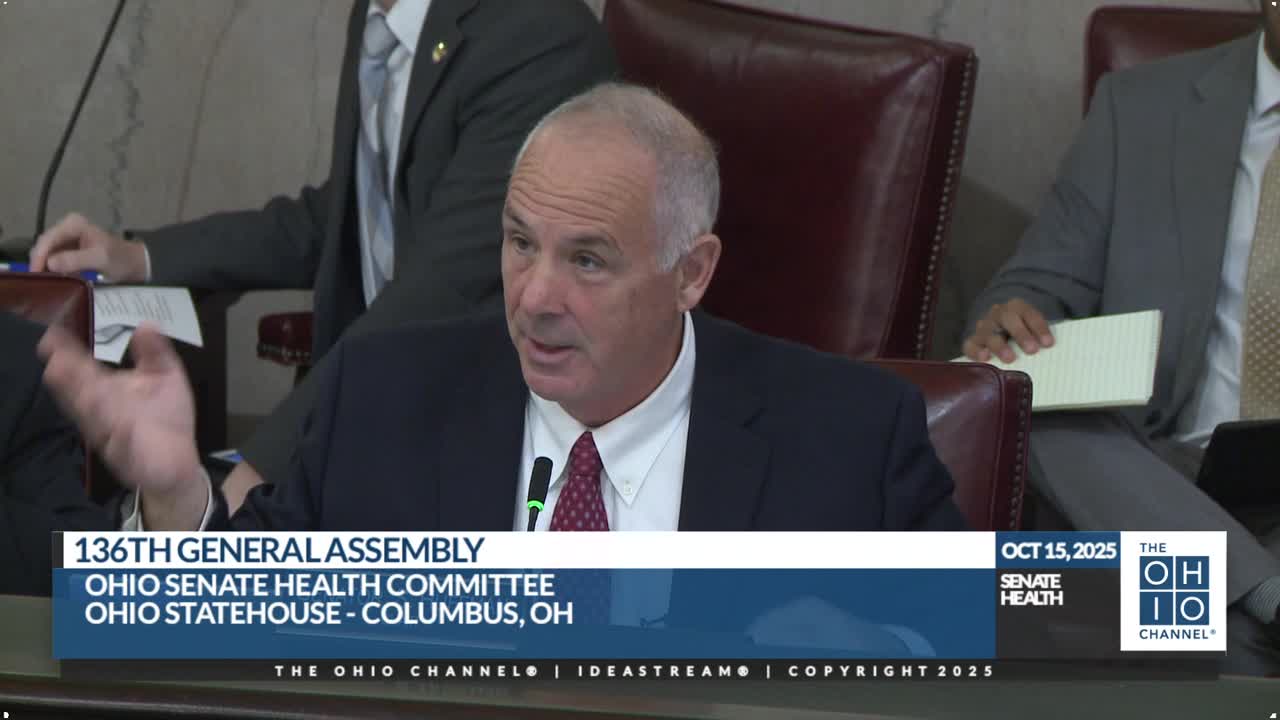
The Senate Health Committee heard multiple witnesses in strong support of Senate Bill 198, legislation the witnesses said would protect community health centers’ access to discounted medications under the federal 340B program and preserve local pharmacy options for patients.
Julie D’Rossi King, president and CEO of the Ohio Association of Community Health Centers, told the committee Ohio’s 61 community health centers operate more than 600 sites across 76 counties and serve "over 1,000,000 Ohioans each year." She said 340B savings allow centers to reinvest in services such as extended hours, care coordination and programs that are not otherwise reimbursed. "By law, community health centers are federally mandated to reinvest 100% every penny earned of 340B savings into patient care," King said.
Witnesses described an industry practice that began in 2020, when several pharmaceutical manufacturers began restricting shipments to multiple contract pharmacies and in some cases allowed only a single contract pharmacy per provider organization. Logan Yoho, a pharmacist and 340B subject‑matter consultant, said 38 manufacturers have added restrictions and 24 of those apply to federally qualified health centers; he said 21 states have passed similar protections and that litigation has so far not overturned those state laws.
Dan Atkinson, CEO of Muskegon Valley Health Centers (an FQHC operating 13 locations), described operational harm from single‑pharmacy requirements in a largely rural service area of about 2,100 square miles: under some manufacturer rules, patients might be required to travel more than 40 miles to reach an approved contract pharmacy, he said. Atkinson described a patient example in which manufacturer rules and short claim submission windows led to denied shipments and losses of 340B‑derived savings that fund services.
Dr. Yamini Tigela, CEO of Rocking Horse Community Health Center and a practicing family physician, stressed clinical consequences for uninsured and low‑income patients who rely on community health center pharmacies. She said Rocking Horse serves close to 16,000 patients and provides about 75,000 visits annually; she told the committee the center’s non‑English speaking patient share rose from 5 percent in 2018 to 25 percent in 2024 and that interpretation costs have grown sharply.
Witnesses told senators that manufacturer restrictions have forced centers to reduce services, consolidate locations or lay off staff in some instances. They argued Senate Bill 198 is narrowly targeted to prevent manufacturers from conditioning drug shipments on data access or on limiting contract pharmacy relationships for federally qualified health centers and similar grantees; witnesses emphasized the bill does not expand 340B eligibility nor impose new state spending.
Committee members asked technical questions about reporting, federal audits and whether 340B discounts pass through to private insurers. Witnesses said community health centers are subject to annual federal audits and reporting requirements through HRSA and that 340B benefits are used to cover care that is not otherwise reimbursed.
No formal vote was taken; committee members thanked witnesses and noted written testimony on file. The committee indicated the bill is part of a broader, ongoing national policy debate about 340B implementation and manufacturer contract pharmacy practices.