Get Full Government Meeting Transcripts, Videos, & Alerts Forever!
Get email alerts on the Public Health Naloxone topic
No spam. Unsubscribe anytime.
Estacada DEIC plans local Narcan distribution, outreach materials and training sign-up
Summary
At a DEIC meeting, members discussed distributing Narcan boxes from Clackamas County to downtown businesses, the food bank and outreach sites, pairing each box with county training information and a committee letter; volunteers will coordinate deliveries while avoiding quorum rules.
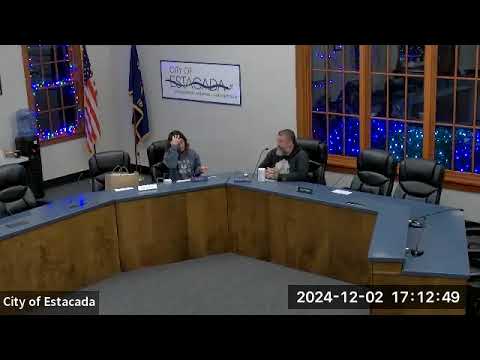
The Estacada Diversity, Equity & Inclusion Committee discussed a volunteer-led plan to distribute Narcan (naloxone) kits and outreach materials to local businesses, the food bank and community sites during its meeting.
Committee members said the kits were provided by Clackamas County and will be paired with two county information sheets — one with dates for free naloxone training and another listing resources and data — plus a short letter on city letterhead explaining the distribution.
The discussion matters because committee members said placing Narcan in publicly accessible locations — gas stations, businesses with public restrooms, the food bank and other transit points — could increase access in places members believe are likely sites of overdoses. Committee members also said the county can supply more kits upon request, though they were told a limit may apply.
Members debated distribution logistics and tracking. They proposed stapling the two county sheets to a committee letter, placing stickers at sites that agree to host Narcan, and leaving a CPR face shield with each kit. Volunteers agreed to split the inventory and walk different parts of town to avoid duplication and to keep a shared list of businesses already visited. One committee member said, “They are very open to connecting with us,” referring to the outside group that can provide resources and tabling opportunities.
Participants identified specific locations and strategies: several said gas stations and businesses with public restrooms are logical placement points; others suggested the food bank as a centralized distribution point because staff there have wider community reach. Members also discussed leaving small supplies in restrooms or cafe baskets where patrons might take them, and suggested asking bar owners to participate because mixing substances in social settings increases overdose risk.
The county materials include sign-up information for training sessions; the committee noted training dates in November and February on the county flyer and agreed to use the county contact form to request more kits if needed. A member said the county had previously placed naloxone vending machines only in county facilities such as the county building and jail, and that no vending machines were known to be deployed in Estacada.
Members discussed grant opportunities for related items. One member said she had spoken with Deterra, a company that sells medication-neutralizing pouches, and brought information on small grants that could help fund broader distribution.
For next steps, the committee agreed a member will draft the short letter for city letterhead and provide it to the committee coordinator so copies can be made. Volunteers will split boxes, track which businesses they visit, and report back at the next meeting. Committee members cautioned that communications about scheduling must avoid creating a quorum (three or more members) or transacting committee business outside an open meeting.
Committee members asked staff to confirm how many more kits the county can provide and to clarify any formal limits. They also asked that the committee follow up with the county contact (listed on the county materials) so individual businesses can get additional supplies directly if needed.
The committee did not adopt a formal resolution; members described the plan as a volunteer implementation and coordination of distribution rather than a binding city policy.