Get Full Government Meeting Transcripts, Videos, & Alerts Forever!
Get email alerts on the Emerald Ash Borer topic
No spam. Unsubscribe anytime.
Denver to pivot emerald ash borer response, focus treatment on high‑value trees and scale planting program
Summary
City Forester Luke Killoren and Parks staff told council the emerald ash borer (EAB) is now established in Denver; the department will pivot from broad preventative chemical treatments to protecting larger, high‑value trees and removing and replacing others, and will temporarily reduce planting numbers while improving survival rates.
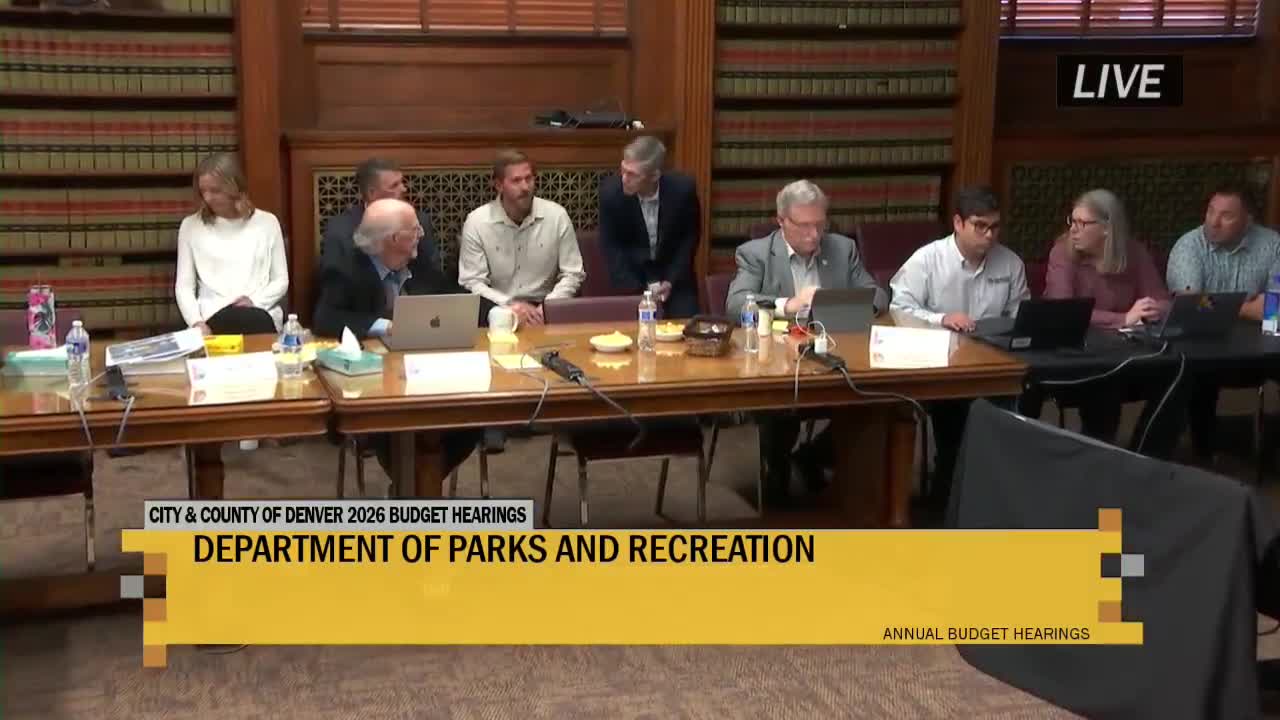
Luke Killoren, City Forester for Denver Parks and Recreation, told the council committee the city has shifted its strategy after the emerald ash borer (EAB) was found in Denver.
“We're talking about a 95, almost 99% success rate for preserving, protecting those trees from the EAB,” Killoren said of chemical treatments used in the program historically. But he and other Parks staff said treating every private and small‑diameter public ash tree indefinitely is not financially sustainable now that the pest is established.
Why it matters: Ash trees account for an estimated 15% of Denver’s tree canopy. How the city manages EAB will affect urban canopy, shade, property values and maintenance budgets across neighborhoods.
Planned changes and rationale - Pivot from broad “halo protection” prevention to concentrated treatment of larger, high‑value trees and accelerated removal and replacement of smaller, less‑sustainable specimens. Clark described the earlier program as prevention that “gave that additional halo protection to try to keep the pest out,” and said the plan was always to pivot when EAB arrived. - Adjust planting numbers and refocus on quality. Killoren said the department plans to scale back planned plantings next year to improve establishment and survival rates; the department reported current BASA program success at roughly 60–70% and said it will ask adjacent property owners to assist with first‑year watering and monitoring for street trees planted in front of private homes. - Cost sharing and maintenance roles. Parks pointed to municipal code language referenced in the hearing that assigns adjacent property owners responsibility for trees in many right‑of‑way locations; Parks staff said their strategy will include more engagement with homeowners for watering and basic maintenance of newly planted right‑of‑way trees.
Council questions and technical details Councilmembers pressed for an assessment of the decade‑long prevention program’s effectiveness. Killoren and other Parks staff described the program’s high effectiveness in treated trees and framed the new approach as the expected, longer‑term strategy once EAB became established: target high‑value trees for treatment and prioritize removal and replacement for many smaller trees.
What remains to be provided Councilmembers requested follow‑up information on a per‑park and per‑neighborhood basis: planting plans, watering contracts currently under consideration, and the specific set of forestry contracts being reduced in the Parks budget.
Ending Killoren said he welcomes more resources and advocacy for urban forestry to sustain canopy growth. “We have all the knowledge information about working that direction,” he told the committee, and asked the council to back efforts to improve planting success and long‑term maintenance.