Get Full Government Meeting Transcripts, Videos, & Alerts Forever!
Get email alerts on the Parks Budget topic
No spam. Unsubscribe anytime.
Denver Parks and Recreation unveils 2026 budget with cuts but preserves rec center hours and flower beds
Summary
Director Joel Clark told the city council that Denver Parks and Recreation’s proposed 2026 budget includes reductions to on-call hours, some contracts and program lines while protecting core services such as recreation center hours and planned capital projects like flower beds.
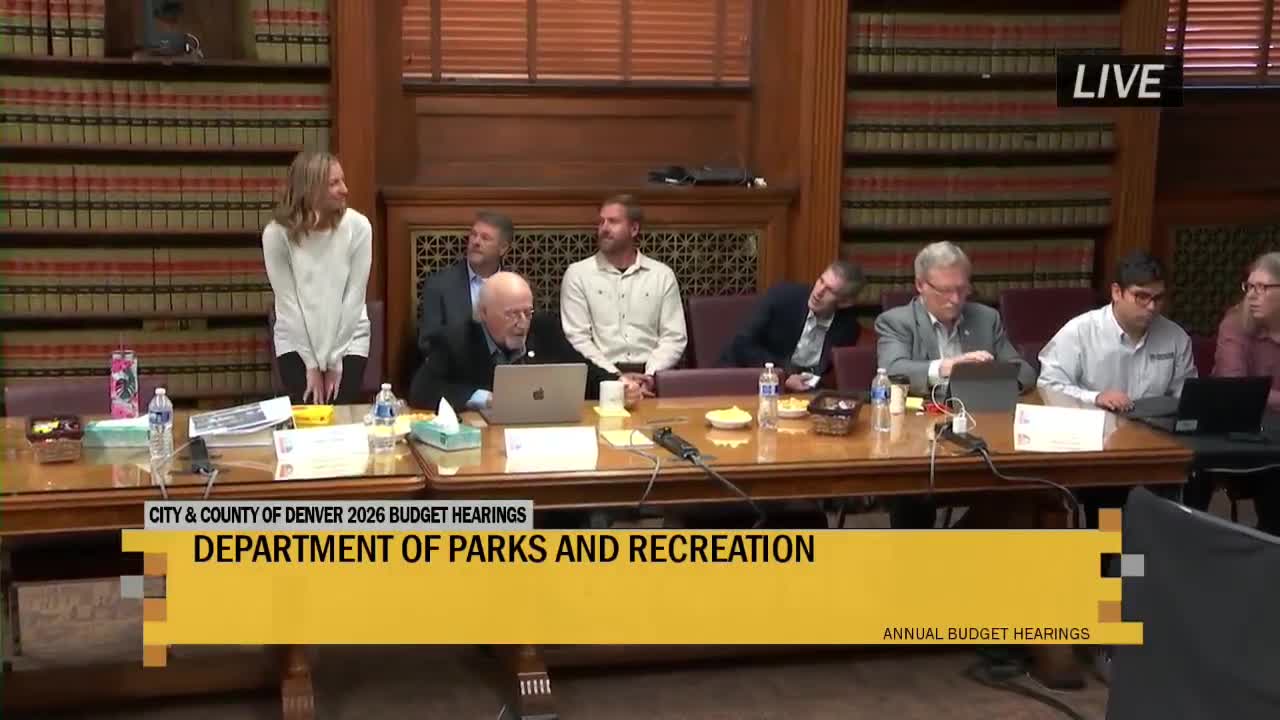
Director Joel Clark, executive director of Denver Parks and Recreation, told a city council committee on Oct. 29 that the department’s proposed 2026 budget would include staffing and contract reductions but would preserve core services that affect residents directly.
Clark said the department faced “a difficult” budget cycle and described a process of soliciting ideas across the agency to protect high‑priority services. “We have preserved recreation center hours. There are will be no change to our recreation center hours. We will be planting the beds,” Clark said during the presentation.
Why it matters: Parks and Recreation manages about 300 urban parks, 14,000 acres of mountain parks and 72 distinct work locations, and its budget decisions affect everyday services — from youth sports and rec center programming to tree care and trail maintenance.
The department described three budget priorities: protecting core services, finding operational efficiencies and leveraging revenue where feasible. To meet those goals, the department proposed cutting on‑call hours, eliminating some vacant and limited positions, reducing certain contracts and shifting eligible planning, design and construction staff to special revenue funds (SRFs) including the Park Legacy Fund to better align funding with work.
Key details - On staffing: Clark said the department is “right sizing” on‑call budgets to match actual spending; the presentation noted reductions across on‑call pools (seasonal lifeguards, pool attendants, instructors) and some layoffs in vacant positions. The department also proposed converting several contract roles into SRF‑funded staff where those positions directly support capital projects. - On revenues: Parks plans to adjust its annual Black‑Friday‑style membership sale from 40% off to 35% this November and to 30% the following year, and to pursue new revenue sources such as greenhouse rentals (estimated at about $100,000) and expanded adult sports leagues. Clark said assistance programs for residents who cannot afford fees would continue unchanged. - On contracts and supplies: The budget package includes reductions in some forestry contracts, hazmat cleanup, cable TV at rec centers and other services and supplies the department says are underused or can be delivered more efficiently. - On capital: Clark emphasized that capital projects cannot start until full funding is secured and that many projects in Parks’ six‑year CIP remain prioritized. He said Parks used interest from capital reserves to shift roughly $2 million of services and supplies out of the general fund this year to ease operating cuts.
Council oversight and next steps Deputy Chief Financial Officer Stephanie Adams reminded councilmembers that fee or rate increases require council approval. Clark said some proposed fee adjustments are being prepared for council consideration in future actions; the membership discount adjustment is already part of Parks’ plan to boost revenue.
What remained unresolved Multiple councilmembers asked for follow‑up details the department promised to provide, including: breakdowns of specific positions moved to SRFs and which SRFs they will join; a list of planting and maintenance metrics broken down by region; and more granular revenue and membership figures compared with pre‑COVID levels.
Ending Clark closed by asking for questions and stressed that, despite cuts, the department aimed to preserve programs widely used by residents. “We have cut everywhere where you can possibly cut before those cuts really, really start to hurt,” he said. Councilmembers requested follow‑up memos on SRF transfers, capital project timing and operating details for recreation and forestry programs.