Get Full Government Meeting Transcripts, Videos, & Alerts Forever!
Get email alerts on the Participatory Budgeting topic
No spam. Unsubscribe anytime.
Denver’s People’s Budget program readies third cycle with $2 million for neighborhood projects
Summary
Program administrator Kiki Turner briefed the committee on the People’s Budget participatory‑budgeting cycle, which will allocate $2 million (split $1 million citywide and $1 million for the Near Southeast planning area), ongoing community stipends and plans to expand youth participation and outreach channels.
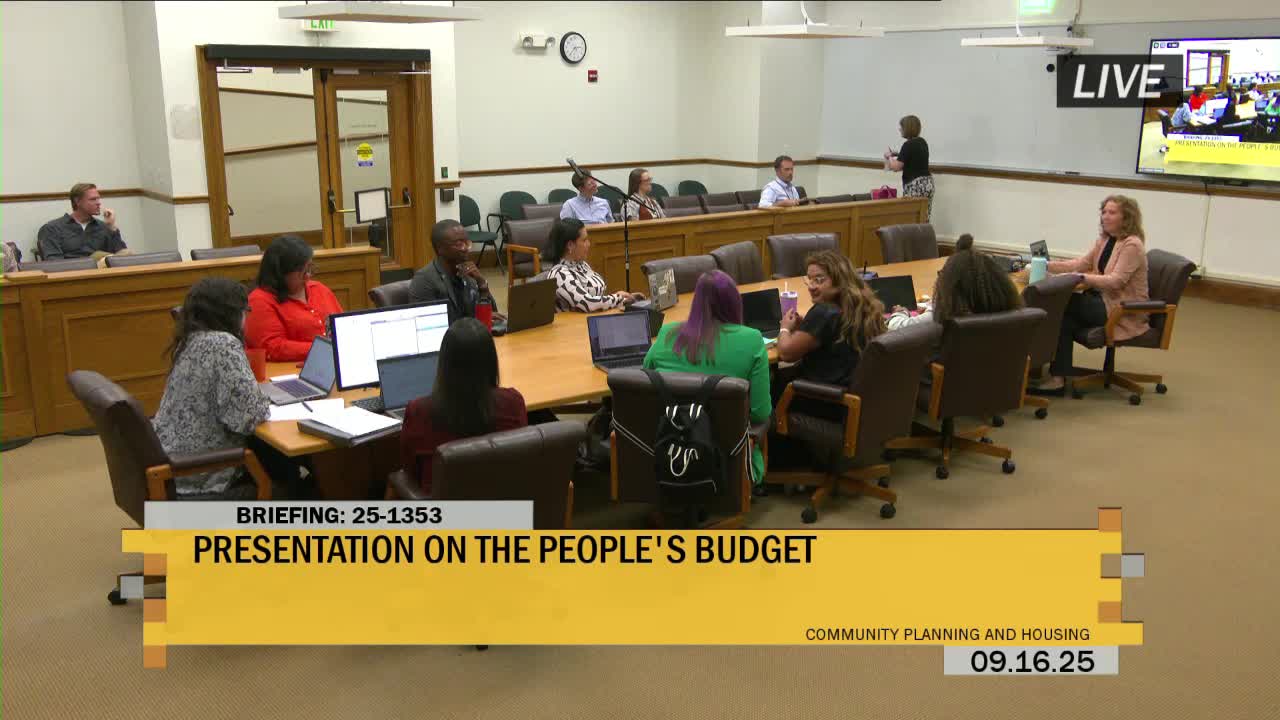
Kiki Turner, program administrator for the Denver People’s Budget, told the Community Planning and Housing Committee on Sept. 16 that the city is launching the third cycle of its participatory budgeting program with $2 million for neighborhood infrastructure projects. “The People's Budget is a participatory budgeting program. It's Denver's participatory budgeting program, which is a direct democracy process where the people of a community, a municipality, have the opportunity to invest a portion of their own taxpayer dollars,” Turner said.
Turner outlined program structure, past results and staffing. To date, the program has stewarded $5 million in project funds; $3 million has already been allocated to 13 projects from the first two cycles, and cycle 3 will devote $2 million for new projects. HOST and People’s Budget staff told the committee the $2 million will be split into two parts: roughly $1 million for projects citywide and $1 million dedicated to the Near Southeast neighborhood plan area.
Turner said the program sets aside budget for operations (about 10% of project funding) and is moving toward a contingency reserve of about 15% of project dollars to cover inflation or escalation. Turner also emphasized that roughly 40% of the program’s operating funds are used to provide stipends and payments to community leaders who run outreach and deliberation activities.
Turnout and outreach
Turner described a heavily community‑driven approach: resident steering committees and locally recruited “project delegates” manage rules, help shape the ballot and run outreach. Staff said they conducted about 30 meetings and spoke with roughly 500 people in recruitment for this cycle’s leadership group; the program aims for 25–30% youth participation (under age 18) among committee members. Turner said the program will maintain existing outreach tactics and add phone‑dial voting and other outreach experiments to increase reach and language access.
Program mechanics and timeline
Turner said idea collection and proposal development will run through spring and summer, with community voting next fall and implementation targeted to complete funded projects within about two years (the program said it generally aims to finish projects by 2028 for this cycle). The People’s Budget continues to use a ranked‑choice ballot and a local technology partner (Civic Trust) to manage submissions and unique‑ballot verification.
Stipends and community partners
Turner outlined the “Phyllis Mack” mini‑grant program — small stipends (commonly $100–$1,500) to community organizers who recruit and run local idea‑collection events. The program is also continuing a process to allow nonprofit applicants to deliver some projects if residents vote them forward; Turner said 11 nonprofit LOIs were received in the most recent round and a small number of nonprofit‑led projects from cycle 2 remain in procurement.
Staffing and budget constraints
Turner told the committee that People’s Budget is a very lean program; she is the sole full‑time employee dedicated to the program and several prior supporting roles were not filled. She said the program will rely on paid community leaders and partner organizations to carry much of outreach and on‑the‑ground work this cycle.
Council feedback and recognition
Councilmember Jamie Torres congratulated the program and noted outside recognition: “Just wanna share again, Kiki, the People's Budget was recognized by doctor Cog, recently with the Metro Vision Awards. So congratulations.” Turner said the program will provide shareable materials for council offices and invited councilmembers to planned events.
Why it matters
The People’s Budget is intended to give residents direct control over a portion of capital funds for neighborhood infrastructure and to expand participation in local government. Committee members pressed staff on outreach, staffing reductions and the balance between citywide and neighborhood dollars.
Next steps
Turner said steering‑committee activities will begin in early October, idea collection will start in December and staff will return with outreach materials for council offices. The committee received the update and asked staff to provide further details about coordination with council offices and a timeline for outreach events.