Get Full Government Meeting Transcripts, Videos, & Alerts Forever!
Get email alerts on the Homelessness Shelter Contracts topic
No spam. Unsubscribe anytime.
Denver officials brief council on shelter contracts, cold‑weather plan and Crossroads renovations
Summary
City housing officials presented a briefing on nine congregate shelter contracts, transportation and cold‑weather sheltering plans, including a one‑month closure next April for renovations at the city‑owned Crossroads site and a pilot to change how some families access hotel vouchers.
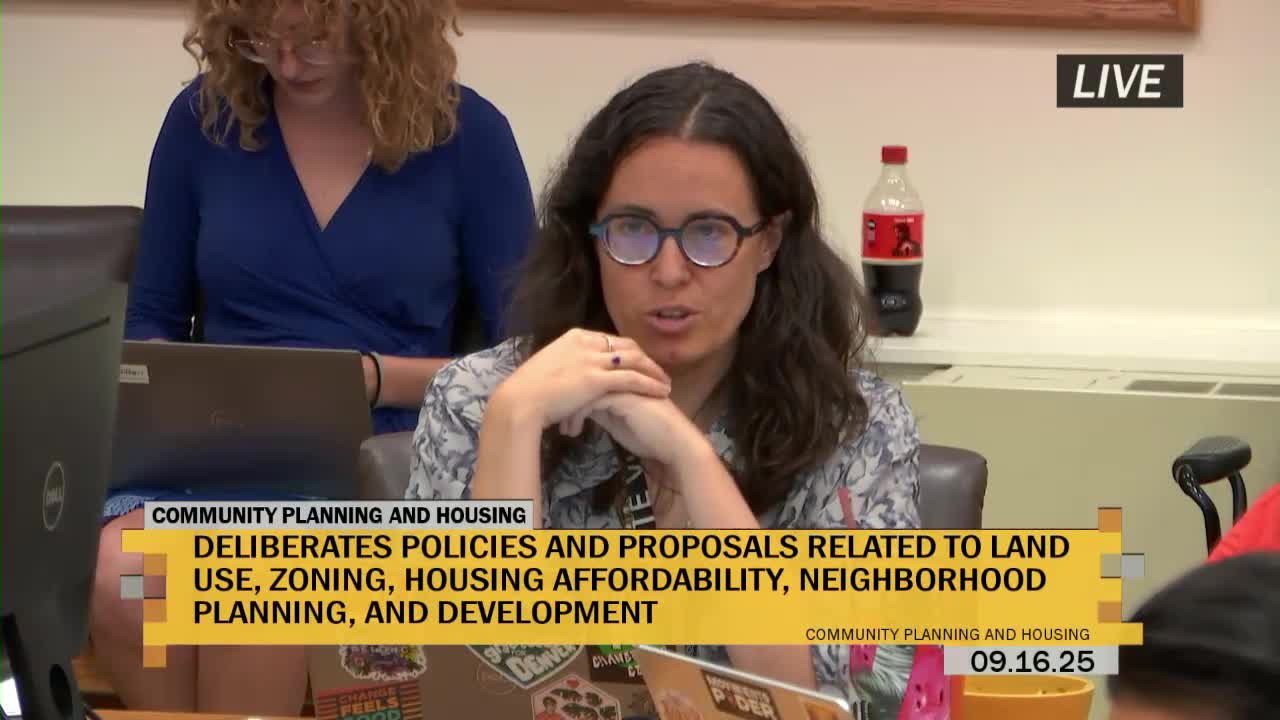
Councilwoman Sarah Paradis, councilmember at large and chair of the Community Planning and Housing Committee, opened the Sept. 16 briefing by saying the meeting would include only briefings and no formal votes: “We have a couple of briefings. No action items. Nothing on consent.”
Housing Department officials described a package of nine one‑year congregate‑shelter contracts, two transportation contracts and two cold‑weather contracts that the Department of Housing Stability (HOST) plans to present to the council in coming weeks. “This briefing is part of our efforts to not only get our contracts all signed on time this year, but also to present them to you in a more organized manner,” said Jeff Kosinski, deputy director for shelter instability.
The contracts cover nine congregate sites that together represent 1,623 beds and serve adults and youth up to about age 24, HOST staff said. The department reported systemwide occupancy above 95% on most nights and outlined the roster of shelters, per‑site budgets, staffing and recent performance data.
Highlights from the briefing:
- Crossroads (Salvation Army), city‑owned, District 9: 300 beds; 2024 budget shown at about $4.5 million with 97% spent; 38 full‑time equivalents (FTEs); cost reported as $43 per person per night; average occupancy 98.3%. HOST said the city plans structural and programmatic improvements at Crossroads — roof repairs, emergency‑exit and access upgrades, improved air circulation and the ability to connect generators — and expects to close the site for about a month in April for much of that work. A temporary site will be used while Crossroads is closed. Kosinski said there are no active redevelopment plans for the site now.
- Denver Rescue Mission (Lawrence Street/40th Street and Holly Center), Catholic Charities (40th Avenue and Smith Road), Volunteers of America (Sit‑In Sanctuary), Dolores Project, Urban Peak and other nonprofit operators: HOST presented per‑site budgets, occupancy, staff counts and outcomes. Reported per‑night costs ranged from about $13 (overnight, limited‑service overflow sites) to more than $96 per night at smaller providers that own and maintain their buildings; larger, city‑owned shelters often showed lower per‑night direct service costs because the city carries some facility costs.
- Cold‑weather shelters and hotel vouchers: HOST described two cold‑weather contracts and a separate hotel‑voucher contract for families. The department estimated it may need to serve up to 900 single adults on a high‑demand night and budgeted roughly $3.5 million for cold‑weather operations (about $64 per person per night, HOST said, which the department said includes roughly $24.07 for meals). For family hotel stays, HOST budgeted about $2.5 million and said the per‑room cost would be about $129.
- Transportation: Two transportation contracts were described — a circular evening bus route that moves clients from downtown intake sites to outlying shelters and a second contract using a 54‑seat motor coach. HOST reported flat funding of about $450,000 for one of the contracts relative to the prior year.
Policy and pilot changes described
HOST told the committee it will pilot a change this winter for family hotel vouchers: families requesting hotel stays will first be offered a congregate shelter bed for one or two nights while the connection center is colocated to process vouchers onsite. HOST said the change aims to reduce costs and address phone‑system barriers that complicated last season’s hotel voucher process. Officials characterized the plan as a change in intake logistics during cold‑weather activations, not a permanent policy to deny hotel rooms to families; they said higher‑priority circumstances (for example, pregnancy or very young children, per HOST) will still get hotel vouchers directly.
Council members raised operational and client‑safety concerns. Councilmember Alvidrez asked, “What about if someone gets kicked out? … What is the plan there besides, like, pushing someone out of the shelter?” HOST staff replied that deactivation plans now include organized transportation away from sites, security presence after deactivation and outreach staff onsite to encourage safe departures; they said police (DPD) are called in incidents that escalate to violence. Kosinski acknowledged the system does not always perform perfectly and said HOST will return with additional details on processes for people who are excluded from a site.
Other operational details and accountability
HOST said shelter contracts will include quarterly qualitative and quantitative reporting, monthly operational meetings with providers, unannounced monitoring visits and regular partner convenings. Several council members urged faster movement toward outcome‑ or performance‑based contracting; HOST said it is piloting performance contracting on certain hotel and micro‑community sites and will expand only if the pilot proves workable.
Next steps
Kosinski and Jared Powell, director of shelter system operations, told the committee that the contracts discussed would be ready for council action in coming meetings and that HOST planned to stagger future shelter RFPs on a three‑year cycle so that contracts would come in roughly one‑third batches each year. Crossroads will be presented this year as a one‑year contract because of the planned capital work, HOST said.
Why it matters
Denver’s congregate and cold‑weather shelter operations are a central part of the city’s homelessness response. The briefing outlined near‑term operational changes and budget assumptions the city will rely on to run shelters and protect people during winter activations. Council members pressed staff for more detail on deactivation, alternatives for people excluded from shelters and how the new family intake pilot will be prioritized.
Ending note
Committee members requested written follow‑up on total dollar amounts for the set of contracts presented, capital funding details for Crossroads renovations, and a more complete plan for handling exclusions and deactivations during cold‑weather operations. HOST said it would return with those details and that most of the contracts would be routed through consent in upcoming meetings.