Get Full Government Meeting Transcripts, Videos, & Alerts Forever!
Get email alerts on the Legal Enforcement topic
No spam. Unsubscribe anytime.
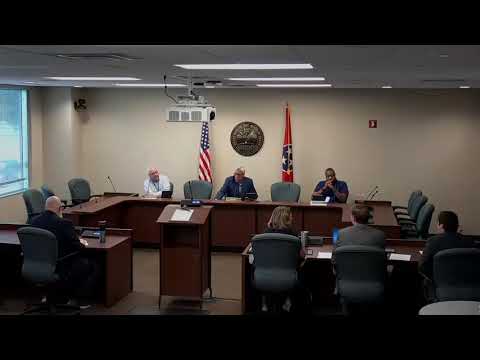
Collection Service Board approves legal report listing 21 complaints and six consent orders
Summary
The Tennessee Collection Service Board accepted a legal report covering 21 complaints and recommended six consent orders tied to statutory licensure violations; counsel clarified redaction practices, statutory scope over commercial collections, and an updated cost-recovery approach for respondents who do not timely accept consent offers.
The Tennessee Collection Service Board voted unanimously Wednesday to accept a legal report from board counsel that lists 21 complaints and recommends six consent orders tied to statutory violations related to licensure and surety bonds.
Board legal counsel Joseph Wharton read the report and answered members’ questions about how complaints are presented and how the board enforces its orders. “Based on the recommendations, currently, I’ve recommended six consent orders, which is a larger volume than our normal legal report,” Wharton said, adding that the consent orders are tied to “direct statutory violations as far as licensure, surety bonds.”
The board discussed the practice of posting a redacted legal report. Member questions reflected concern that redaction could hide conflicts of interest. Wharton said the practice of giving anonymous complaint information at the report stage is intentional: the board reviews complaints before formal litigation is initiated, and a respondent’s name is typically redacted until the board advances a matter. If a case moves forward to a formal enforcement action, Wharton said staff would identify potential conflicts and request that any conflicted member step aside.
Members pressed counsel on the board’s jurisdiction over commercial collections raised in one complaint, noting that the federal Fair Debt Collection Practices Act primarily protects consumers. Wharton read a statutory definition on the record, saying the Tennessee statute defines collection service broadly: “Collection service means any person that engages in or attempts to engage in the collection of delinquent accounts, bills, or other forms of indebtedness irrespective of whether the person engaging in or attempting to engage in collection activity has received the indebtedness by assignment or whether the indebtedness was purchased by the person engaging in or attempting to engage in the collection activity.” He said there are limited exemptions for banks and some state institutions, and that the department’s approach is to focus on statutory violations, such as unlicensed activity, when a respondent is not licensed under Tennessee law.
Wharton also described the board’s consent-order process and a recent change in how the board seeks recovery of expenses when a respondent fails to respond to a consent-offer. He said respondents given a 30-day offer to accept a consent order often respond after the board files a notice of hearing and charges; in those cases, legal staff now ask that the respondent pay the original civil penalty plus incidental costs such as the attorney time spent drafting the notice and the APD filing fee (which Wharton said is $200). Wharton gave a hypothetical example: a $500 penalty could become approximately $900 after added costs if the respondent fails to accept the consent offer in the 30-day window.
Wharton said collection on consent orders has occurred in past cases; he recalled instances where the board received payment after issuing a consent order and closed the matter. The board then voted to accept counsel’s recommendations on the legal report.
The meeting record contains the complaint numbers Wharton read into the record (Complaint 2025006761; 2025012991; 2025013131; 2025013321; 2025013431; 2025017551; 2025018991; 2025012391; 2025014221; 2025015541; 2025017691; 2025019471; 2025019731; 2025023211; 2025020861; 2025025691; 2025022121; 2025023741; 2025026011; 2025028321; 2025028551).
The board took no separate vote on individual complaints at this meeting; it approved the legal report with counsel’s recommendations as presented.
Members and counsel indicated they will follow up on a question about the statute’s consumer-versus-commercial scope after the meeting if more statutory detail is needed.
Ending: The board’s legal report and its recommendations will be the subject of follow-up if staff pursues formal legal actions; board counsel said staff will notify members if any pending case requires recusal or changes quorum needs at future meetings.