Get Full Government Meeting Transcripts, Videos, & Alerts Forever!
Get email alerts on the Utility Communications topic
No spam. Unsubscribe anytime.
Public Service Commission directs utilities to form work group on Empower Maryland customer notices
Summary
Commissioners paused rule adoption and asked utilities and stakeholders to explore ways to deliver consolidated information about Empower Maryland programs and available federal and state tax credits and rebates, including options that avoid extra mailing costs for some utilities.
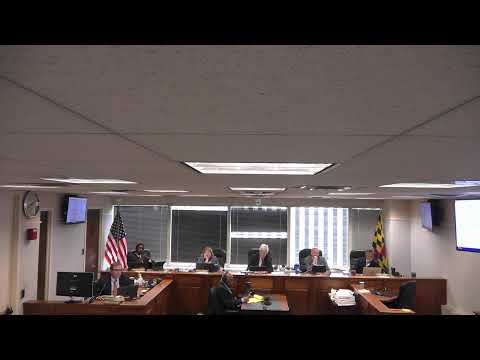
The Public Service Commission on an unspecified date directed utilities and stakeholders to form a work group to develop clearer customer notices that combine information about Empower Maryland programs with federal and state rebates and tax credits, rather than adopting a regulation at the meeting.
Commissioner Plutchman said she was "just concerned about customers getting lots of different kinds of information in lots of different ways and not getting in the information that they can actually use effectively," and asked whether the commission could require notices that are useful to ratepayers rather than simply meeting a narrow statutory wording.
The matter arose from recent legislation that requires the commission to adopt regulations obligating utilities to offer or promote federal and state tax incentives, rebates and credits. Commissioners and utility representatives agreed the statute's requirement could be met while also packaging information so customers can more easily see all available options.
Jacqueline Zikus, a BGE marketing representative, said BGE will launch an advertising campaign the next day that creates “this virtual front door of how to manage your energy use” and links customers to Empower programs and assistance tools. She described existing vehicles utilities use to notify customers: a quarterly Smart Energy News newsletter (a second page of the bill), monthly bill inserts ("buck slips") and email campaigns. Zikus gave cost estimates cited during the meeting: a one-sided bill insert printed for mailing around $7,000, a two-sided insert about $14,000, and a new targeted email about $5,000.
A Washington Gas representative said the company prefers leveraging existing marketing resources and targeting tactics to "get the most bang for the buck," and said Washington Gas already provides tax credit information alongside Empower rebates on a dedicated microsite. A PHI representative said PHI does not have the quarterly newsletter and that a bill insert would be an added expense for their company.
Commissioner Litton asked whether utilities can attach additional information to what they already provide or would need a standalone document. Utility representatives repeatedly said they could include additional copy in existing channels (web pages, email campaigns, bill newsletter or inserts) but a dedicated bill-insert would impose additional printing costs for some utilities.
Commissioners and utility speakers also discussed customer support after notices arrive: BGE said it would arm care-center representatives and community outreach teams with talking points and link notices to web tools such as a "savings finder" that helps customers identify qualifying programs. BGE stated roughly 40% of its customers receive paper bills and that electronic-bill customers have links to online resources.
The commission decided not to adopt a regulation at the meeting. The chair confirmed there is "no clock ticking on this regulation," and commissioners directed staff and the utilities to convene a work group to explore approaches that deliver consolidated information on Empower programs and other incentives, and to consider direct-notification frequency (the chair suggested twice yearly, in spring and fall, as a possible cadence). The commission asked utilities to return with examples of current newsletters, inserts and other outreach materials and to discuss minimizing added costs for companies that lack an existing newsletter.
No formal vote was recorded during the discussion; the record shows direction for follow-up rather than an adopted regulation.
The discussion focused on communication tactics and costs; it did not adopt or amend statutory language, set a regulatory deadline, or change program eligibility. Staff and utilities were asked to report back to the commission with recommended language and outreach options for the proposed notice obligations.
Looking ahead, commissioners asked the group to consider a single hub or "one-stop" approach so customers do not have to visit multiple sites, and to build a process that can be adjusted if federal incentives change or expire.