Get Full Government Meeting Transcripts, Videos, & Alerts Forever!
Get email alerts on the Waste Management topic
No spam. Unsubscribe anytime.
Encinitas staff, EDCO report progress on SB 1383 organics diversion, urge public outreach
Summary
City staff and contractor EDCO updated the Environmental Commission on state SB 1383 rules, local diversion performance, edible-food recovery, and planned outreach and enforcement steps to meet the city—s Climate Action Plan disposal-rate target.
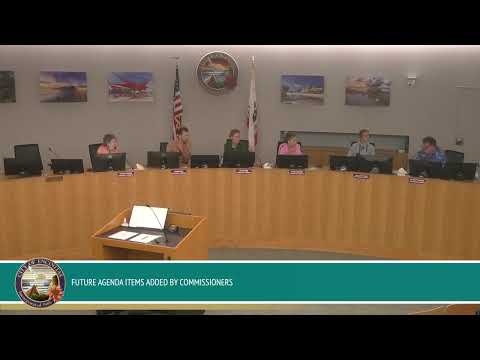
City of Encinitas 0 Waste Program Administrator Paul Meckler and EDCO Northern Division General Manager Matthew Cleary gave the Environmental Commission an extended update on SB 1383 implementation, local diversion results and next-year plans at the commission—s June meeting.
Meckler summarized the regulatory drivers and local targets, saying the state mandate SB 1383 requires broad organics diversion and edible-food recovery while the older AB 939 sets an ongoing 50% diversion framework. He noted the city measures disposal as pounds per person per day and reiterated the Climate Action Plan goal of reducing that rate to 3 pounds per person per day by 2030; Encinitas—s regulatory target referenced in the presentation is currently about 7.5 pounds per person per day, with an interim goal of 5.3 that the city has passed.
The update placed heavy emphasis on organics capture and edible-food recovery. Meckler said the city identified 16 tier-one and 29 tier-two qualifying food generators for edible-food recovery (grocery and larger food-service sites, cafeterias and schools) and reported 44 education-outreach instances, 16 formal inspections and nine technical consultations. Meckler added that city-reported donations from generators amounted to roughly 679,000 pounds in the most recent reported year; local food-recovery organizations reported about 519,000 pounds recovered. Meckler said the difference reflects donations originating outside city limits and some generators using FROs outside Encinitas.
Matthew Cleary described EDCO—s role in processing and outreach. He said EDCO—s anaerobic-digestion facility currently processes about 93,000 tons of organic material per year and is being expanded with two additional digesters to reach roughly 186,000 tons annual capacity; the digester expansion is expected to be operational about a year from now. Cleary noted the company—s material-recovery and household-hazardous-waste services, school- and multifamily-outreach materials (including eight videos produced in English and Spanish), and community events such as mulch giveaways and periodic universal-waste collection days.
On program performance, staff presented a citywide diversion figure of about 29,991 tons (39.7% of materials generated) diverted from landfill during the reported period. Meckler said organic tons diverted rose substantially year over year, and EDCO highlighted increases in construction-and-demolition diversion (from 10% to 15%) and stable recycling tonnage at roughly 13% year over year. Meckler characterized those gains as important steps toward the 2030 goal but said the current trajectory would still fall short of the 3-pound target unless additional measures are implemented.
The presenters also outlined enforcement and compliance work. Meckler said the city conducted 65 inspections covering edible-food recovery, construction-and-demolition and commercial front-of-house organics; the city logged nine enforcement cases related to noncompliance. EDCO reported ongoing multifamily outreach (25% complete as of the presentation, with a target to finish by Sept. 30) and business-assessment pilots for restaurants conducted in partnership with iLoveCleanSD.
Several commissioners and members of the public asked technical and operational questions. Commissioners and attendees raised: whether mulch distributed at giveaways is the digestate from EDCO—s anaerobic digester (Cleary and Meckler clarified the mulch is ground yard waste and not the digester—s blended soil amendment), requests for improved on-container labeling and outreach to residents who did not receive kitchen caddies, and suggestions to pilot compost-only restroom bins at public facilities.
Cleary and Meckler invited commissioners to tour EDCO—s facilities; Cleary said, "I'd like to invite you to... tour our facilities." Cleary also warned of safety and contamination issues tied to improper disposal: he told the commission that since January of the year he had recorded 13 fires at the recycling facility and multiple vehicle fires suspected to be caused by batteries and other improperly disposed items, stressing the safety imperative of proper universal-waste handling.
Meckler closed by listing near-term priorities: continued multifamily and commercial outreach, ramped edible-food recovery enforcement and inspections, continued expansion of construction-and-demolition diversion procedures and forms, and efforts to increase local procurement and availability of compost and mulch products. He said the city and EDCO will publish case-study materials and a 0-waste toolkit for businesses later in the year.
The presentation was for information only; no formal commission vote on program actions was taken during the session.
Ending: The commission thanked the presenters and moved on to regular business, including the June work-plan update.