Get Full Government Meeting Transcripts, Videos, & Alerts Forever!
Get email alerts on the Public Access Ombudsman topic
No spam. Unsubscribe anytime.
Attorney General asks panel to let Public Access Ombudsman delegate duties to speed case closures
Summary
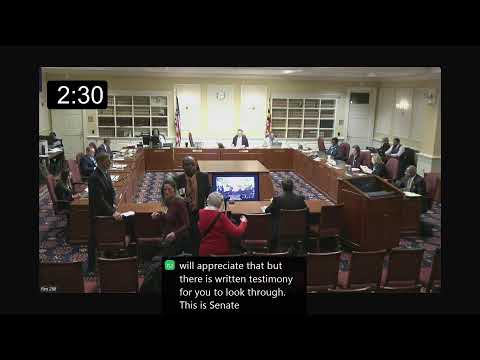
Sen. Malcolm Augustine and an attorney from the Office of the Attorney General told the committee SB 296 would let the Public Access Ombudsman delegate dispute‑resolution tasks to staff to manage a growing caseload more efficiently.
Sen. Malcolm Augustine opened the presentation on SB 296 by describing a growing workload for the Public Access Ombudsman. "In fiscal year 20 24, the ombudsman had a total of 6 36 matters," he said, noting mediations and carryover caseloads that at times reached 87 matters in a month. He said the ombudsman needs flexibility to delegate some duties to staff so disputes can be resolved more quickly.
Office of the Attorney General support: Sarah Clem, assistant attorney general in the public access unit and counsel to the ombudsman, told the committee the office has provided a contractual mediator and administrative help to manage caseloads and that the bill simply makes explicit the ombudsman's ability to delegate tasks such as conducting dispute resolution and issuing administrative determinations to staff in the Public Access Ombudsman office. "All this bill does is make it explicit that the ombudsman can delegate some of the tasks assigned to her," Clem said, adding that delegation would improve efficiency without changing the legal standards applied to disputes.
Press and public‑interest backing: Rebecca Snyder of the Maryland‑Delaware‑D.C. Press Association said the ombudsman's success in resolving disputes keeps matters out of court and that delegation would help the office maintain timely service for journalists who depend on fast access to records. The ombudsman, Lisa Kirschner, was unable to join live testimony but members of the committee and witnesses said they would accept written input from her describing operational needs.
Next steps: Committee members asked for further data on the composition of caseloads and whether particular categories (for example, law enforcement records) are driving growth. The attorney general’s office indicated it could manage delegation within current resources and the fiscal note did not indicate a requested appropriation. No formal vote was recorded in the transcript.