Get Full Government Meeting Transcripts, Videos, & Alerts Forever!
Get email alerts on the Anesthesia Practice topic
No spam. Unsubscribe anytime.
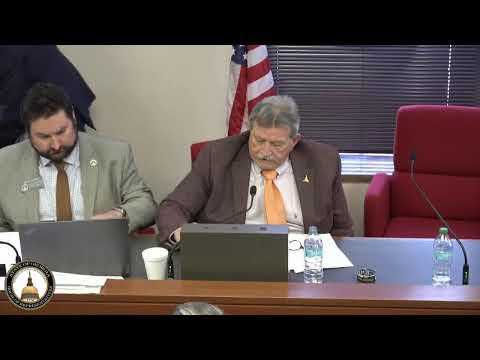
House Regulated Industries committee rejects change to physician-direction requirement for anesthesia
Summary
The House Regulated Industries Committee declined to advance a substitute to House Bill 251 during a committee meeting when members voted against the motion to pass the measure.
The House Regulated Industries Committee declined to advance a substitute to House Bill 251 during a committee meeting when members voted against the motion to pass the measure. The bill would have altered Georgia law that currently requires anesthesia to be “administered under the direction and responsibility of a duly licensed physician,” replacing that language with a definition of “coordination” between physicians and certified registered nurse anesthetists (CRNAs) and other anesthesia providers.
Supporters of the bill argued the change would expand access to anesthesia services, particularly in rural areas. Matt Oxford, president of the Georgia Association of Nurse Anesthetists, told the committee that 36 states have already moved to similar statutory frameworks and that CRNAs are the primary anesthesia providers in many rural counties. “36 states have already changed their legislation to remove, direction or supervision within their legislation,” Oxford said.
Opponents — including physicians and the Georgia Society of Anesthesiologists — said the substitute would remove an essential, statutory backup and risk patient safety by weakening the clear chain of command in operating rooms and high-acuity settings. Dr. Mark Newton, a member of the House and an emergency physician, said the substitute was “so broadly written” that it risked introducing confusion in acute-care hospitals and trauma situations. “It is vital that you know exactly who’s in charge,” Newton said, describing scenarios where rapid, single-person decision-making is required.
Dr. Steve Swayne, a retired physician anesthesiologist who practiced at Emory Saint Joseph’s, urged the committee to retain the physician-led model. “You simply cannot eliminate ‘administered under the direction and responsibility of a duly licensed physician’ and expect the same ability to successfully respond to and appropriately intervene in anesthetic urgent and emergent situations,” Swayne said. He described the physician-led anesthesia care team as the safest mode of practice for many high-acuity cases.
Proponents said the change would give hospitals flexibility to staff in places with shortages of physician anesthesiologists. Tim Davis, director of government affairs for the Georgia Nurses Association, told the panel many health systems “rely on these surgical services, from a viability standpoint,” and that local facilities sometimes lack any anesthesiologist on site.
Representative Carpenter offered an amendment that would have limited the coordination standard to areas outside metro counties, using a list of counties (Bartow, Clayton, Cobb, DeKalb, Fulton, Gwinnett and Henry) as the metropolitan exemption. The amendment failed on a voice/hand count.
Representative McDonald moved to pass the substitute; the motion received a second. The committee then voted on the bill and, following a hand count recorded in committee, the motion to pass failed by tally (yes: 6; no: 9). Committee discussion before the vote emphasized competing priorities: maintaining patient safety and supervisory clarity in operating rooms versus expanding access to anesthesia care in undersupplied rural hospitals.
Committee members and witnesses offered several policy suggestions during debate, including increasing residency slots and other incentives to attract physicians to rural Georgia; several speakers said such workforce measures would do more to address rural shortages than changing the statutory supervision language.
The meeting concluded without the substitute advancing from committee.
Votes at a glance
- Motion to pass substitute to House Bill 251: mover — Representative McDonald; second — not specified in transcript; tally — yes 6, no 9; outcome — failed. Vote names were not recorded in the transcript; counts are committee hand-count totals as announced on the record. - Amendment offered by Representative Carpenter to restrict the coordination standard to outside the listed metro counties (Bartow, Clayton, Cobb, DeKalb, Fulton, Gwinnett, Henry): outcome — failed (hand-count; committee announced the amendment failed). No roll-call names were recorded in the committee transcript.
Why it matters: The bill would have changed statewide statutory language governing anesthesia practice and could have allowed facilities to rely more on CRNAs without the explicit statutory phrase tying anesthesia to physician direction and responsibility. Proponents said the change would increase staffing flexibility in underserved areas; opponents said it would remove an important statutory safeguard for patient safety and clear command in emergencies.
Speakers and witnesses represented competing stakeholder groups, including the Georgia Society of Anesthesiologists, physician anesthesiologists who warned of increased risk in high-acuity cases, nurse anesthetist organizations advocating for scope-of-practice change, and nurses and APRN representatives raising workforce-access concerns.
The committee did not adopt any formal follow-up assignments during the meeting; members urged continued study of workforce incentives and training-slot expansion as potential long-term solutions to rural access challenges.