Get Full Government Meeting Transcripts, Videos, & Alerts Forever!
Get email alerts on the County Finance And Operations topic
No spam. Unsubscribe anytime.
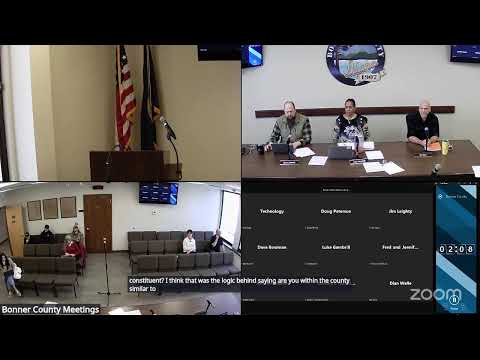
Bonner County commissioners discuss moving vehicle repair costs to individual departments as EMS district transitions
Summary
Commissioners questioned current process by which vehicle repair bills are paid from the county general fund and discussed assigning costs to departmental budgets, including the Bonner County Ambulance District, which is transitioning to an independent taxing district.
Bonner County commissioners spent part of Tuesday’s meeting questioning why the county general fund repeatedly pays for vehicle repairs — often to the same vendor — and discussed policy changes to improve accountability, cost tracking and vendor vetting.
Commissioners and county risk and finance staff said the present practice allows departments to report damage or accidents to risk and have repairs paid from the general fund, which prevents tracking costs at the individual‑department level. Christian Jocelyn, the county risk manager, confirmed departments typically choose the repair shop and said the county has historically not directed vendors so local shops can compete for work.
“Traditionally in the old days, they had 3 different shops they're using, but we on purpose don't direct what shop to go to, just let the local shops kind of compete for the business,” Jocelyn said. He also told the board the county’s risk policy provides no deductible as long as incidents are reported timely and personnel policies followed, but that policy could be modified to include co‑pays or other controls.
Commissioners said ambulance repairs and other costs paid from the general fund make it difficult for the Bonner County Ambulance District — which is moving toward operating as its own taxing district — to account for vehicle expenses in its budget. The board asked that county staff, the ambulance district and the comptroller meet to clarify whether the general fund will continue to cover those costs during the district’s transition and to consider formal changes to county policy and ordinance so department costs are tracked in the appropriate budgets.
The comptroller told commissioners that until the ambulance district’s ordinance is formally amended, current practice will likely continue, but commissioners directed staff to accelerate work to clarify written policy and consider a workshop so any changes can be included in the upcoming budget cycle.
On the consent agenda the board also directed staff to remove an erroneous tax charge from an auto‑body bill; risk staff agreed to investigate routine tax charges and to conduct deeper audits of invoices and vendor vetting procedures.
No formal ordinance changes were adopted at Tuesday’s meeting; commissioners asked staff to draft options, bring back legal and comptroller input and schedule a workshop ahead of next year’s budget discussions.