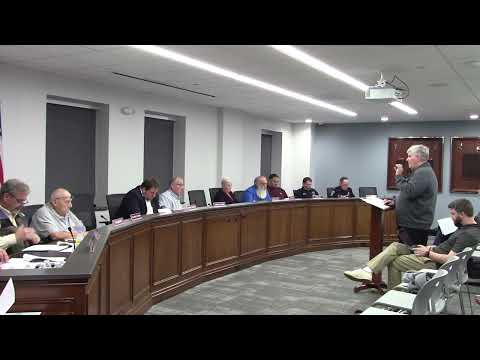
Developer outlines no-upfront-cost solar plan for Munhall borough buildings; council and residents raise questions
Loading...
Summary
A Mid-Atlantic solar developer told the Munhall Borough Council on Tuesday the company could install ground-mounted solar arrays for borough-owned meters with no upfront construction cost to the borough and with an option for the borough to buy the system after five years.
A Mid-Atlantic solar developer told the Munhall Borough Council on Tuesday night it could install ground-mounted solar arrays that would require no upfront construction cost to the borough and could generate net positive cash flow within the first five years, while offering the borough an option to buy the system starting in year six.
The developer’s representative, who identified the firm as a Harrisburg-based Mid-Atlantic solar developer but did not give a personal name, told council members the largest proposal considered for borough-owned land would be about 1.7 megawatts and — under the company’s modeling — could produce roughly $64,000 a year in net cash flow in years after a potential purchase at year six. The presenter described the project structure as a power service agreement in which the company finances, builds and operates the system; the borough would make service payments once the system is operational and would receive reduced kilowatt-hour charges and any solar renewable energy credit (SREC) revenues the company aggregates on the borough’s behalf.
Why it matters: The proposal could reduce the borough’s electricity bills for its municipal buildings and facilities without an initial capital outlay, then give the borough the option to acquire the system after the tax-equity investors complete their initial term. Council members pressed the presenter for precise figures, timelines, maintenance responsibilities and public-safety procedures; residents who spoke during public comment described personal savings from rooftop systems and urged the borough to consider native plantings around arrays.
Details presented and questions raised The presenter said the company has deployed roughly 350 solar arrays for nonprofits, boroughs, townships and school districts, and that panels are typically installed about 36 inches off the ground and fenced with vegetative buffers. The company’s one-page summary circulated to council included three sizing options; the largest, the 1.7 MW scenario, was described as “much higher than what you use” for borough buildings and modelled to return approximately $64,000 per year after a purchase in year six and lifetime savings the presenter estimated in the millions over a 40-year span.
The representative said the company’s example contract in the meeting materials included an annual contract-service payment of $118,000 spread monthly (the presenter described that as the example payment to the company in the power service agreement) and that — after accounting for the borough’s lower electric bills and SREC revenue — the borough would be roughly $30,000 ahead per year in the early years under one of the sample scenarios. The presenter said a buyout price in the example schedule at year six was about $2,000,059 for the large array, and that smaller arrays would have proportionally lower buyout costs.
Timing and incentives The company urged the borough to act early to capture federal tax incentives and current SREC values, saying projects completed by 2027 could capture some expiring incentives. The presenter gave an overall timeline of about 18–20 months from permitting through construction in many cases but emphasized permitting and interconnection reviews with the utility could lengthen that schedule. The company said the project would be submitted under the utility’s net‑metering tariff (the presenter referenced Duquesne Power for the borough’s service territory) and that interconnection studies by the utility would determine upgrades and any limits on export.
Operations, maintenance and safety The presenter described ongoing monitoring and an operations-and-maintenance program the company offers, warranty coverage for panels (a 30-year output warranty was cited) and inverter warranties extended to 20 years in the company’s model. Council members and the fire chief asked about emergency response and disconnection at the site. The presenter said grid-side circuits can be shut off but that panels will still produce DC electricity in sunlight; he recommended fire-safety training and said site-level disconnect procedures exist and would be part of planning.
Public comment and council cautions Resident Charlene David, who identified herself and said she has a rooftop system, told the council solar had “saved me a heck of a lot of money” and recommended getting multiple bids and favoring native plantings around arrays to reduce maintenance. Another public commenter, identified in the record as TJ of Gravity Trico, offered packets about tax-abatement programs (a different agenda item) and encouraged the borough to coordinate with the school district on incentives. Council members repeatedly asked for bills and usage data so the company could refine sizing and financial modeling; the presenter asked for physical electric-bill copies to finalize a smaller-array estimate tied to the borough’s actual annual kilowatt-hour use.
What the borough would (and would not) control The presenter stressed this project as described would serve borough accounts only — municipal buildings, fire halls and similar borough meters — not residents’ bills under the company’s example. He noted ‘community solar’ proposals being discussed by the state could allow subscriber participation in the future, but that option was not guaranteed: “technically, no” for residents under the proposal he presented.
Next steps Council members indicated the matter would be discussed further at future meetings. The presenter suggested a target contract-execution window (he mentioned March 31 as a reasonable internal planning target in the presentation) and said company counsel would follow up with the borough’s solicitor to begin due diligence and a draft power service agreement if the borough chooses to proceed.
Ending note Council members asked the company to provide a refined proposal using the borough’s actual electric bills, clarifications on the sample contract terms, and details on vegetation maintenance and emergency-response training before the council considers authorizing a formal agreement or taking a vote.