Get Full Government Meeting Transcripts, Videos, & Alerts Forever!
Get email alerts on the High School Schedule And Courses topic
No spam. Unsubscribe anytime.
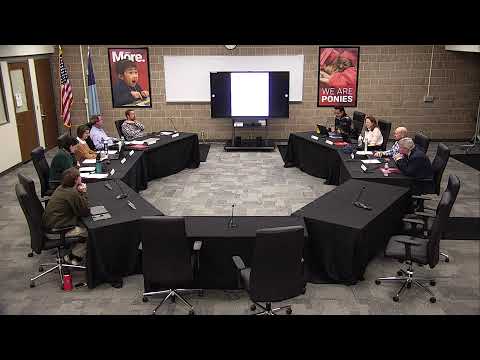
Stillwater board hears proposal for new high-school schedule, AA-degree pathway and online academy; board discusses $800,000 staffing ask and fund-balance risk
Summary
District staff presented a multi-part plan to the Stillwater Area High School Board that would change the high-school schedule and expand course offerings to support career and college pathways, including the possibility of a school-based AA degree and a district-run online academy.
District staff presented a multi-part plan to the Stillwater Area High School Board that would change the high-school schedule and expand course offerings to support career and college pathways, increase concurrent/college-in-the-schools (CIS) enrollment and create a district-run online academy.
Assistant administrators and high-school staff framed the proposal as a strategic investment intended to recapture students who leave traditional enrollment for PSEO (Postsecondary Enrollment Options), online providers, homeschooling or other districts. Staff described a menu of changes: a modified seven-period day (7x2), an option to offer an associate of arts (AA) degree on site through coordinated CIS/college-credit coursework, and about 20 new or revised course proposals across English, social studies, sciences, world languages, health/PE, music and digital technology. Among courses cited were a CIS research-writing course, CIS Introduction to Physics, Temas Globales (a bridge course for immersion students), Spanish for heritage speakers, a beginning guitar class and several digital-technology offerings including Python programming and cybersecurity introductions.
Rob, a district staff member presenting course proposals, said the work was done “to ensure that our kids have access to higher and higher levels,” and described the course set as intended to make an AA degree attainable at the high school. Staff also proposed a district-run online academy for required courses students commonly take online (English 10/11/12, algebra sequences, U.S. history, government and chemistry). Staff argued a district-run online option would keep students enrolled with Stillwater teachers and that earlier experience in other districts showed retention improved when the district provided the online option.
Board members pressed senior staff on cost and timing. Administration said implementing the modified schedule would require additional staffing and identified an initial staffing investment estimate of about $800,000 to operate the schedule and pathways work. Board members and staff discussed the district’s low fund balance (about 1.1% at last audited year) and the board’s policy goal (around 5% fund balance). Board members repeatedly asked what the district will cut or reallocate if the board makes this strategic investment; staff said they will return with specific options for operational efficiencies and confirmed transportation is a primary area being considered for savings.
Administration also presented a capture-rate and revenue-impact analysis that staff said showed the district lost an estimated $3.0 million from resident homeschooling and about $900,000 in PSEO costs last year, and cited roughly $580,000 in courses taken outside the district via online providers; staff said nearly 2,000 resident students attend school elsewhere, an impact staff estimated at about $14 million in lost potential revenue.
Several board members said they supported the concept and the AA-pathway goals but wanted clearer metrics and a staged plan before approving dollars. Chair Sherman and others asked for measurable outcomes to report back (enrollment capture, pathway participation, college-credit taken, and financial results) and for a three-year review horizon. Student speaker Zach and other board members endorsed the AA-degree and 7x2 concepts as likely attractive to students.
Ending — what’s next District staff will return with a detailed budget-to-source plan showing operational efficiencies, potential savings (transportation and other areas), and specific staffing requests and course-by-course enrollment projections. The board indicated it expects performance metrics and a follow-up recommendation before any final vote on schedule change and additional staffing.