Get Full Government Meeting Transcripts, Videos, & Alerts Forever!
Get email alerts on the Substance‑use‑treatment topic
No spam. Unsubscribe anytime.
Senate panel backs AB 669 to guarantee minimally 28 days of uninterrupted residential addiction treatment for insured patients
Summary
AB 669 would require insurers to ensure at least 28 days of uninterrupted addiction treatment and limit early discharge driven by utilization review panels; supporters cited overdose deaths and clinical need, while insurers said they were "oppose unless amended." Committee moved the bill forward as amended.
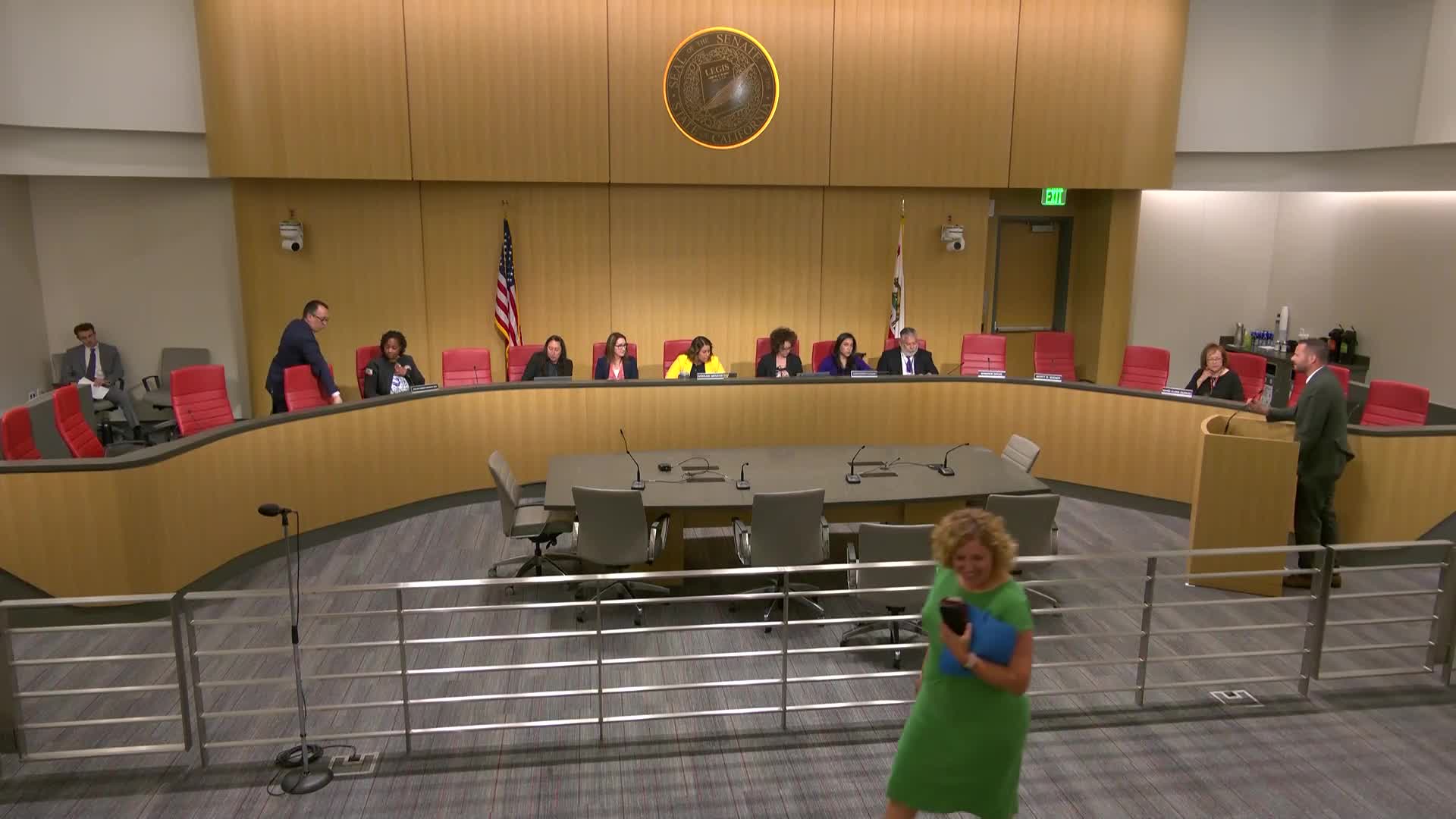
AB 669, a bill to require insurers to cover at least 28 continuous days of residential addiction treatment without premature discharge driven by insurer utilization panels, was advanced by the Senate Health Committee after emotional testimony from family members and addiction clinicians.
Assemblymember Haney, the bill’s author, said insurers sometimes use corporate review panels that “have no contact at all with the patient, no contact at all with their doctors, and use that process to deny the coverage that folks in our state critically need.” He cited other states (New York, New Jersey, Massachusetts, Delaware) that have enacted similar protections and urged the committee to prevent abrupt discharge from residential care that can lead to relapse and overdose.
Christine Matlock, whose son Ryan died of a fentanyl overdose in 2021 after insurers approved only a three‑day detox stay despite clinician recommendations for 90 days, gave detailed testimony about the family’s failed appeals and the fatal outcome after discharge: “That was the last time I spoke to my son. He was released the next morning and died 48 hours later from a fentanyl overdose,” she told the committee.
Dr. Veronica Loso, a board‑certified psychiatrist and addiction specialist, testified about clinical evidence that recovery and neuroadaptive healing take months and that mortality risk rises sharply when individuals lose tolerance. She said guidelines and diagnostic frameworks support longer stabilization and that early termination can raise mortality risk by large multiples.
Supporters included the California Consortium of Addiction Programs and Professionals, Health Access California, the California Behavioral Health Association, Hospital Association representatives, drug‑policy advocates and treatment coalitions. Insurer groups, including the Association of California Life and Health Insurance Companies and the California Association of Health Plans, said they were “oppose unless amended,” asking for clarifying language, interoperability with utilization‑management processes, and stronger communication between plans and providers before discharge. Insurer witnesses said utilization management plays a role in ensuring medical necessity and in guarding against waste and fraud.
Several senators urged continued negotiations; some expressed support for the bill in committee and the author asked for an aye vote. The committee advanced AB 669 as amended and referred it for fiscal consideration.
Votes at a glance: AB 669 advanced from committee as amended and was sent to appropriations.