Get Full Government Meeting Transcripts, Videos, & Alerts Forever!
Get email alerts on the Public‑health‑infrastructure topic
No spam. Unsubscribe anytime.
Committee advances bill to create state working group on North County San Diego public healthcare sustainability
Summary
AB 356 would create a HCAI working group to evaluate public health infrastructure in North San Diego County and examine the long‑term sustainability, governance and finances of Palomar Health Care District; it advanced from the Senate Health Committee after testimony and amendment.
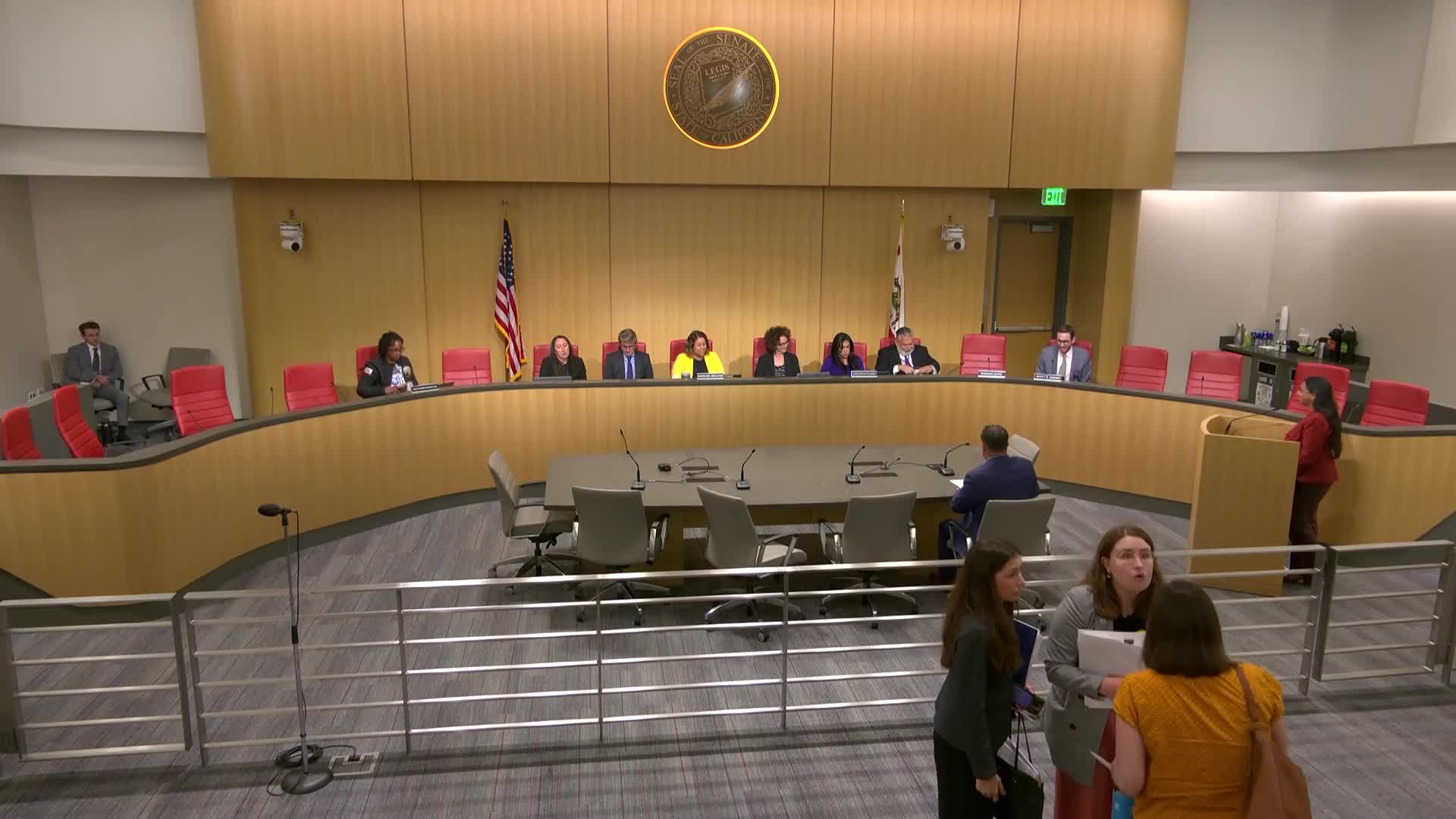
Assembly Bill 356, introduced by Assemblymember Samara Patel, advanced from the Senate Health Committee after extended debate about creating a state‑led working group to assess public healthcare infrastructure in North San Diego County and the long‑term sustainability of the Palomar Health Care District.
The bill would establish a working group within the Department of Healthcare Access and Information (HCAI) to review the statutory responsibilities, governance, finances and service delivery of health care districts and hospitals serving the region, with a specific focus on Palomar Health — the largest public health care district in California. The author said the measure is “at its core, a transparency and accountability bill” and cited Palomar’s recent financial losses, large public subsidies and governance changes as motivating factors. In committee the author said Palomar “is home to the region’s only public maternity ward” and noted the district “serves a patient population with an 80% Medi‑Cal mix.”
Adam Wilson, representing San Diego LAFCO (Local Agency Formation Commission), testified in support after an amendment added LAFCO to the working group. Wilson explained that LAFCO is conducting a municipal service review (MSR) of four local health care districts and said involvement in the working group would allow integration of MSR findings with state policy and planning and “ensure the stakeholders and the public are provided with timely, relevant information.”
Opponents included Palomar Health’s representative and the Association of California Health Care Districts. Sarah Bridge of the Association of California Health Care Districts said the group was “respectful opposition,” raising concerns about timing, the bill’s breadth and scope (the amended language expanded the list of facilities to include “all hospitals”), and the risk of duplicating or interfering with local public processes. Palomar Health’s representative, Felipe Fuentes, registered opposition as well.
Committee members pressed the author on how the working group report would differ from the LAFCO MSR. The author and Adam Wilson said the MSR would provide detailed municipal‑service data and a draft MSR was expected in October; the HCAI working group would convene stakeholders, use the MSR, and produce a state‑level assessment and recommendations intended to improve transparency and sustainability.
Several members — including those representing San Diego interests — expressed support for advancing the measure with the committee amendments that narrowed membership and extended the workgroup timeline. The author said the bill is complementary to the LAFCO process and would rely on local MSR data.
Votes at a glance: The committee moved AB 356 as amended and referred it to the next committee for fiscal consideration.