Get Full Government Meeting Transcripts, Videos, & Alerts Forever!
Get email alerts on the Health‑care‑provider‑directories topic
No spam. Unsubscribe anytime.
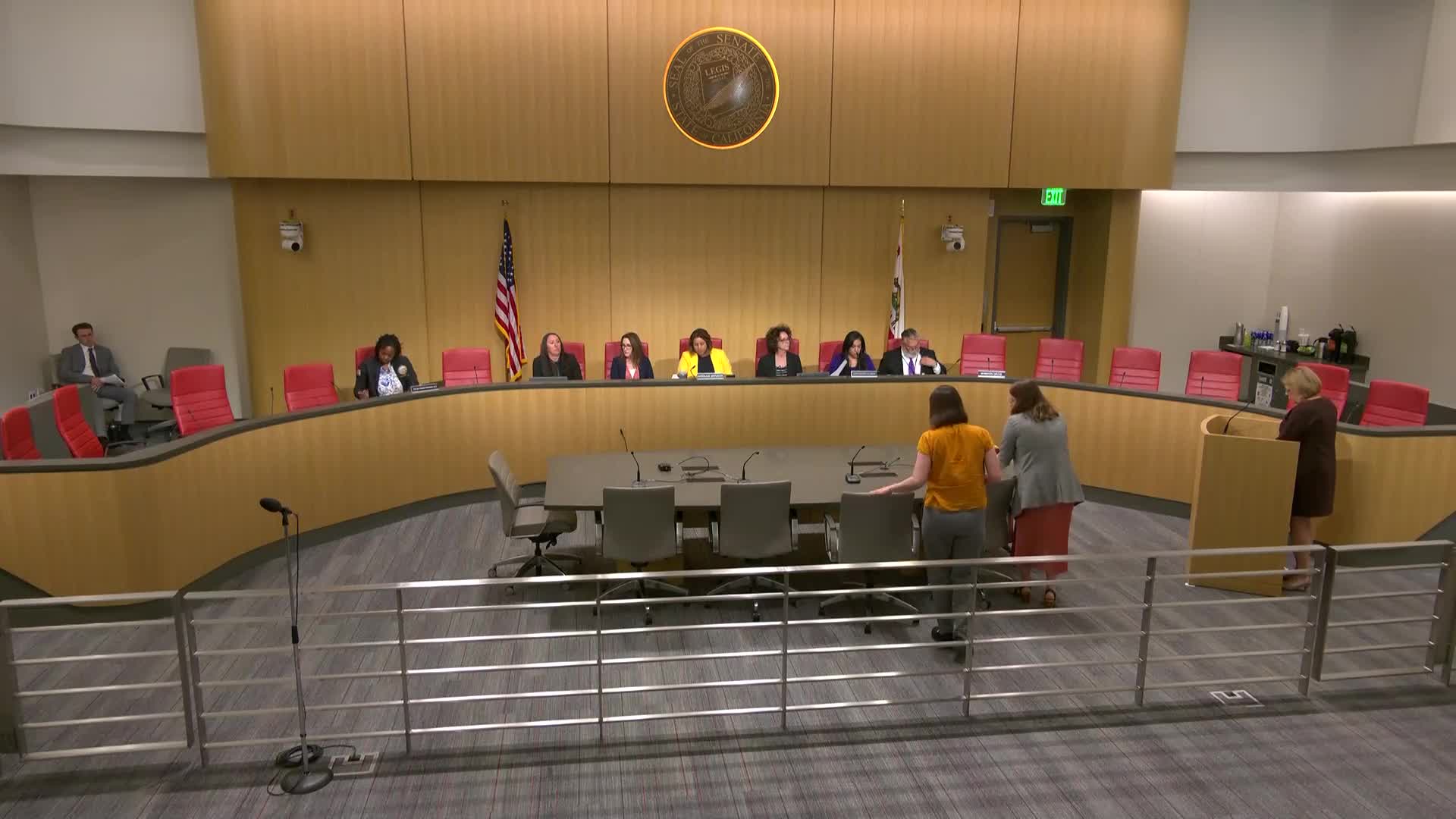
Senate committee advances bill to require accuracy benchmarks and penalties for health plan provider directories
Summary
The Senate Health Committee heard testimony supporting AB 280, which would require plans and providers to meet phased accuracy benchmarks for provider directories, create timelines for provider verification, permit use of a central database, and authorize penalties for noncompliance; the bill won committee approval as amended and will be referred.
AB 280, a bill aimed at improving the accuracy of health plan provider directories, advanced out of the Senate Health Committee after testimony from therapists, consumer advocates, and health-access groups about “ghost networks” that leave patients unable to find in‑network providers.
The bill would require health plans to meet increasing accuracy benchmarks that reach 95% by 2029, create timelines for providers to respond to information requests, allow plans to indicate on directories when a provider has not responded, and authorize the Department of Managed Health Care (DMHC) to require use of a central third‑party database. AB 280 also gives the DMHC authority to set penalties for noncompliance and requires plans that cause patients to rely on inaccurate directory information to arrange care and cover out‑of‑network costs.
The measure’s author, identified in committee as the Assembly majority leader, said she would accept committee amendments that “reflect our conversations with the plans, the providers, consumer advocates, the chair, and committee staff to strike a balance on accountability for all parties involved.” She told the panel, “AB 280 will fix a basic but important issue, making sure health plan provider directories are accurate and up to date.”
Mental‑health practitioners and advocates gave concrete examples of harm. Sarah Sorokin, a licensed clinical social worker from Solano County, described patients who call through long provider lists only to find numbers are wrong or providers are not taking new patients; she said that in extreme cases she has evaluated patients in emergency departments after a failed search for care. Katie Van Dynes, director with Health Access California and a sponsor of the bill, told the committee California “in theory has the strongest law in the nation on provider directories” but that directories remain unreliable in practice, with error rates for some specialties “as high as 80%.”
Opposition and cautious stakeholders — including the California Association of Health Plans, the California Medical Association and dental and insurer trade groups — said they were “opposed unless amended” to the bill in print and needed time to review the late committee amendments. Nick Luisos of the California Association of Health Plans said the groups appreciated recent modifications to penalty structure and provider accountability measures but asked for time to vet the exact language. Kevin Guzman of the California Medical Association said concerns remain about provider reimbursement and central‑utility provisions.
Committee members discussed Medi‑Cal carve‑outs in the amendments. Director Hansford (testifying with the author’s presentation) said amendments adopted in Assembly Appropriations removed enforcement provisions for Medi‑Cal managed care plans: “the enforcement of administrative penalties for failures to meet the benchmarks would not apply for Medi‑Cal managed care. It would only apply for commercial plans,” she said, while other reporting and accuracy requirements would still apply to Medi‑Cal managed care under the amendments.
Committee debate stressed balancing accountability between plans, providers and any third‑party central utility, and several members urged continued stakeholder work. The author closed by asking for an aye vote when the bill is called.
Votes at a glance: The committee moved the bill forward as amended and referred it for further consideration (see actions for details).