Lifetime Citizen Portal Access — AI Briefings, Alerts & Unlimited Follows
Council approves Vacant to Vibrant amendment to speed conversion and clarify wills handling
Loading...
Summary
The Council of the District of Columbia on July 1 approved the Vacant to Vibrant Amendment Act of 2025, a comprehensive revision aimed at speeding the return of vacant properties to housing and clarifying how the register of wills handles deposits and transfers.
The Council of the District of Columbia on July 1 approved the Vacant to Vibrant Amendment Act of 2025, a comprehensive revision aimed at speeding the return of vacant properties to housing and clarifying how the register of wills handles deposits and transfers.
The amendment-in-the-nature-of-a-substitute clarifies that only District residents may deposit wills with the register of wills and that court-appointed fiduciaries may examine an attestator's will only in limited circumstances such as when a testator has been adjudicated incapacitated. It also requires the register to transfer a will to the jurisdiction where a decedent allegedly lived at death if the testator did not live in the District.
The substitute adds additional permits'including raise, demolition and shoring and sheeting permits'that may trigger reclassification of a property from a higher commercial tax classification to a residential classification after developers obtain a new building permit. The substitute further requires the chief financial officer to revoke the preferential classification if the property is not put to predominantly residential use within three years of the issuance of a qualifying permit.
The amendment also expands Office of the Attorney General authority to decline to file or to move to dismiss foreclosure complaints in circumstances the OAG finds would cause substantial personal or economic hardship, where an interested party intends to rehabilitate or reoccupy within a year, or where foreclosure is not in the District's interest. If OAG declines to file or dismisses a pending foreclosure, the ANS requires publication of notice in the District of Columbia Register.
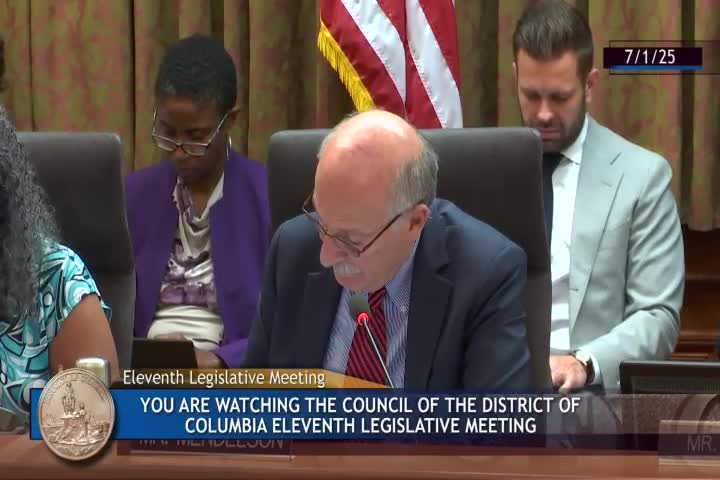
Chair Phil Mendelson moved the substitute and described multiple technical and substantive changes before members debated and approved the measure. Councilmember Robert White spoke in support, saying the package would help keep neighborhoods affordable and urged colleagues to vote yes. The amendment and the bill as amended passed by voice vote; the chair announced the ayes had it unanimously.
The Council described the legislation as a multicomponent effort to reduce blight, preserve affordable housing stock and provide clarity on probate-related practices and foreclosure discretion. The law will be carried forward as amended.
The measure drew applause from sponsors and no recorded dissent on final passage.
Looking ahead, implementation will require rule-writing and coordination among the CFO, Register of Wills, OAG and the permitting offices cited in the amendment.