Get Full Government Meeting Transcripts, Videos, & Alerts Forever!
Get email alerts on the Education Cyber Charter Reform topic
No spam. Unsubscribe anytime.
House passes House Bill 1500 to overhaul cyber charter funding and accountability
Summary
After hours of floor debate, the Pennsylvania House approved House Bill 1500, a package of cyber charter reforms including a flat tuition cap, new transparency measures and limits on reserve funds; final passage was 104-98.
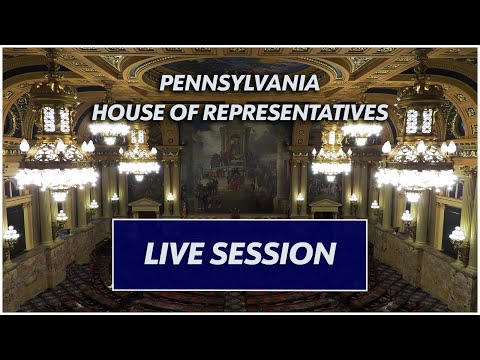
The Pennsylvania House of Representatives on June 4 passed House Bill 1500, a comprehensive package of reforms to cyber charter schools, by a vote of 104 to 98.
Supporters said the measure aims to standardize tuition payments, increase transparency and align cyber charter reporting with school districts. Representative Isaacson, the bill sponsor, said, “This bill, House Bill 1,500, focuses on 3 crucial changes, cyber charter funding reforms, transparency, and parity with school districts.”
Opponents argued the bill would sharply reduce funding and the viability of cyber charters, possibly closing schools that serve tens of thousands of students. Representative Kozak, speaking in opposition, said, “This bill's passage, the way it's written, will ultimately lead to the end of cyber charter schools and silence the families of 60,000 plus students.” Representative White called the measure “a massive cut to public education,” saying HB 1500 proposes a flat $8,000 tuition rate for cyber charter schools and would allow the state to seize certain reserve funds.
Debate covered multiple points of contention. Lawmakers who opposed the bill repeatedly cited the bill’s $8,000-per-student tuition cap and argued that the figure lacked justification; Representative White contrasted that figure with a Basic Education Funding Commission recommendation she said called for roughly $14,000 per student and with average per-pupil spending she cited of about $15,000 in fiscal 2023–24. Supporters cited auditor general findings about large fund balances held by some cyber charters and examples the auditor described as “uncommon expenditures,” arguing reforms were needed to prevent waste of public funds.
Sponsors and some committee chairs described prior actions on charter oversight, including changes enacted in 2024. Representative Cooper noted prior bipartisan reforms last year and described the bill as setting an unsustainable tuition rate for cyber charters unless further changes are negotiated. Representative Schweier, chair of the House Education Committee, cited the auditor general’s report and described the bill as implementing many of the report’s recommendations, including tighter rules on fund balances and increased oversight.
Lawmakers repeatedly framed the question as one of balancing oversight of public dollars with parental choice. Several speakers, including Representatives Anderson and D'Orsay, said they feared the bill would remove an educational option used by students with varied needs. Other members, including majority leaders, argued that unchecked fund balances and certain expenditures documented in audits justified the reform.
Formal action: the House voted on final passage. The clerk recorded yeas 104, nays 98, and the chair announced that, having achieved the constitutional majority, HB 1500 passed and would be presented to the Senate for concurrence.
The bill itself contains multiple substantive provisions that were discussed on the floor: a statewide tuition standard for cyber charters, new transparency and reporting requirements aligning cyber charters with district reporting, limits and oversight of reserve funds held by cyber charters, and a multi-year moratorium provision referenced in floor remarks that would pause the authorization of new cyber charters for five years (as described by speakers). Several members said that special education tuition changes and other technical changes were added during amendment and committee steps prior to floor passage.
Lawmakers on both sides asked for further work on funding formulas and on applying accountability measures across all public-school providers. With the House passage, HB 1500 goes next to the Senate; no Senate action was recorded in the House transcript.