Get Full Government Meeting Transcripts, Videos, & Alerts Forever!
Get email alerts on the Homelessness Enforcement topic
No spam. Unsubscribe anytime.
Worcester County adopts criminal penalties for camping on county property after public hearing
Summary
Worcester County Commissioners voted unanimously May 20 to adopt Bill 25-02, an amendment to county code that makes camping and sleeping on county property a criminal misdemeanor punishable by up to 30 days in jail or a fine and that clarifies a process for removing personal property stored or abandoned on county land.
Worcester County Commissioners voted unanimously May 20 to adopt Bill 25-02, an amendment to county code that makes camping and sleeping on county property a criminal misdemeanor punishable by up to 30 days in jail or a fine and that clarifies a process for removing personal property stored or abandoned on county land. The measure passed after a public hearing and a period of public comment that included law enforcement, county social-services staff and outreach providers.
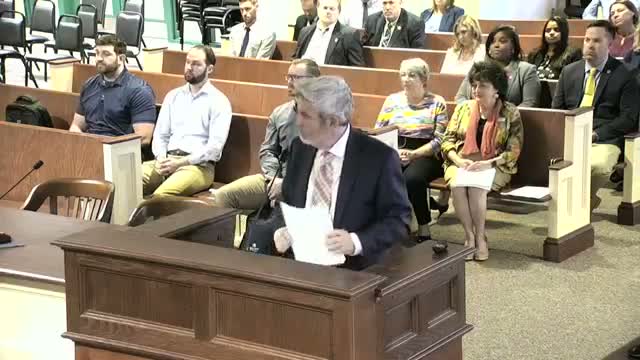
The county attorney, Roscoe Leslie, told the board the ordinance makes “violations a criminal offense, misdemeanor, punishable by up to 30 days in jail or a fine,” and also “clarifies a process for removing personal property that is stored or abandoned on county property.” Leslie said he had worked on the draft with the state's attorney and the sheriff’s office and the bill incorporates input from prior work sessions.
Sheriff Chris Foley told commissioners the ordinance provides “a tool for law enforcement” when outreach and voluntary interventions fail. “This ordinance is an additional tool for law enforcement to provide layers of safety for our entire county,” Foley said, noting the sheriff’s office already partners with outreach providers. He said officers should not have to tolerate “blatant disregard” by people who refuse resources.
Representatives from outreach agencies urged the commissioners to preserve noncriminal options. Roberta Baldwin, director of the Worcester County Department of Social Services, said the department supports removing individuals from public areas when necessary but urged commissioners “to consider looking at alternatives to criminalization and look at implementing those funds to Housing First efforts and looking to find housing, supportive housing, and other programs to support homeless individuals.” Diakonia executive director Ken Argot and Stephanie Van Gasback, team lead for a county rapid response outreach team, described efforts to connect people to services and said the ordinance should be used only after repeated outreach fails.
A handful of residents urged the county to avoid criminal penalties when possible. Edward Lee, a Snow Hill resident who works with weekly feeding efforts, asked commissioners to “find another way” rather than criminalize people who may not understand their situation.
Commission discussion emphasized the ordinance is intended as a last resort. Commissioner Fiore thanked the outreach partners and said the policy provides “a tool to give the help to some of these individuals that need the help.” The board took no amendments during the hearing.
Votes at a glance - Bill 25-02 (Anti-Camping Ordinance): motion to adopt by Commissioner Matricek; second by Commissioner Fiore. Outcome: adopted unanimously (recorded as unanimous). Penalties: misdemeanor up to 30 days in jail or a judge-set fine. Removal process for personal property established.
What the ordinance does and does not do - Criminalization: converts county civil citation for camping on county property into a misdemeanor offense (judge decides jail or fine). - Property removal: establishes a clearer procedure for removal of belongings abandoned or stored on county property. - Service linkages: commissioners and several speakers emphasized outreach, Housing First and diversion options remain the preferred first response.
Next steps and implementation County staff and the sheriff's office will implement the removal procedures and coordinate outreach so that law-enforcement action is used when outreach has failed or when public-safety risks are present. The county attorney said the draft incorporated input from work sessions with the state's attorney and the sheriff.
Why this matters The change affects how the county enforces camping on public property and clarifies the legal process for removing personal belongings. Supporters said it fills enforcement gaps when outreach fails; critics warned criminal penalties can harm people experiencing homelessness and urged greater investment in housing and services.
Sources and evidence This article draws on the public hearing testimony and the county attorney’s presentation during the Worcester County Commissioners meeting on May 20, 2025. Verbatim quotes are attributed to speakers who spoke during the hearing.