Get Full Government Meeting Transcripts, Videos, & Alerts Forever!
Get email alerts on the Agrivoltaics topic
No spam. Unsubscribe anytime.
Commissioners approve revised agrivoltaics and vegetation-management plan for Kansas Sky Energy Center with conditions
Summary
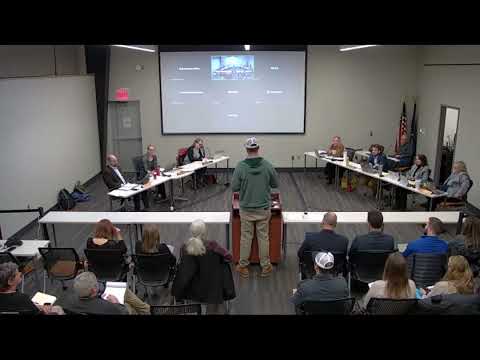
After hours of public comment and technical questioning, Douglas County commissioners approved the revised agrivoltaics and vegetation-management plan for the Kansas Sky Energy Center (a previously approved CUP), subject to minor corrections staff identified and continued reporting and bonding requirements.
Douglas County commissioners voted to approve a revised vegetation-management and agrivoltaics plan tied to the Kansas Sky Energy Center conditional use permit (CUP). The CUP itself was approved by the commission on April 13, 2024; the plan before the board was a required follow-up that lays out how vegetation, pollinator habitat and proposed agrivoltaic activities (including grazing and small-scale agriculture) could be phased, monitored and reviewed over the life of the facility.
The revised plan consolidates earlier submissions, adds a mowing schedule and herbicide clarifications and proposes a $250,000 grant program to fund agrivoltaics operators or research projects. It also proposes an advisory Agrivoltaics Board that would include county representation, The Nature Conservancy, the operator, and other stakeholders; staff said the board structure and bylaws will be shaped later in phase 3 and that the county will remain engaged.
Mary Miller, city-county planner, told commissioners the plan "is a plan for a process" and emphasized reports and updates are required: the operator must provide an agrivoltaic report 12 to 24 months after the certificate of completion and then at every five-year CUP review. Ashton Martin, Savion’s senior permitting and environmental manager, said the revised document "consolidates and integrates" prior materials and serves as a foundational document for implementation.
Several members of the public, nearby landowners and local trustee bodies urged delay and asked for third-party engineering review, stronger enforcement language, clearer irrigation commitments, and protections for neighboring farms. Speakers repeatedly raised concerns that agrivoltaics language in the plan is written as guidance rather than binding obligation, that enforcement mechanisms were limited or advisory, and that vegetation failures would increase runoff during the plant-establishment period.
Staff and the applicant said the plan meets the CUP conditions, highlighted a vegetation bond to ensure establishment, and noted the county will perform a 12–24 month review after certificate-of-completion and periodic five-year reviews thereafter. Tanya Voigt, the county’s director of zoning and codes, said staff can require third-party expertise if necessary during reviews and that the vegetation bond (designed to ensure reseeding and establishment) would remain until county staff confirm vegetation targets are met.
Commissioner Reid said the plan meets CUP conditions and that the vegetation bond is a “critical stop gap.” After discussion, Commissioner Reid moved to approve the plan “subject to the revised corrections noted in attachment D by staff.” A second was recorded and the motion passed. The county’s action does not change the underlying CUP; it implements the procedural and reporting elements the CUP required and leaves detailed bylaws for the advisory board to be set in phase 3 and through staff collaboration.