Get Full Government Meeting Transcripts, Videos, & Alerts Forever!
Get email alerts on the Technology Plan topic
No spam. Unsubscribe anytime.
SCUC ISD previews 10-year technology plan, recommends needs-based 1:1 device model
Summary
District technology staff presented a long-range plan that shifts device replacement from a "device-for-device" model to a needs-based 1:1 deployment, with projected six-year Chromebook costs of $4.77 million under the recommended approach and infrastructure replacements scheduled through 2029.
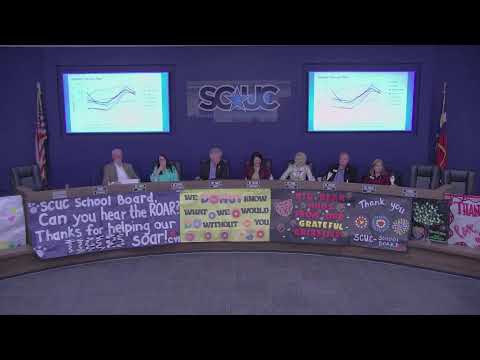
Technology staff for the Schertz-Cibolo-Universal City Independent School District presented a long-range technology plan and a set of funding options at the board—s January meeting, urging a transition to a "needs-based 1:1" model to reduce costs and improve device parity among campuses.
Presenters said digital use has grown rapidly: monthly sign-ins to district digital systems increased roughly tenfold from about 52,000 in February 2018 to nearly 540,000 in February 2024, and the network supports between 20,000 and 40,000 wireless devices daily. District staff recommended shifting away from the traditional device-for-device replacement model toward a needs-based 1:1 approach that targets device availability where instructional schedules and enrollment demonstrate consistent need.
Cost comparisons presented to trustees showed estimated replacement spending over six years of: about $4.9 million for device-for-device replacement; about $5.27 million for a fully deployed traditional 1:1; and about $4.77 million for the needs-based 1:1 plan. Projected campus-targeting thresholds in the recommended model are 85% device coverage at elementary schools, 90% at intermediate schools, 93% at junior highs and 95% at high schools.
Staff described near-term infrastructure needs: a content filter replacement in 2026; firewall and voice-router replacements in 2027; primary storage and phone-system replacement by 2028; and a wireless system replacement in 2029. Specific capital projections included a server upgrade estimated at about $560,000 and a data-center battery-backup replacement near $200,000 in the next 10 years.
Funding options discussed were (1) continuing to use assigned fund balance (the district has used assigned balances for technology replacements in recent years), (2) short-term bonds or maintenance-and-operations (M&O) notes (noting that student devices must be on a separate bond proposition under state law), and (3) shifting recurring costs into the annual M&O budget (which would require identifying new or reallocated recurring revenue). Board members praised the analysis and described the needs-based approach as fiscally and operationally preferable.
One trustee called the proposal similar to a just-in-time model used in industry; another noted the plan—s potential long-term compounding benefits. Trustees asked about logistics for device movement; staff said the plan assumes some device sharing and scheduling based on class schedules and that their inventory work and on-campus support would coordinate movement without adding FTEs.
Ending Staff said they will use the needs-based model and inventory data to produce detailed replacement budgets for the upcoming budget workshop and the combined community advisory committee meeting. Board members will consider funding options, including potential bond propositions for infrastructure and a separate proposition for student devices if the board chooses that route.