Get Full Government Meeting Transcripts, Videos, & Alerts Forever!
Get email alerts on the Agenda Review topic
No spam. Unsubscribe anytime.
Board members press for clearer fiscal notes and agenda access as staff previews Jan. 7 meeting
Summary
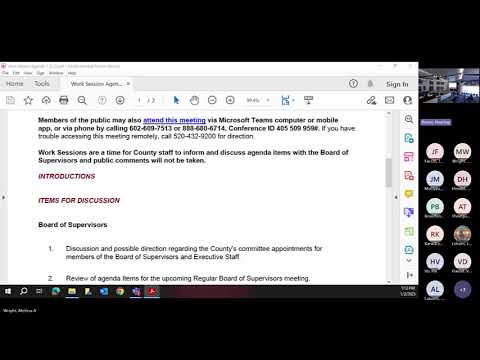
County staff walked supervisors through the draft agenda for the Jan. 7 regular meeting, described how the county’s AgendaQuick system shows fiscal impact and attachments, and agreed to train supervisors on using the system. Supervisors asked staff to ensure fiscal impacts are explicit for items that obligate county tax dollars.
Cochise County staff used the work session to walk the newly seated board through the draft agenda for the Jan. 7 regular meeting and to explain how the county’s AgendaQuick system displays attachments and fiscal‑impact notes. Supervisors asked staff for clearer, item‑level fiscal disclosures when county funds are on the line.
Sharon Gilman, the staff presenter, described the agenda review as an opportunity for new supervisors to get questions resolved before the Tuesday meeting and told the board that final agenda materials would be posted before the meeting. She said, “When the item is posted,…there are links to the agenda within the agenda. And some agenda items will have a fiscal impact factor and a description within the background information.”
Supervisor Tom Crosby pressed staff on a standard expected in other legislative contexts: a concise fiscal note that states how much the county would be committing from general fund or other county accounts. Crosby said he wants to know “what are the taxpayers on the hook for?” when the board votes on items that obligate county money. Gilman and staff agreed to provide training on AgendaQuick and to work with department presenters to include fiscal impact lines where appropriate.
The board reviewed how consent agenda items are handled and how to remove items for separate discussion. Gilman advised supervisors that if they want an item removed from consent they should inform the clerk, who would then notify the chair so the item can be pulled for separate vote.
Staff used a consent agenda example (a CDC overdose grant amendment) to illustrate fiscal reporting: the amendment did not change the grant’s total amount ($80,000) but shifted budget line items within the grant, which requires an amended grant budget to be approved. Gilman said such a change required an amendment even though the grant total remained the same.
Public‑hearing procedure was also reviewed: staff reminded supervisors that detailed public hearing discussion is limited to the noticed meeting and that the typical sequence is motion, second, open public hearing, staff presentation, public comment, close public hearing, board questions and vote. The board asked staff to attach district information to public‑hearing items so supervisors can quickly confirm which district is affected.
Ending
Staff committed to provide AgendaQuick training for supervisors, to post final agenda materials when available, and to more clearly flag fiscal impacts for agenda items that obligate county funds. The board did not take votes during the work session; the regular meeting on Jan. 7 will include the formal consent agenda and public hearings.